October 23, 2026
ITDP Indonesia Supports Integrated Transit-Oriented Development at the 2026 Selangor Mobility Summit
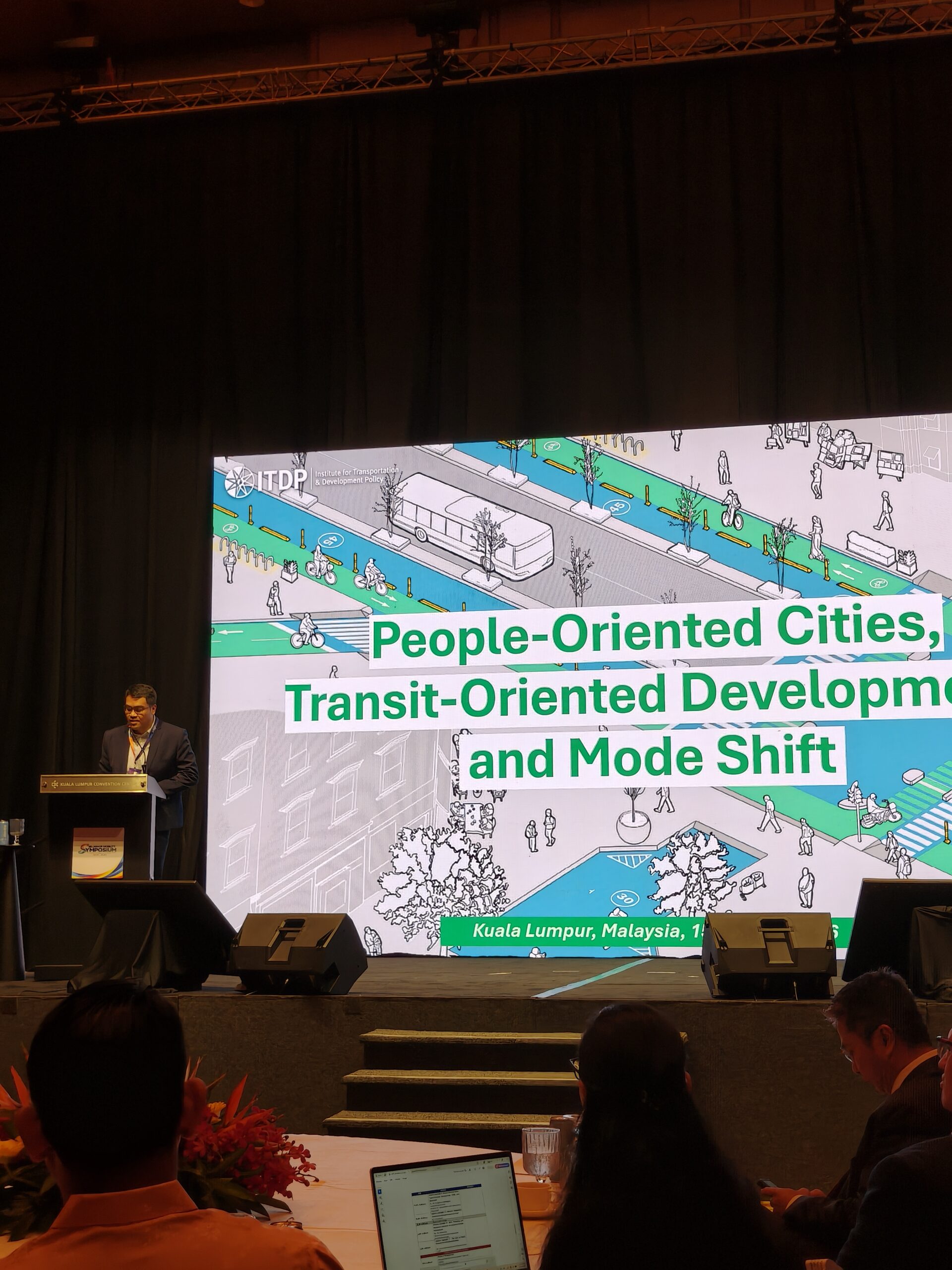
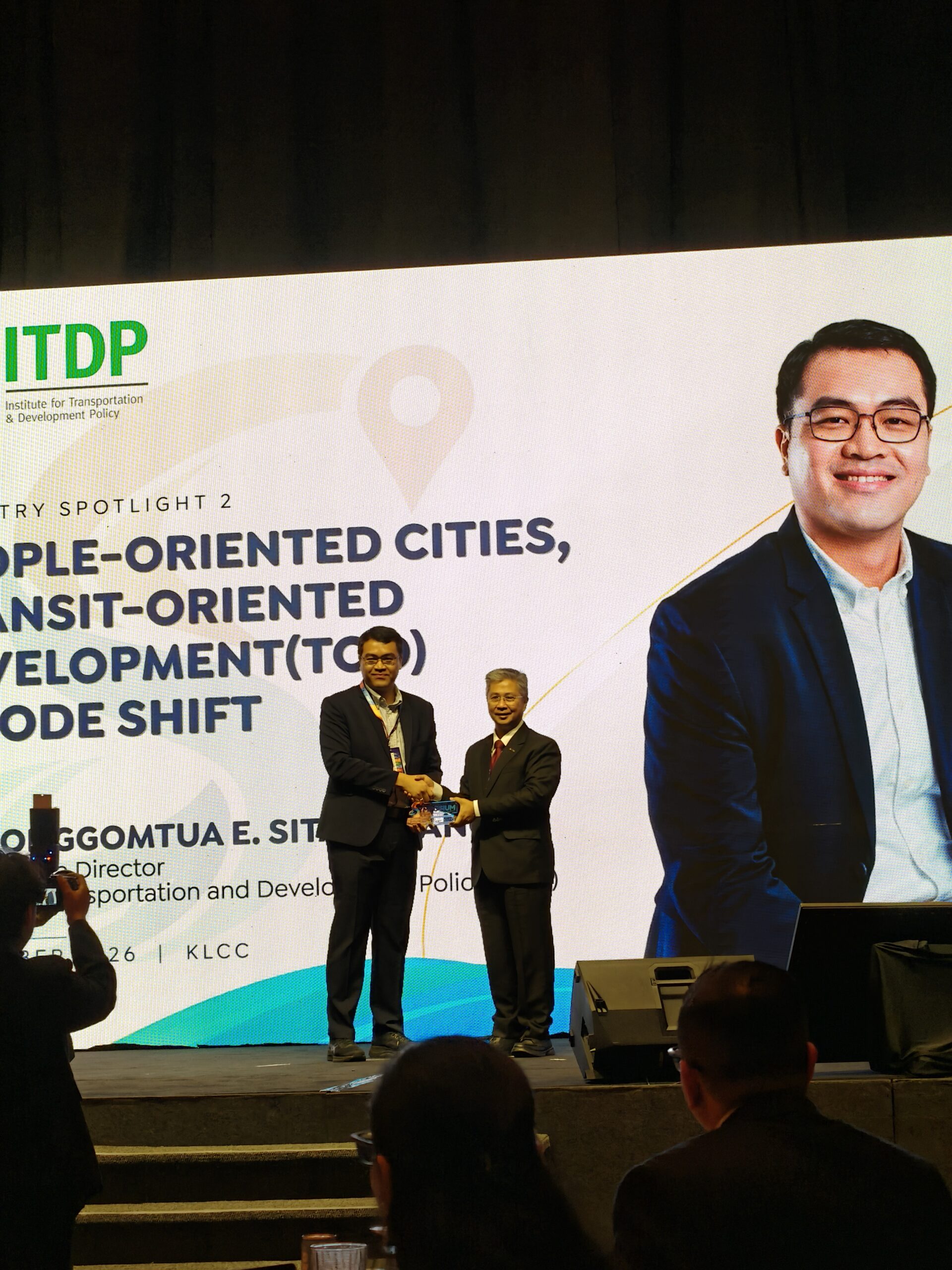
Would developing areas around transit points encourage people to shift to public transport? Not necessarily. This can be seen in Selangor, Malaysia. Despite having a 256-km public transport network and feeder services, 83 percent of trips in the Klang Valley are still made using private vehicles. This issue was highlighted in a presentation by ITDP Southeast Asia Director Gonggomtua Sitanggang at the Selangor Mobility Symposium, held in Kuala Lumpur, Malaysia, on October 15, 2026.
In his presentation, Gonggomtua emphasized that transit-adjacent development (TAD) is not the same as transit-oriented development (TOD). TAD focuses on developing areas around transit points, whereas TOD integrates the built environment, communities, activities, and accessible public spaces with active mobility (walking and cycling), as well as high-quality public transport services.
To establish TOD areas, transit points need to be supported by adequate first- and last-mile connectivity. This includes access to feeder services and convenient walking and cycling connections to transit points. Encouraging people to shift towards active mobility also requires safe and comfortable infrastructure. For pedestrians, for example, this means providing traffic separation, adequate street lighting, vehicle speed management, and accessible pathways. Meanwhile, cycling infrastructure needs to be designed to ensure safety, comfort, continuity, and attractiveness.
Physical integration between transport modes must also ensure that transfers are fast, easy, safe, and convenient. This allows people to access public transport services without facing significant barriers when travelling to and from transit points.
Beyond infrastructure provision and service improvements, changing people’s mobility habits also requires push and pull policies. This approach combines measures that encourage the use of public transport and active mobility (pull) with restrictions on private vehicle use (push). In Selangor, this could begin with reviewing parking rates and availability, as well as reallocating road space to pedestrians and buses. Other measures, such as congestion pricing, could also be considered to manage private vehicle use.
These efforts need to be tailored to the characteristics of different areas across Selangor. In denser urban areas, TOD development can be supported by integrating walking, cycling, public transport, and mixed-use neighbourhoods, alongside parking and traffic management measures. Meanwhile, in less densely populated areas, improving feeder services and demand-responsive transit (DRT), providing safe walking access to transit points, and developing more compact areas around activity centres could be relevant strategies.
Several initiatives in Selangor demonstrate ongoing efforts to strengthen people-oriented mobility. In 2025, the Bas Smart Selangor service carried approximately 7.84 million passengers and continued to operate across 60 routes in 2026. The state government is also developing the Selangor State Mobility Master Plan (Pelan Induk Mobiliti Negeri Selangor/PIMNS), which
These initiatives provide an important foundation for strengthening public transport connectivity in Selangor. However, developing people-oriented mobility still requires an approach that takes into account the characteristics of each area, including access to transit points and dependence on private vehicles. Through advocacy and collaboration efforts across Southeast Asia, ITDP Indonesia remains committed to promoting the development of inclusive, sustainable, and low-emission mobility systems.