November 05, 2026
ITDP Indonesia Discusses the Path Towards a Truly Inclusive Blok M
Baca artikel dalam Bahasa Indonesia
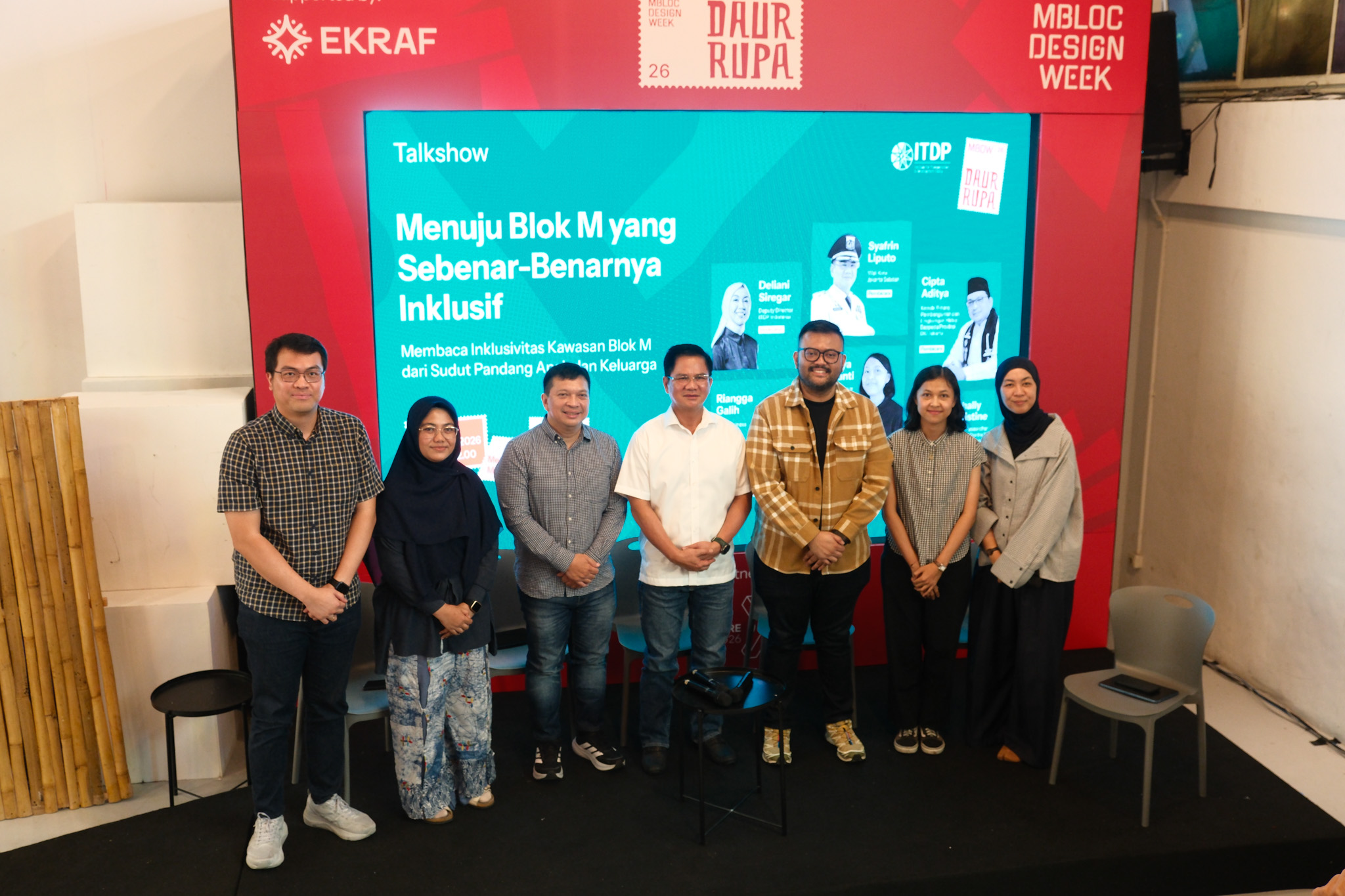
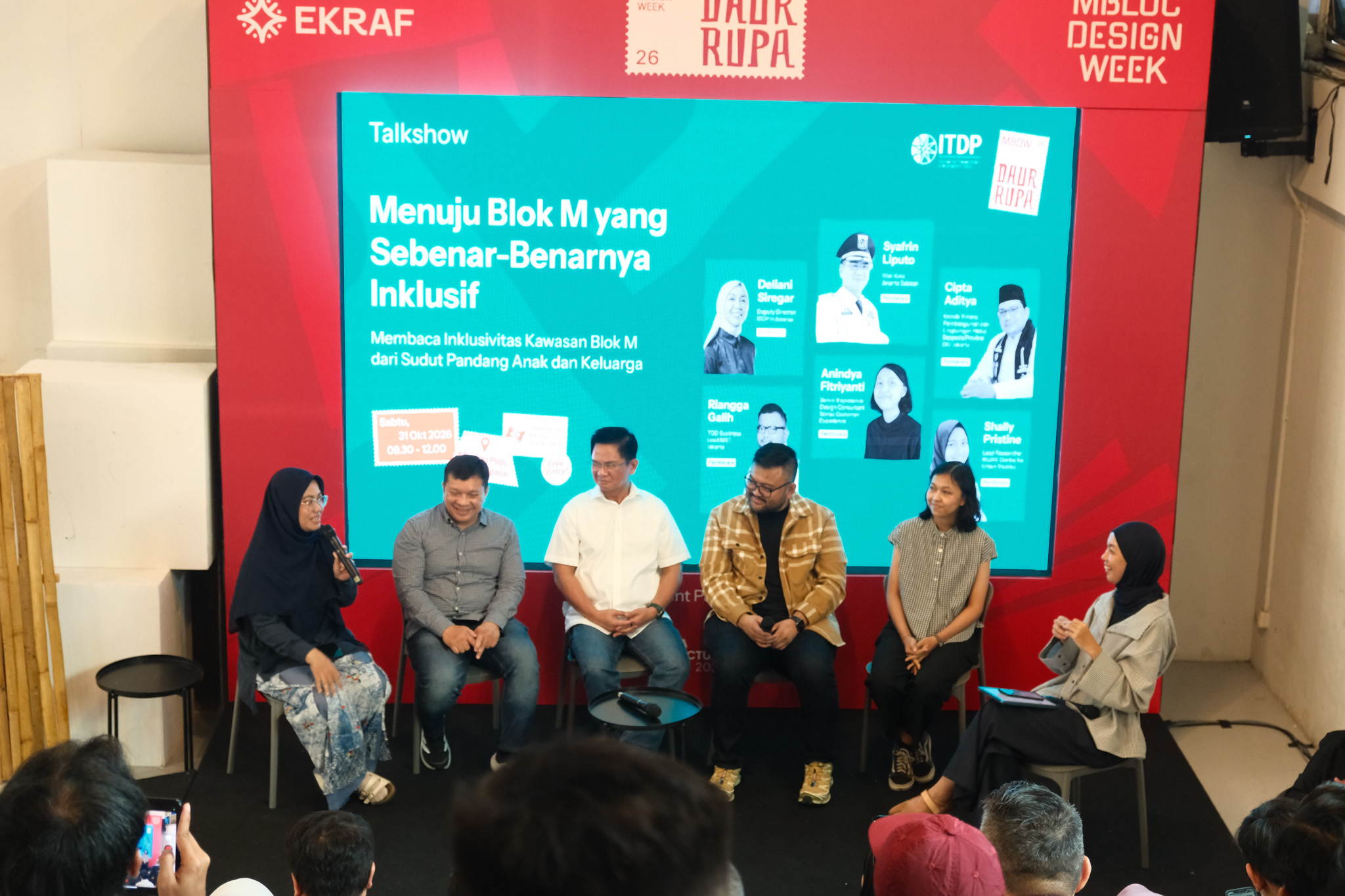
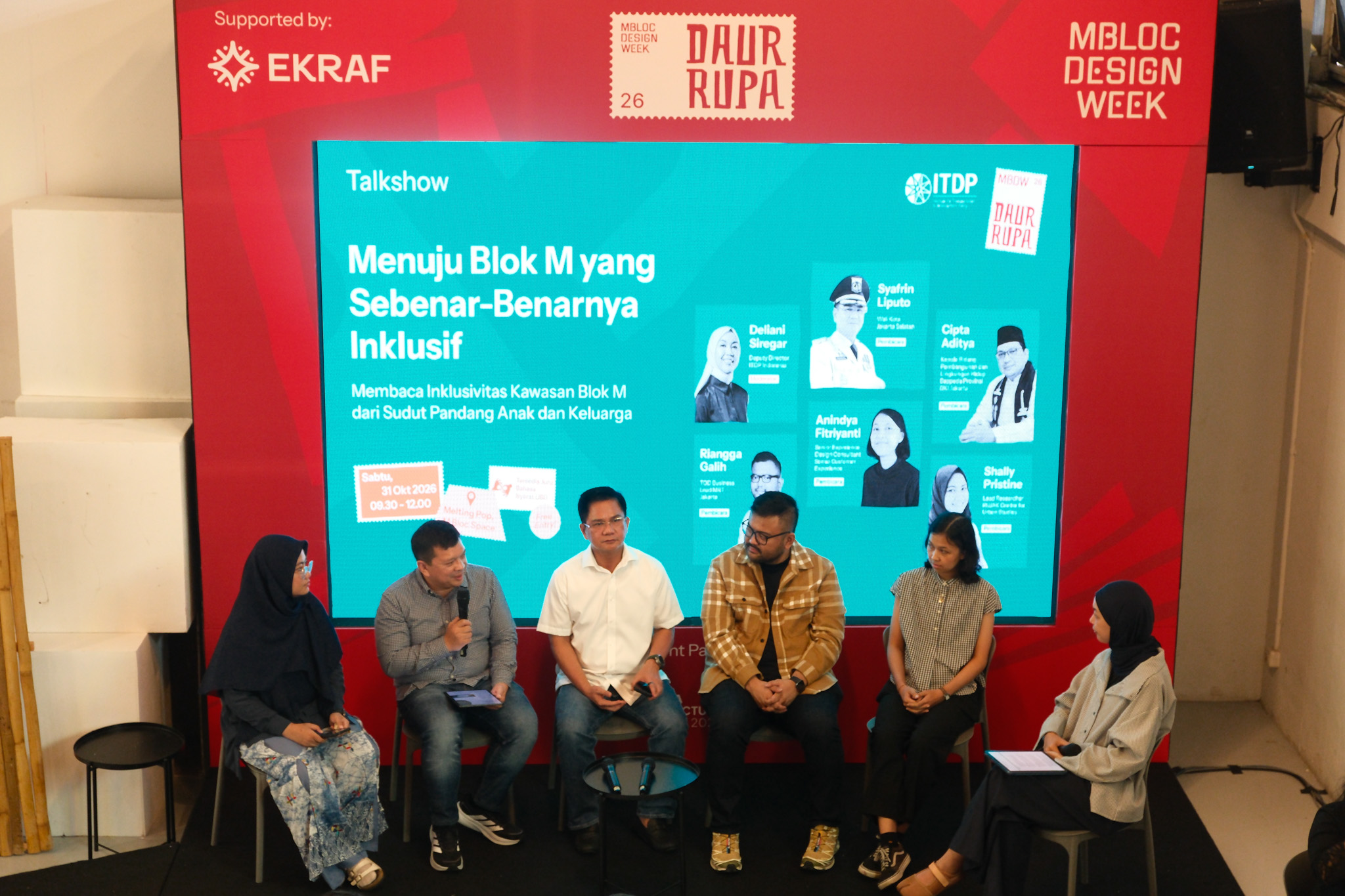
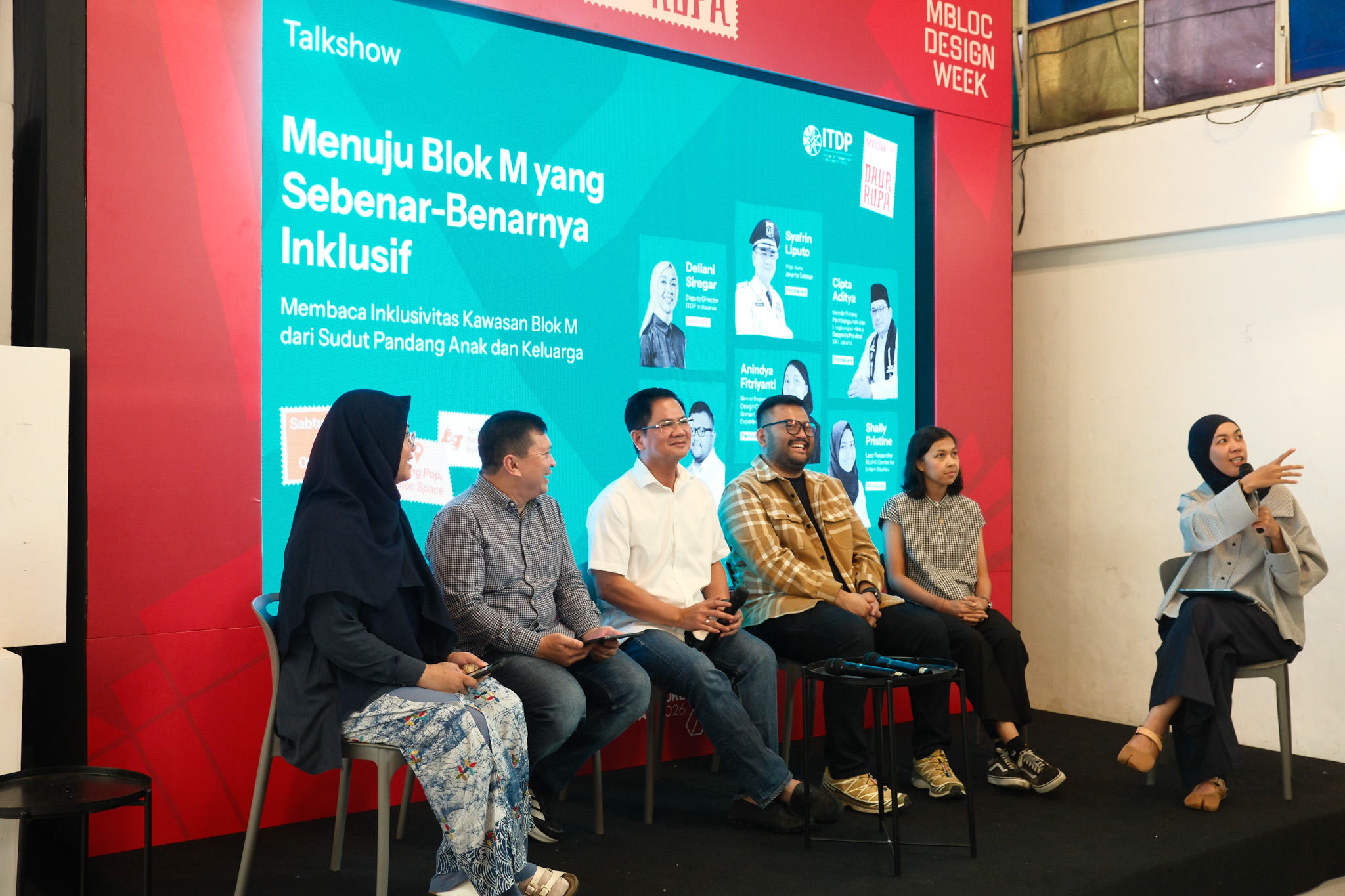
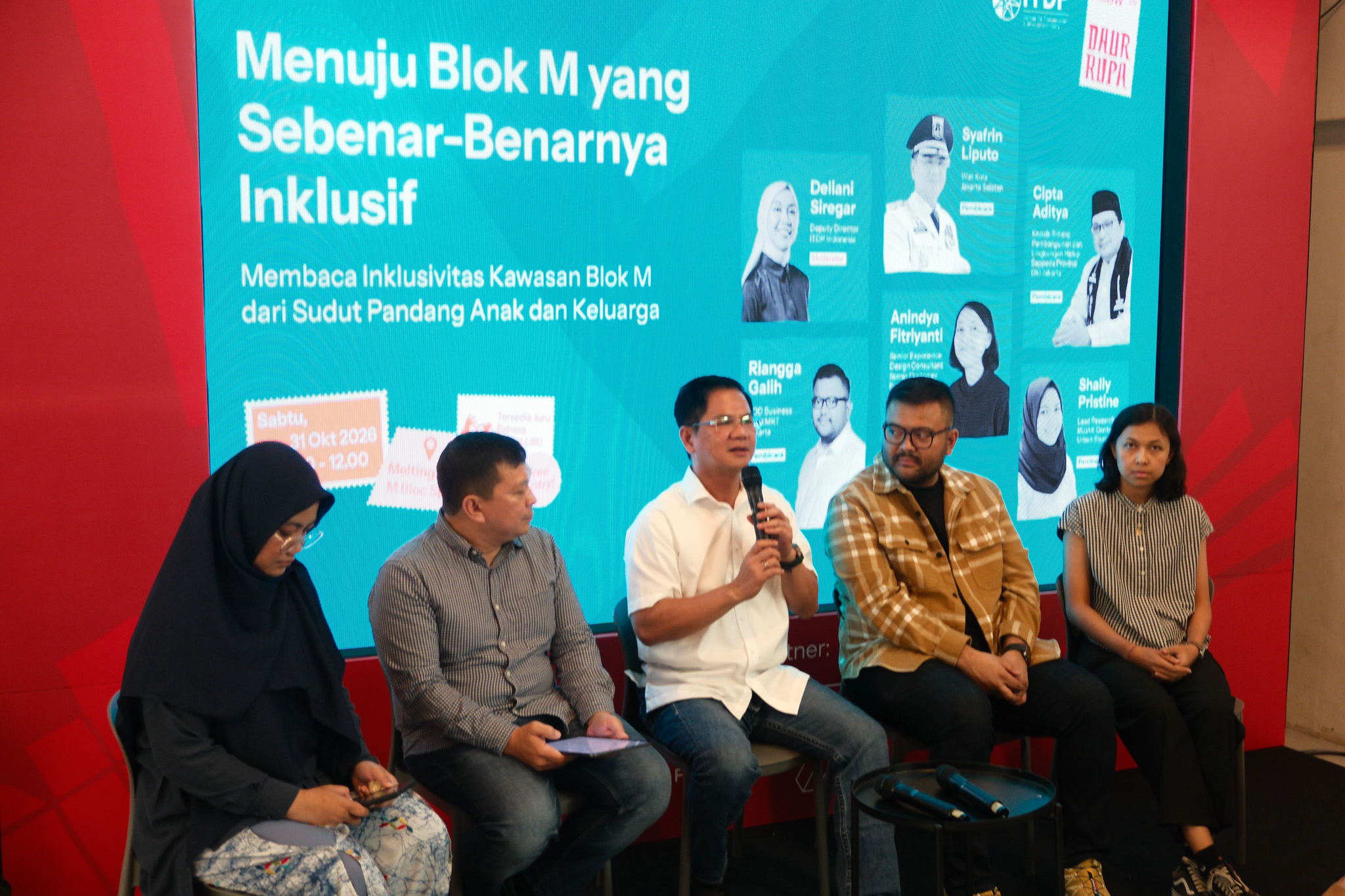
Blok M has become one of Jakarta’s key urban activity hubs, bringing together people from diverse backgrounds, interests, and communities. However, the diversity of its visitors does not necessarily reflect the inclusivity of the area, particularly for children, families, older adults, and persons with disabilities, who have different mobility needs. These issues were highlighted during a talk show titled “Towards a Truly Inclusive Blok M,” organized by ITDP Indonesia as part of M Bloc Design Week 2026 on Saturday (October 31) at M Bloc Space, South Jakarta.
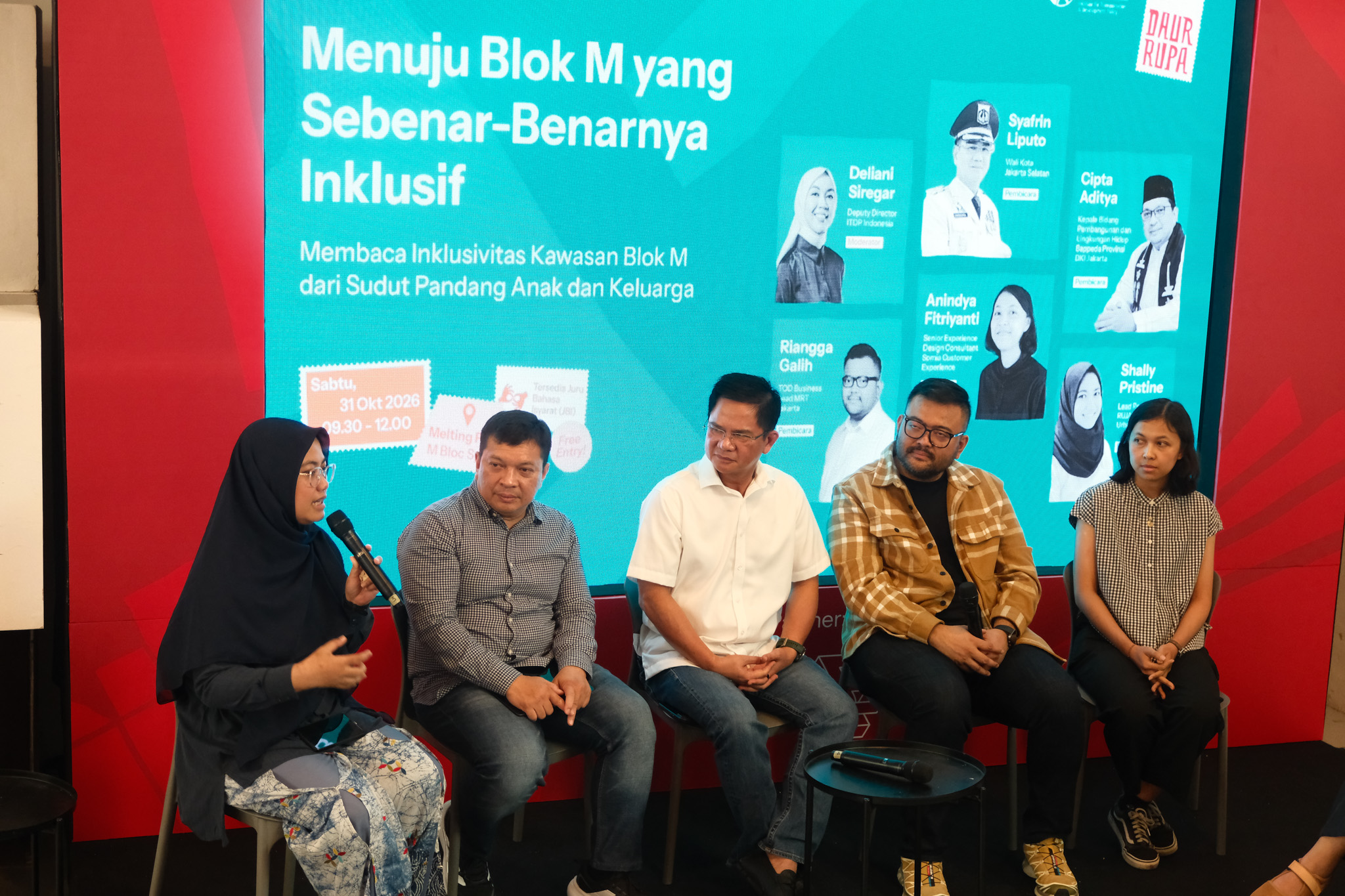
The discussion featured South Jakarta Mayor Syafrin Liputo; Cipta Aditya, Head of the Environmental Resources Subdivision at the Jakarta Regional Development Planning Agency (Bappeda DKI Jakarta); Shally Pristine, Lead Researcher at RUJAK Center for Urban Studies; Anindya Fitriyanti, Senior Experience Design Consultant at Somia Customer Experience; and Riangga Galih, Head of TOD Asset, Permit, and Business Management at MRT Jakarta. Deliani Siregar, Deputy Director of ITDP Indonesia, moderated the discussion.
Towards a Truly Inclusive Blok M
The discussion drew on the findings of ITDP Indonesia’s walking audit in Blok M, which assessed accessibility, pedestrian crossings, safety, comfort, and ease of navigation from the perspectives of children and families. The audit was conducted on September 12, 2026, and found that Blok M scored only 1.99 out of 5 for comfort.
In addition to the audit involving families and children, the ITDP Indonesia team also conducted an assessment based on seven parameters outlined in the Guidelines for Determining the Walkability Index (05/P/BM/2023). The results showed that the area received an overall score of 62.3 out of 100, placing it in the fairly good category. However, the availability of supporting facilities, inclusive infrastructure, and the presence of obstructions all scored below the average.
Together, these findings underscore that creating an inclusive urban area requires more than simply providing accessible facilities. Connectivity between spaces, ease of navigation, travel safety, and the experiences of users with diverse needs must also be central considerations in urban planning and area management.
Developing Blok M as a Shared Space
Syafrin emphasized that the development of Blok M must be carried out in collaboration with the community, taking into account the aspirations and needs of different user groups. He noted that Blok M should not only serve as a transportation and economic activity hub, but also as an inclusive, sustainable public space that can be enjoyed by everyone.
“Blok M must be developed together with the community, rather than through a one-way approach. We want everyone, whether residents or visitors, to have equal opportunities to access, engage in activities, and enjoy this area,” Syafrin stated.
In line with this vision, Syafrin explained that the development of Blok M aligns with the Jakarta Active City approach, which promotes urban activities across social, environmental, and economic dimensions. He added that the area’s growth must be accompanied by improvements in public space quality and greater community involvement in the planning process.
“The development of an increasingly active area must go hand in hand with greater attention to inclusivity. The key lies in coordination, communication, and collaboration among stakeholders, including community participation, to ensure that improvements to the area truly benefit everyone,” Cipta stated.
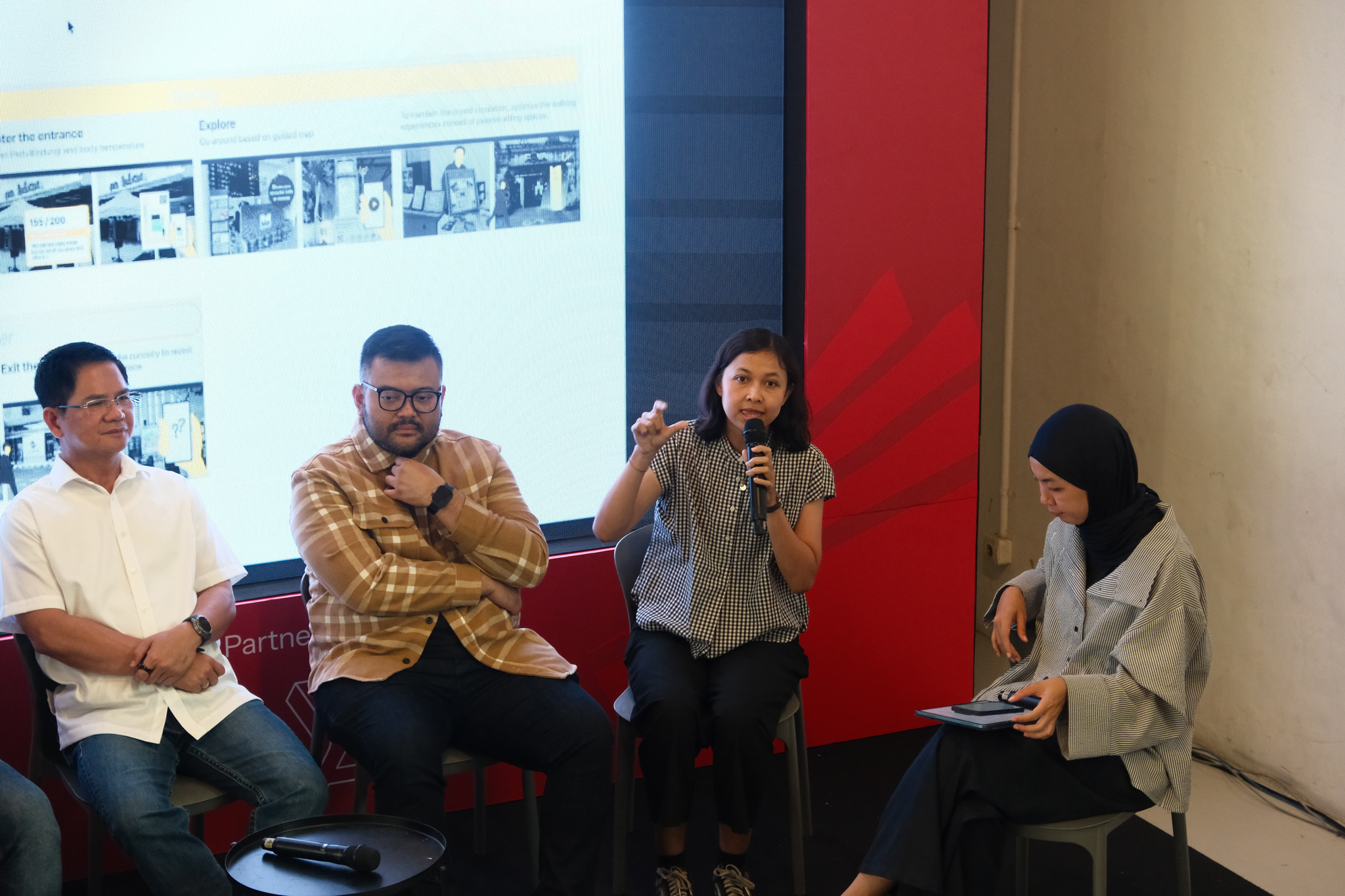
Meanwhile, Riangga outlined plans for the development of Blok M through the Blok M Ultimate project, which envisions a creative district integrating transportation, commercial activities, green open spaces, and residential areas.
“We want to establish better connectivity between the terminal, MRT station, green open spaces, and various activities throughout Blok M. Its development also requires coordination with area managers and input from the community to ensure that its benefits can be shared more widely,” Riangga explained.
Addressing the development of residential areas, Shally highlighted that TOD development should not only integrate transportation and commercial activities, but also ensure the availability of affordable housing. Without policy interventions, rising land values could drive up property prices and limit people’s access to living in increasingly developed areas.
From a user experience perspective, Anindya emphasized that improving inclusivity requires both physical and non-physical interventions, including services and information that support visitors throughout their journey, from arrival to departure. Simple improvements, such as directional signage and information about family-friendly facilities, can serve as initial steps that can subsequently be evaluated and further developed.
The importance of access to information was also raised by representatives of the Indonesian Deaf Welfare Movement (GERKATIN) during the question-and-answer session. They highlighted the limitations of visual accessibility in Blok M, including directional signage, safety information, and clear information on which management parties to contact. Their input underscored that accessibility goes beyond the condition of sidewalks and connecting pathways; it also depends on the availability of information that can be understood and used by different groups, including the Deaf community.
During the discussion, ITDP Indonesia emphasized the importance of ensuring inclusive design from the planning stage, including by taking into account the needs of groups with varying mobility limitations and economic circumstances. This approach is increasingly relevant as Blok M moves forward with its development plans as a Transit-Oriented Development (TOD) area.