May 12, 2026
Energy Transition for Whom? Why EVs Alone Won’t Deliver Justice
By Tutut Indriaty, Project Assistant ITDP Indonesia
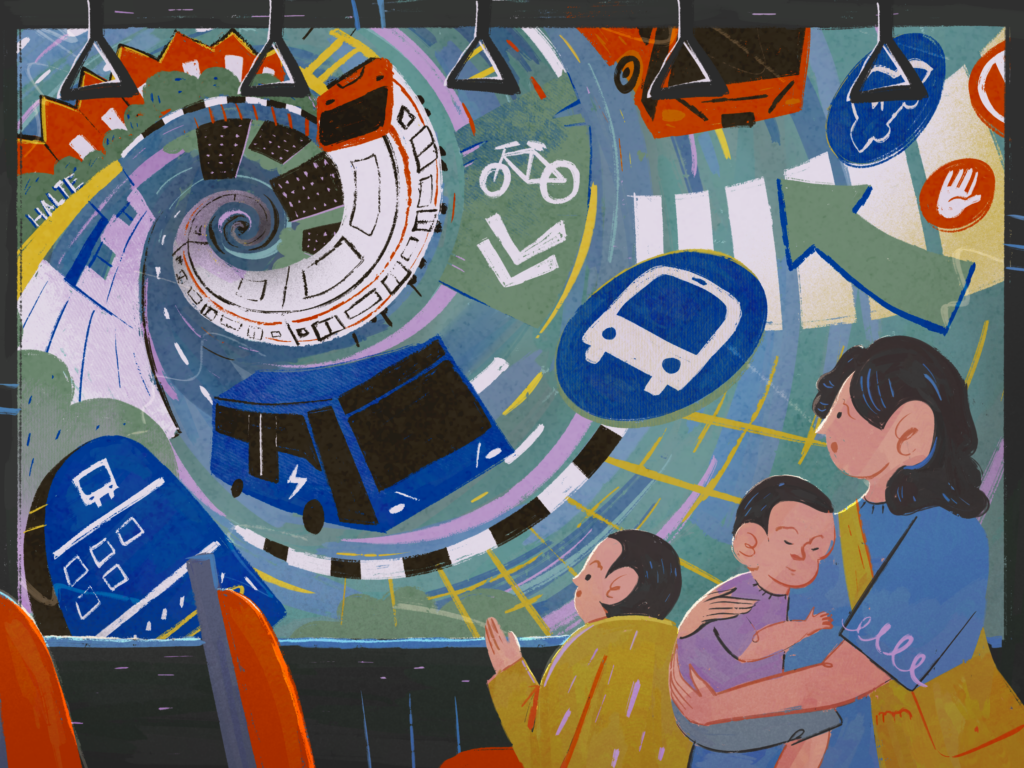
Illustration by Danu Fitra (@fetradanu)
The energy transition in the transportation sector is often promoted as a quick solution to the climate crisis. In Indonesia, this narrative has been translated into a massive push for electric vehicle adoption. However, behind the ambitious emissions reduction of targets lies a fundamental question: has this transition truly ensured justice for all groups in society?
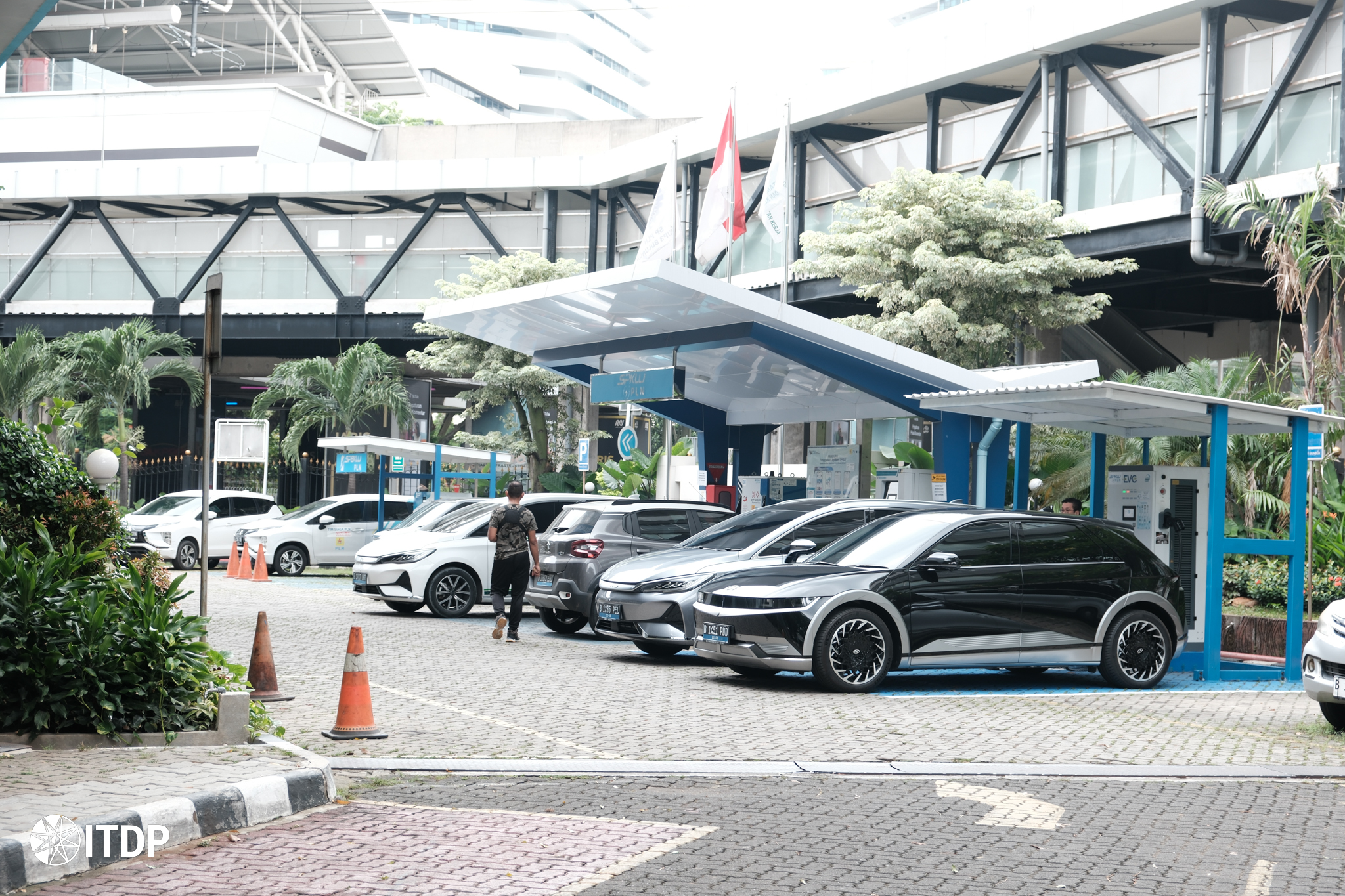
Today, the transportation energy transition has become one of the main focuses in global efforts to address the climate crisis. Unfortunately, policy direction and resource allocation still show a strong bias toward the electrification of private vehicles.
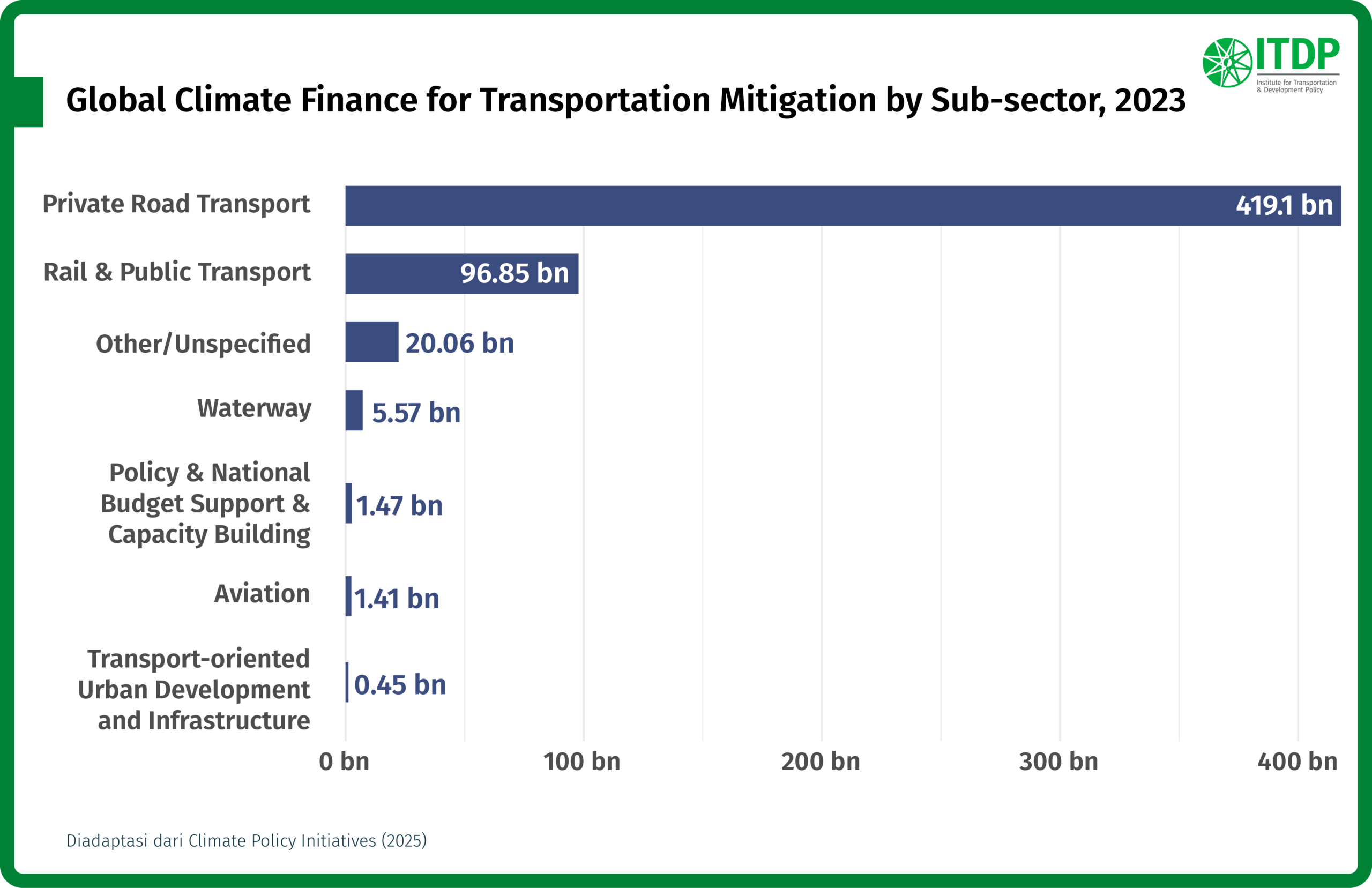
Globally, a report by the Climate Policy Initiative (CPI)1 revealed that investments—both domestic and international—in private vehicles in 2023 were four times larger than investments in road- and rail-based public transportation. Meanwhile, transport-oriented urban development and infrastructure accounted for only 0.26% of total transportation financing.
The imbalance is also reflected in Indonesia’s national climate strategy document, the Second Nationally Determined Contribution (SNDC)2, which places fuel and vehicle technology at the center of mitigation efforts. Public transportation targets, meanwhile, are not elaborated in detail. As a result, funding flows and government incentives tend to favor sectors that are easier to quantify, rather than those that deliver the broadest social benefits.
This condition is clearly visible in domestic budget allocations. In recent years, the government has provided subsidies of IDR 7 million3 for the purchase of electric motorcycles, IDR 10 million4 for vehicle conversion programs, and a 10% government-borne VAT incentive for electric cars until December 20255. Meanwhile, support for public transportation programs such as Teman Bus in cities including Bali, Yogyakarta, and South Sulawesi still depends on uncertain contract extensions and budget availability, making their sustainability far from guaranteed.
The policy logic is contradictory. On one hand, the government aims to reduce emissions, but on the other hand, the services most effective at moving people on a mass scale are instead being cut back. Although a 5% government-borne VAT incentive6 for electric buses exists in 2025, the figure remains insufficient to close the gap in upfront costs and charging infrastructure, which can reach twice the cost of diesel buses. Without fiscal schemes equivalent to those provided for private vehicles, local governments are beginning to experience significant fiscal burdens in operating cleaner fleets.
Accessibility: Beyond the Type of Vehicle Engine
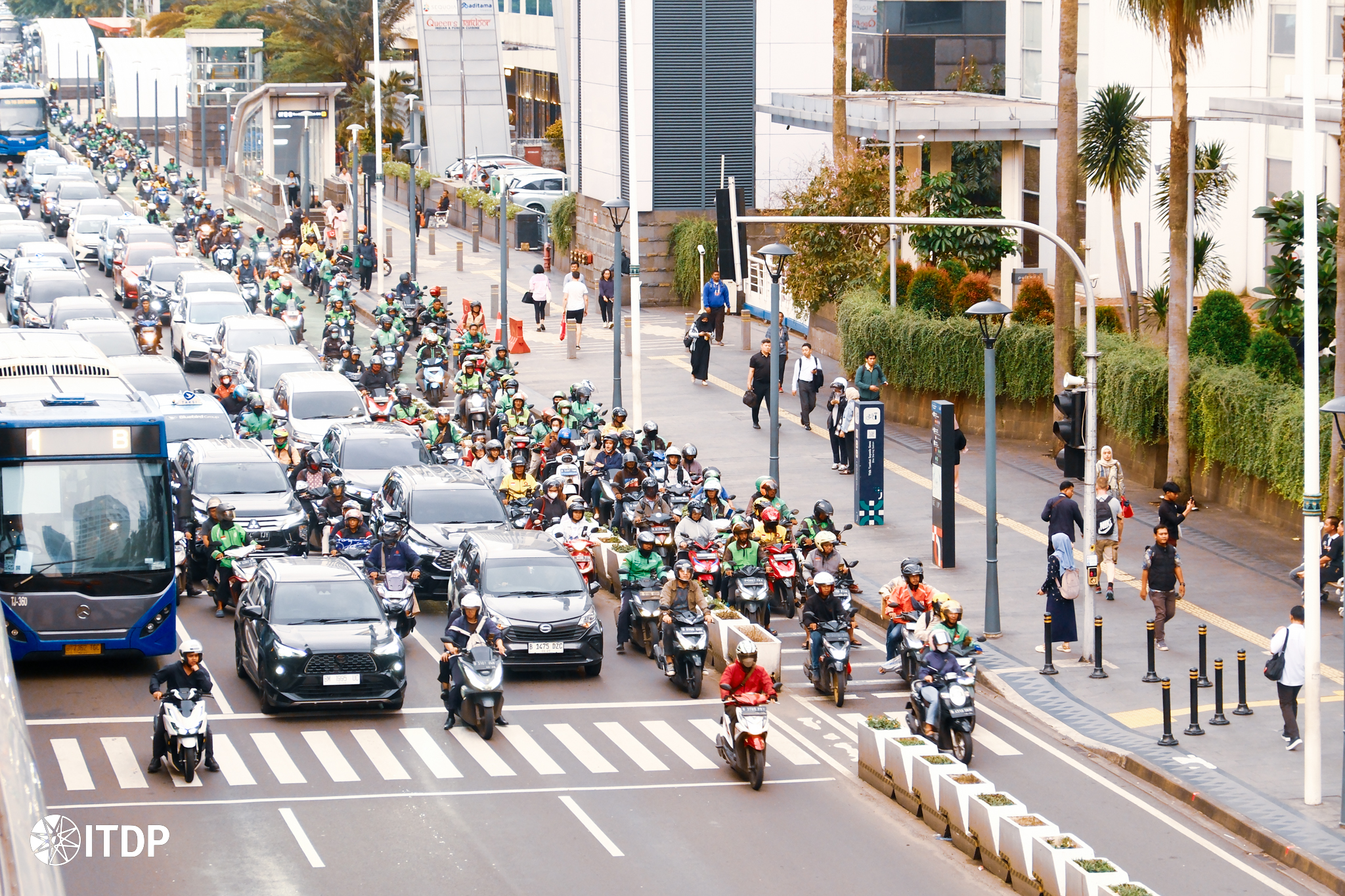
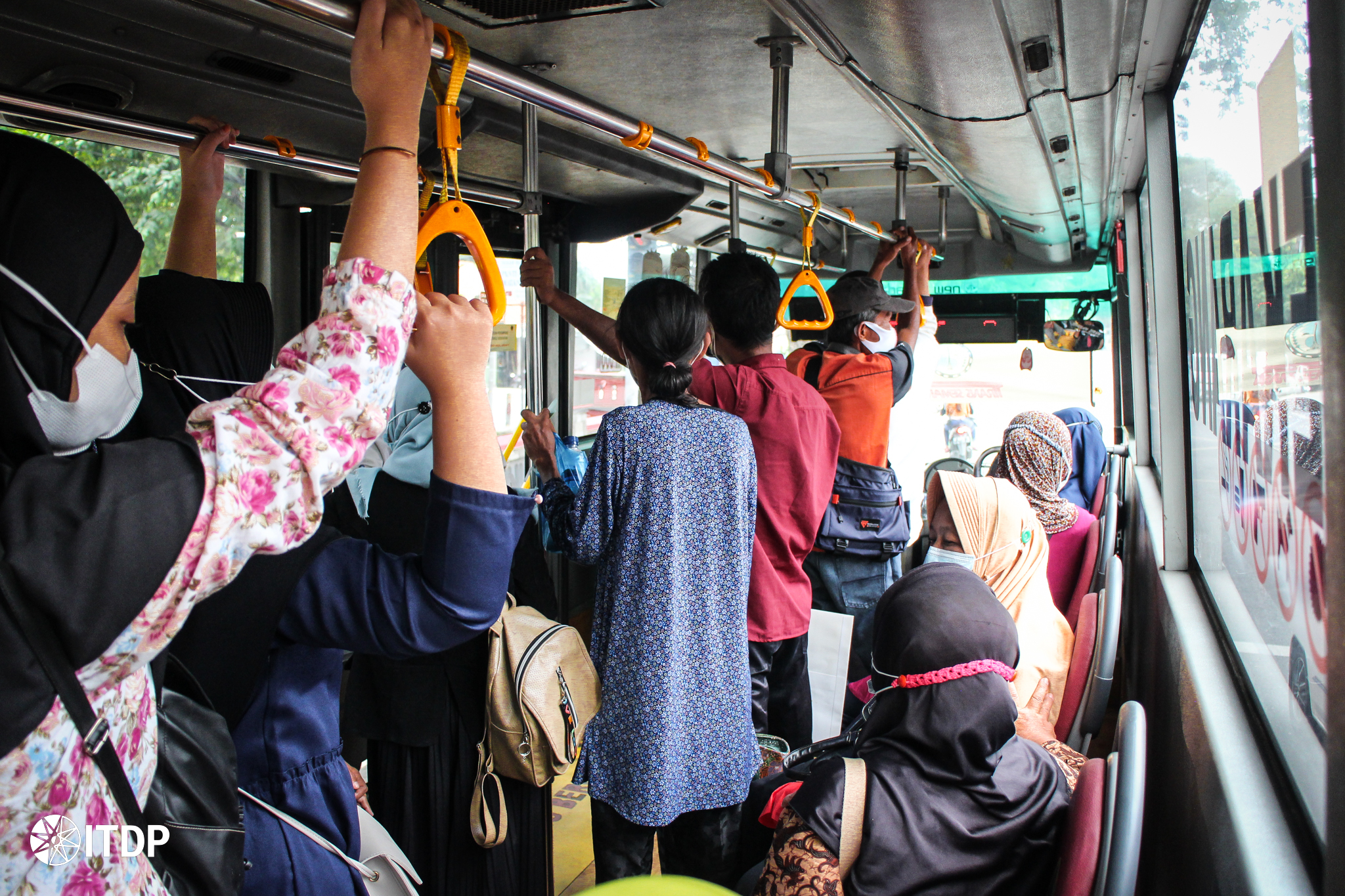
The key question is not simply “what type of vehicle is being used,” but rather “can people reach their destinations easily and affordably?” Focusing solely on vehicle engine technology often overlooks the real needs of society, especially vulnerable groups such as persons with disabilities, older adults, and residents living on the urban periphery.
For these groups, the core issue is not vehicle emissions, but inaccessible sidewalks and the absence of transport routes reaching their neighborhoods. Without safe and comfortable first- and last-mile connectivity, the transition to electric vehicles will merely shift pollution without solving mobility isolation.
Poor accessibility ultimately forces people to rely on private vehicles, creating new economic burdens. Data from Kompas7 shows that private vehicle users in several Indonesian cities spend between 40–60% of their regional minimum wage on transportation—far exceeding the World Bank’s recommended threshold of 10%.
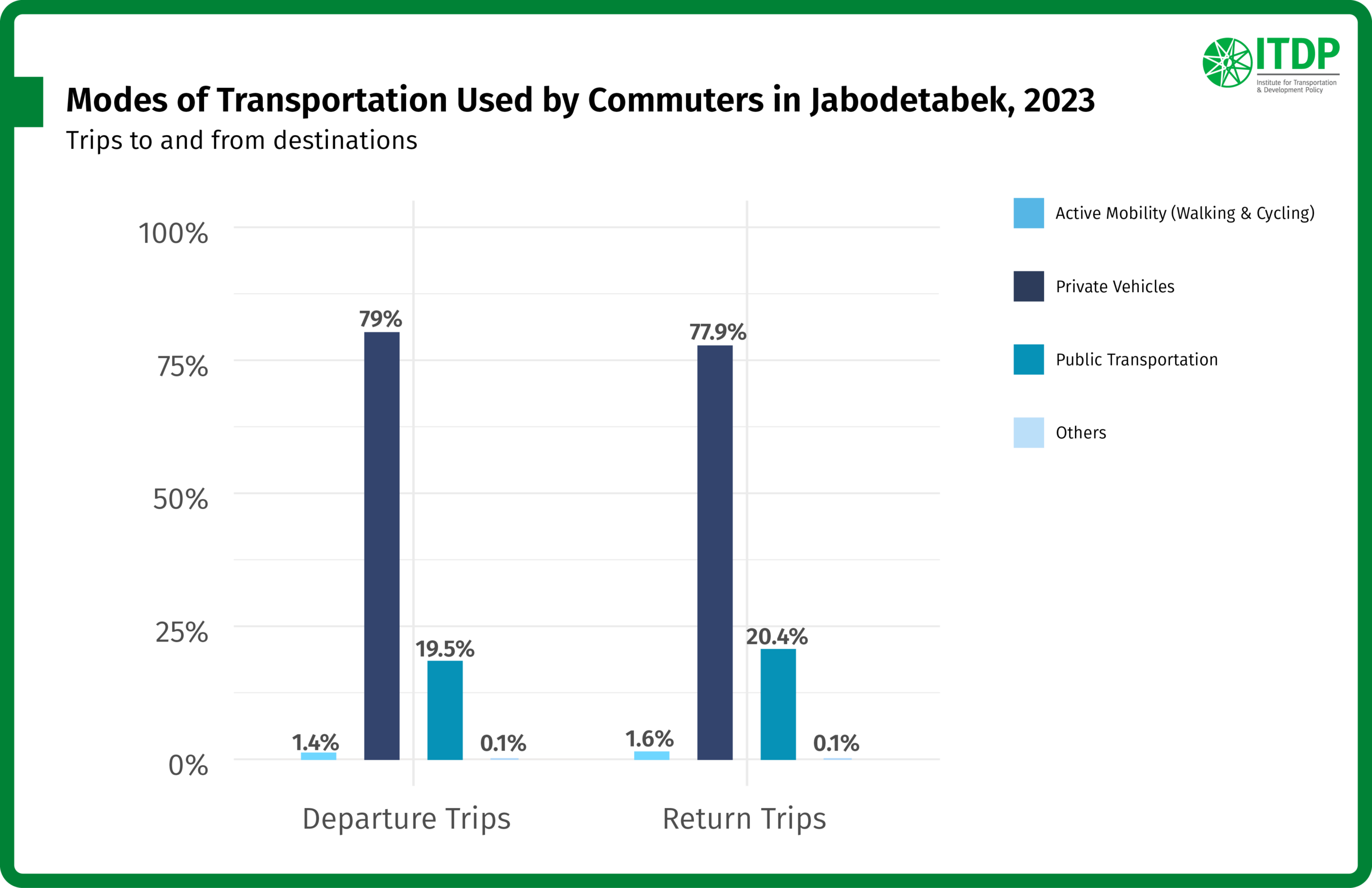
These figures confirm that many people are trapped in using private vehicles not out of choice, but necessity. Data from BPS Commuter Statistics (2023)8 reinforces this finding: 92% of commuter workers use private vehicles because public transportation is considered impractical, time-consuming, and difficult to access. A Tempo article9 discussing the discontinuation of Trans Metro Dewata in Bali highlighted how the service shutdown harmed people without private vehicles, including schoolchildren, persons with disabilities, market vendors, and small businesses.
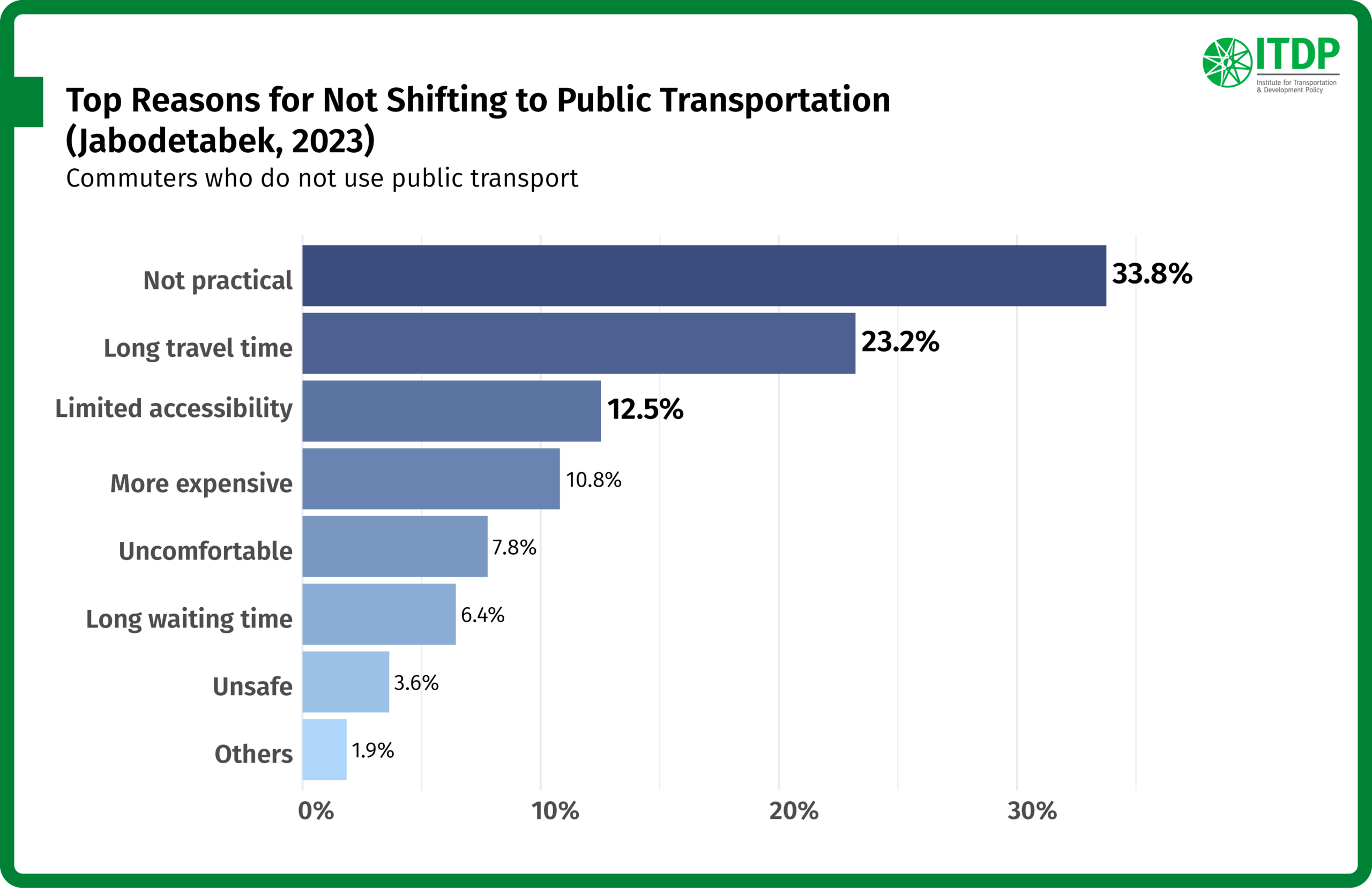
This situation creates a double burden for low-income groups: they must pay high mobility costs (economic burden) while also spending more time and energy due to inaccessible transportation systems (access burden). Ironically, these are the groups that contribute the least to emissions yet suffer the greatest impacts from the climate crisis and limited opportunities.
Why Does System Improvement Still Face Dead Ends?
To address these inequalities, enabling conditions are needed—from legal frameworks to institutional capacity—which currently have not been implemented evenly from the national to local levels. The challenges of improving the system lie in three crucial aspects: financing, governance, and planning.
- The Financing Dilemma
Many local governments are currently under fiscal pressure due to reduced transfers from the central government. These limitations force regions to provide only minimal public transportation services. The problem becomes even more complicated when limited budgets collide with the high upfront costs of electrification.
Interviews with one local government revealed that budget constraints still prioritize diesel buses to maintain service coverage, considering that the budget required for one electric bus route can equal the cost of operating two diesel bus routes.
Additionally, the lack of creative financing schemes to support feeder transport services as well as pedestrian and cycling infrastructure keeps local governments trapped in a dilemma: choosing between maintaining existing services or forcing a transition to expensive clean technologies.
- Fragile Governance and Regulation
The sustainability of public transportation is often hostage to local political cycles. Services that perform well under one administration are vulnerable to being discontinued or redirected whenever regional leadership changes.
This condition is worsened by weak regulations that fail to bridge coordination between central and local governments, as well as among agencies within local governments themselves—especially in metropolitan regions. Without institutions that possess cross-boundary authority, intermodal integration will remain difficult to achieve because each region operates with different capacities and priorities.
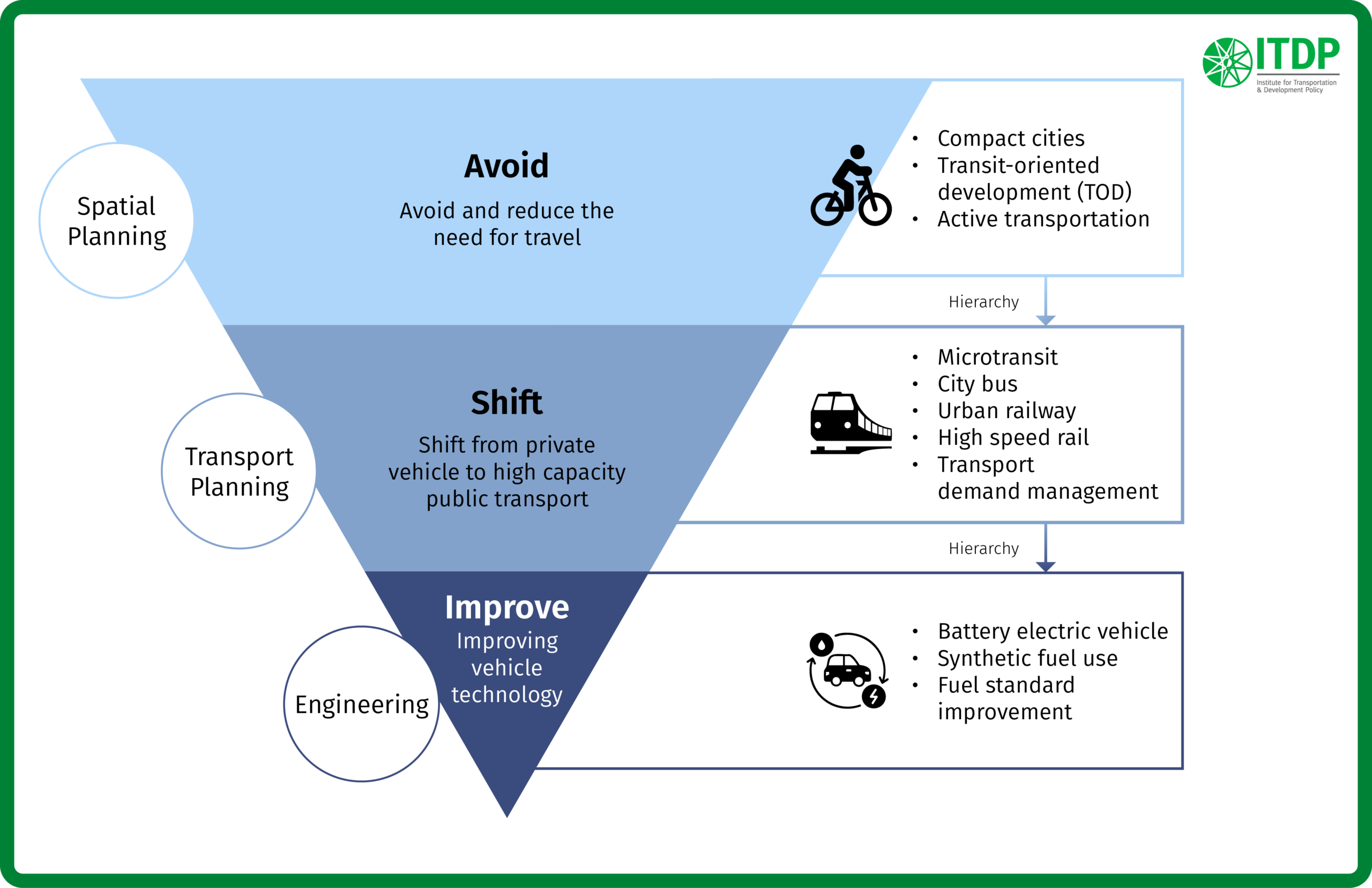
ITDP is conducting a study to map the sectors and critical issues that should be prioritized within Indonesia’s transportation policies. These findings are expected to provide a more comprehensive understanding of barriers on the ground, ensuring that the energy transition truly becomes a momentum to improve the mobility system as a whole.
Referensi:
- Climate Policy Initiative. “Global Landscape of Climate Finance Data Dashboard,” 28 Januari 2026, https://www.climatepolicyinitiative.org/resources/data-visualizations/global-landscape-of-climate-finance-data-dashboard/
- Republik Indonesia. “Second Nationally Determined Contribution (SNDC),” 2025, https://unfccc.int/sites/default/files/2025-10/Indonesia_Second%20NDC_2025.10.24.pdf, hlm. 11, 29, 37.
- Regulation of the Minister of Industry Number 21 of 2023 concerning Amendments to Regulation of the Minister of Industry Number 6 of 2023 on Guidelines for Providing Government Assistance for the Purchase of Two-Wheeled Battery Electric Vehicles.
- Regulation of the Minister of Energy and Mineral Resources Number 13 of 2023 concerning Amendments to Regulation of the Minister of Energy and Mineral Resources Number 3 of 2023 on General Guidelines for Government Assistance in the Program for Converting Internal Combustion Engine Motorcycles into Battery Electric Motorcycles.
- Regulation of the Minister of Finance Number 12 of 2025 concerning Value Added Tax on Certain Four-Wheeled Battery Electric Vehicles and Certain Battery Electric Buses, as well as Luxury Goods Sales Tax on the Delivery of Taxable Luxury Goods in the Form of Certain Low Carbon Emission Electric Four-Wheeled Motor Vehicles Borne by the Government for Fiscal Year 2025.
- Ibid.
- Satrio Pangarso Wisanggeni, Margaretha Puteri Rosalina, Albertus Krisna, “Gaji Kecil Terkuras Ongkos Transpor,” Kompas, 17 Maret 2022, https://www.kompas.id/artikel/gaji-kecil-terkuras-ongkos-transpor
- Badan Pusat Statistik. Statistik Komuter Jabodetabek: Hasil Survei Komuter Jabodetabek 2023 Volume 3, 2024. Jakarta: Badan Pusat Statistik, 2024. Nomor Publikasi 04100.24008. Dipublikasikan 28 Maret 2024. https://www.bps.go.id/id/publication/2024/03/28/33b6bef825944e576e7ea3ba/statistik-komuter-jabodetabek-hasil-survei-komuter-jabodetabek-2023.html
- Tempo.co. Ni Kadek Trisna Cintya Dewi, “Trans Metro Dewata Berhenti Beroperasi: Ni Luh Djelantik Sebut Bali Darurat Transportasi Publik,” 12 Januari 2025, https://www.tempo.co/ekonomi/trans-metro-dewata-berhenti-beroperasi-ni-luh-djelantik-sebut-bali-darurat-transportasi-publik-1193661