
August 28, 2026
Beyond Jakarta: Can TOD Work in Other Cities?
By Mega Primatama, Urban Planning Associate ITDP Indonesia
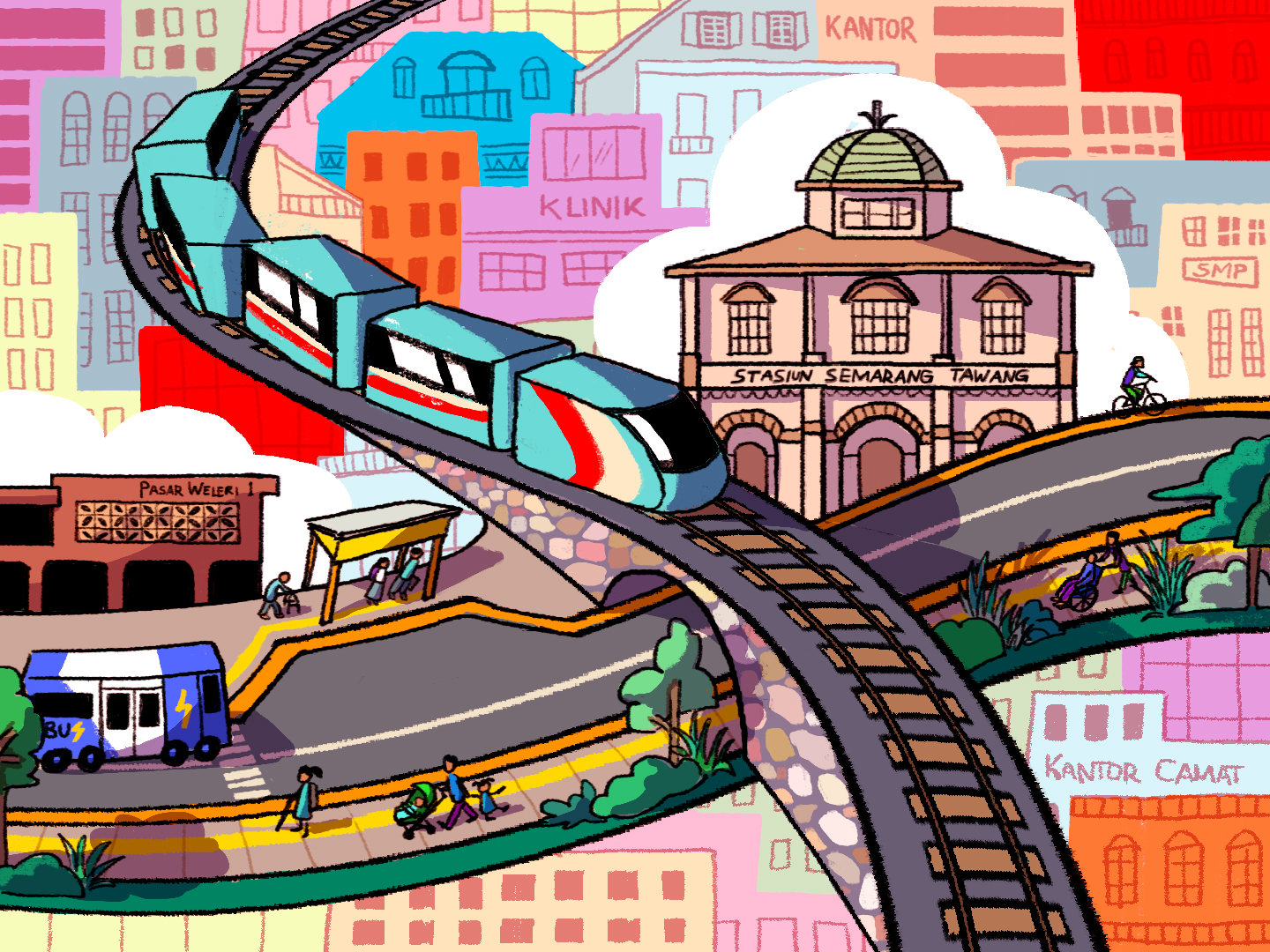
Illustrated by @sekarjoget
Not every city has MRT, LRT, or BRT systems like Jakarta. Nor does every city have the same scale of vertical housing. So, can TOD work in cities with very different transport systems, housing markets, and urban forms?
Rapid urbanisation in Jakarta has given rise to two critical issues: limited access to affordable housing, which is pushing people to live increasingly farther from Jakarta, where many of their daily activities are concentrated. The development of Transit-Oriented Development (TOD) areas around transport nodes could, in principle, help address these challenges. However, a common public misconception continues to equate TOD with little more than “building apartments on or around stations.” This perception raises two fundamental questions: to what extent do areas designated as TOD align with TOD principles, and to what extent can Jakarta’s TOD model be adapted to other Indonesian cities?
Jakarta as Indonesia’s “TOD Laboratory”
Conceptually, TOD seeks to create areas that integrate people, activities, buildings, and public spaces through connectivity that can be easily accessed by walking, cycling, and public transport1. These principles are reflected in the TOD Standard 3.0, which serves as a foundation for TOD policy in Indonesia.
At the national level, TOD is regulated under Ministerial Regulation of the Ministry of Agrarian Affairs and Spatial Planning/National Land Agency (ATR/BPN) No. 16 of 2017. At the regional level, several local governments have designated areas for TOD development in accordance with their respective levels of service. Compared with other regions, Jakarta was among the first to establish more detailed TOD regulations through a series of policies covering specific aspects of TOD areas, including transport services and affordable housing2,3,4.
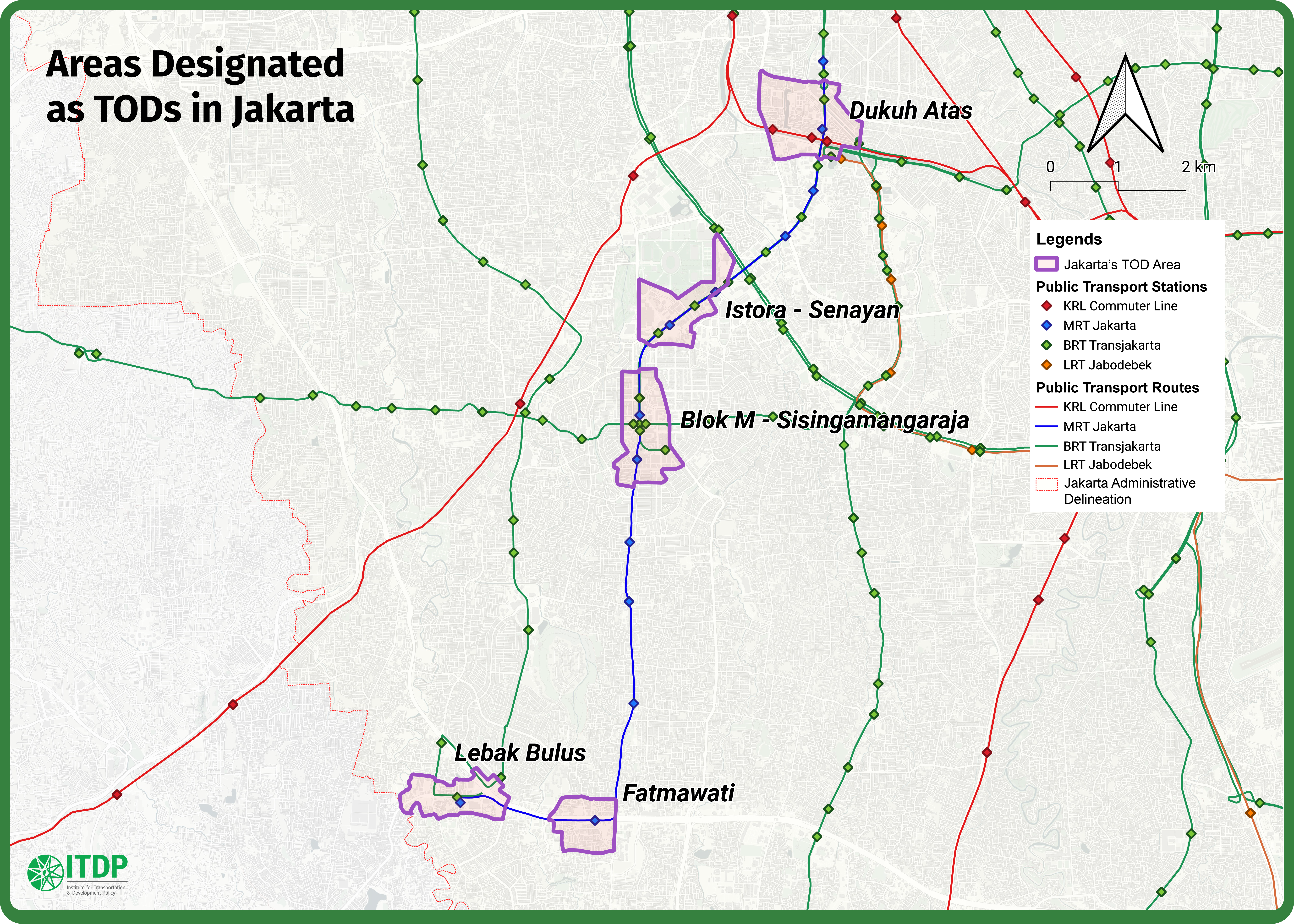
From a transport perspective, Jakarta meets the requirements set out in the ATR/BPN regulation, which identifies rail-based transport services—including MRT Jakarta, LRT Jakarta, LRT Jabodebek, and the KRL Commuter Line—as a requirement for designating TOD areas. To date, Jakarta has designated five TOD areas centred around MRT stations5 (Figure 1).
However, Transjakarta’s BRT service, which carries up to 1.4 million passengers per day, also has the potential to be considered as a node for TOD development6. This potential can be seen at several points where Transjakarta integrates with other modes of transport.
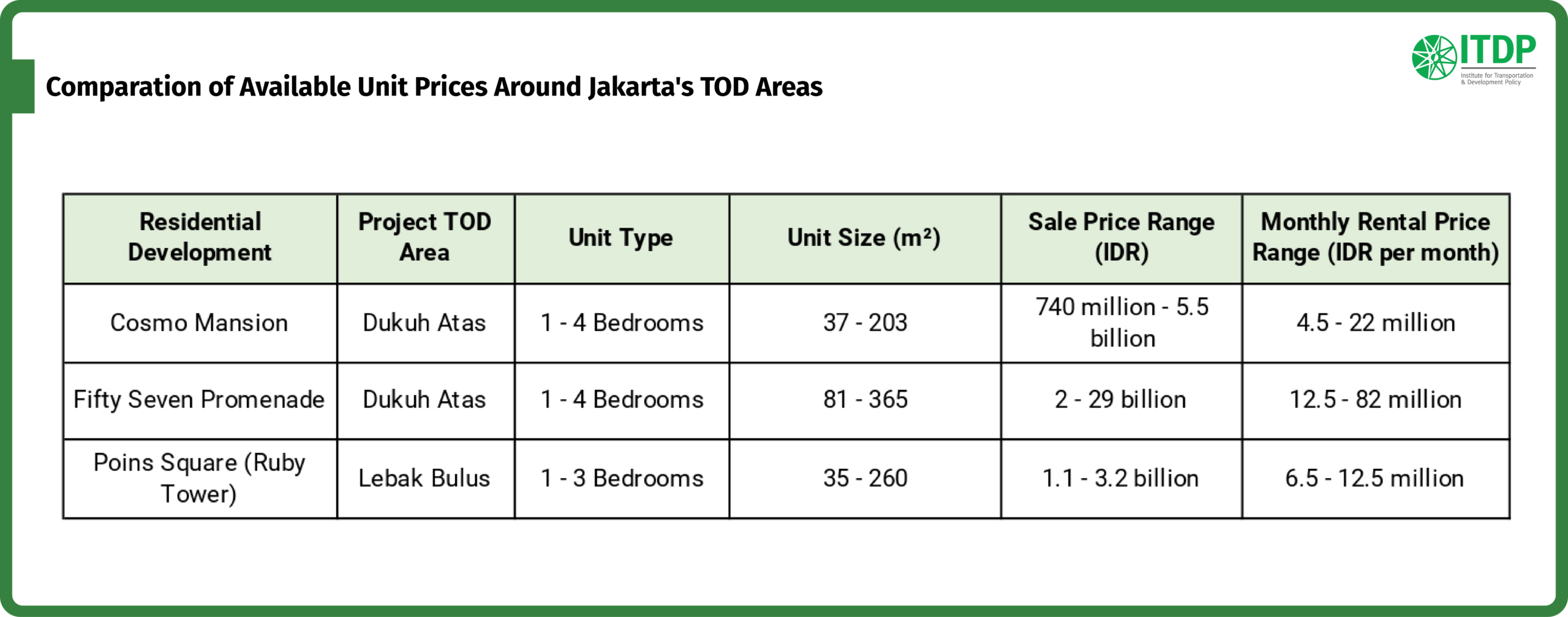
From a housing perspective, however, implementation on the ground has yet to fully ensure the availability of affordable housing as mandated by regulation. Several examples of vertical housing within TOD areas, along with their unit prices7, are presented below.
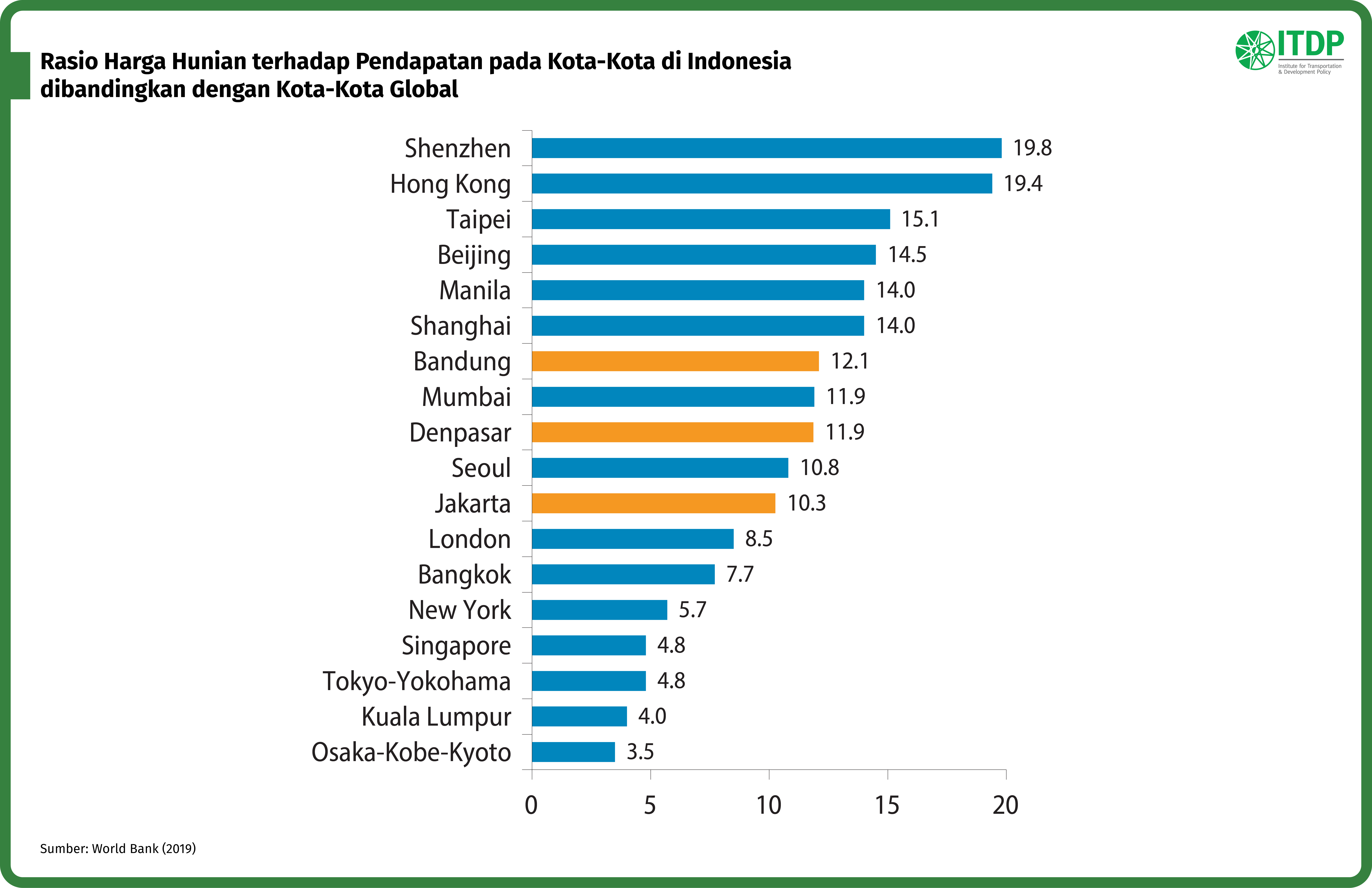
When measured against the World Bank’s Price-to-Income Ratio (PIR)8, which compares median property prices with median annual household income, Jakarta, Bandung, and Denpasar have higher PIRs than London, New York, Singapore, and Tokyo (see Figure 2). The graph shows that housing prices in Jakarta can reach 10.3 times the average annual household income.
Housing affordability is also reflected in households’ ability to purchase homes: only 20% of households in Indonesia can afford commercial housing8, while 40% of middle-income households still require government subsidies to afford homeownership. In the Dukuh Atas TOD area, gentrification has driven land and building prices up by an average of 50.94% between 2018 and 20239.
These conditions indicate that housing in TOD areas remains far from affordable for many people. This, in turn, reinforces the public perception of TOD as a premium, centrally located residential area. As a result, stations in Jakarta’s surrounding areas, where land prices are lower, have increasingly been labelled as “TOD” areas. Development has focused on selling relatively affordable commercial housing based on its proximity to, or direct connection with, station land.
Yet these so-called “TOD housing” developments often overlook the definition of a neighbourhood and other TOD principles. For example, they may fail to address the need for people to live close to urban services, which can reduce the distance and time required for daily travel. Such approaches risk undermining the Mix and Compact principles of the TOD Standard 3.0.
Until the government establishes a concrete strategy for providing affordable housing within TOD areas, gaps in creating truly integrated TOD neighbourhoods will persist, accompanied by issues such as low-density development and gentrification.
Jakarta’s experience demonstrates that regulations and physical development around transport nodes are not sufficient to create well-implemented TOD areas, even after nearly a decade of regulatory development. TOD implementation therefore requires a more comprehensive approach—not only regulating transport nodes and development around them, but also ensuring housing affordability and connectivity across the wider neighbourhood.
Looking Beyond Jakarta: TOD in Other Cities
Jakarta’s experience becomes increasingly relevant as the Central Java Provincial Government begins promoting TOD implementation across the Kedungsepur Metropolitan Area—Kendal, Demak, Ungaran, Salatiga, Semarang, and Purwodadi—including through the development of the Tawang–Weleri–Batang corridor. TOD planning for Semarang and its surrounding areas is already reflected in regulations at the national10, provincial11, and municipal levels12, with TOD activities able to take place at railway stations and bus terminals.
For Semarang, the provincial government’s planned interventions include integrating commuter rail, Trans Jateng, and other feeder services at Tawang Station; extending commuter services to Weleri–Batang; developing new Trans Jateng routes with inter-regional integration13; and electrifying the Trans Jateng fleet14.
Looking at the current TOD plans for Semarang, the proposed interventions appear to remain largely focused on connectivity and mobility within the station area15. Yet, based on TOD radius requirements, a TOD area should extend up to 800 metres from the primary station node16. TOD development, therefore, should go beyond simply improving the environment within the station premises.
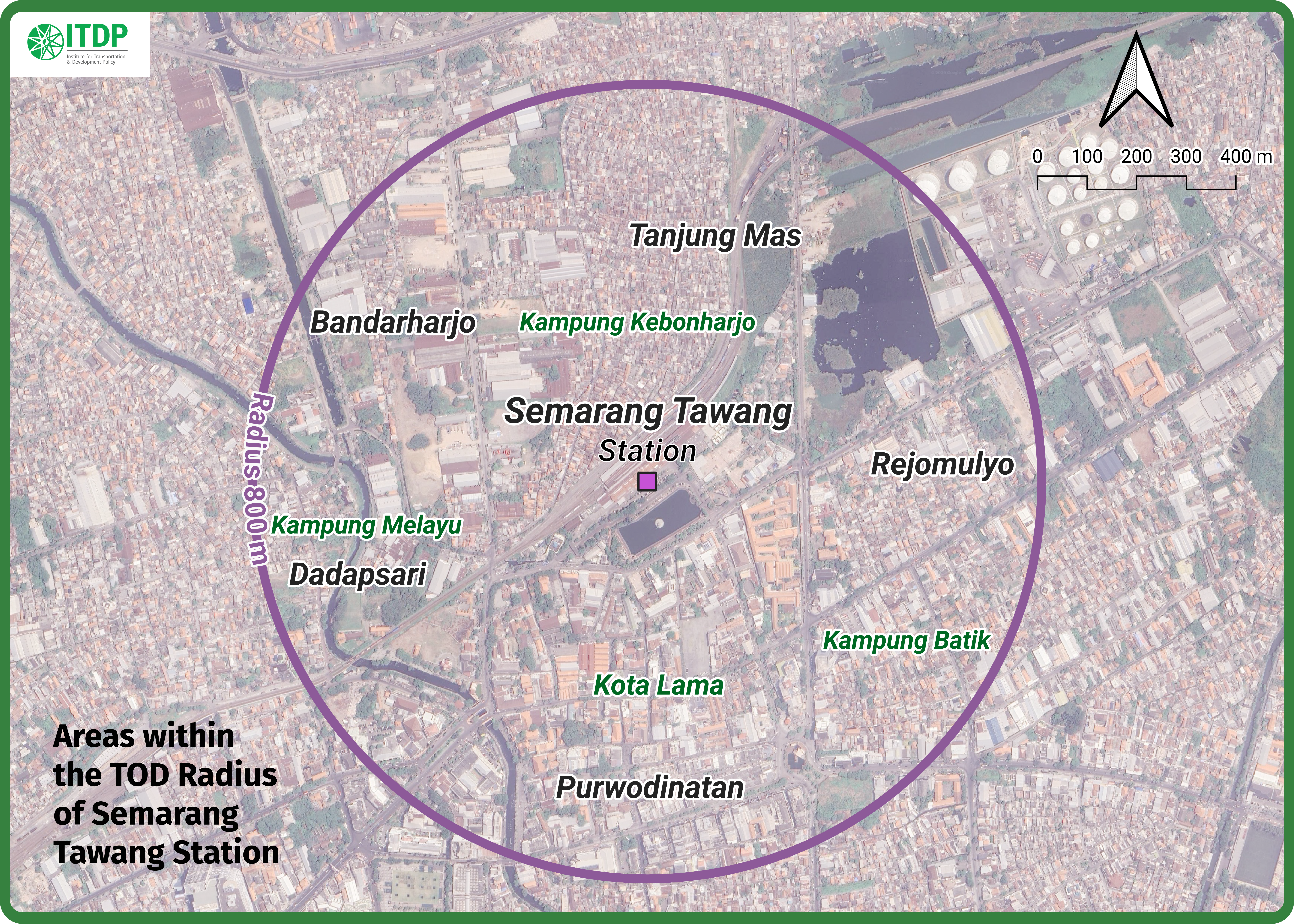
The area within this radius also encompasses Semarang Old Town, neighbourhoods such as Kampung Kebonharjo, Kampung Melayu Dadapsari, and Kampung Batik Rejomulyo, as well as warehouse areas supporting Tanjung Mas Port (see Figure 3). The presence of existing heritage areas means that the TOD approach at Tawang Station differs from that of Jakarta. Its development should therefore focus on integrating the transport system and improving accessibility across existing neighbourhoods, while safeguarding their affordability and identity.
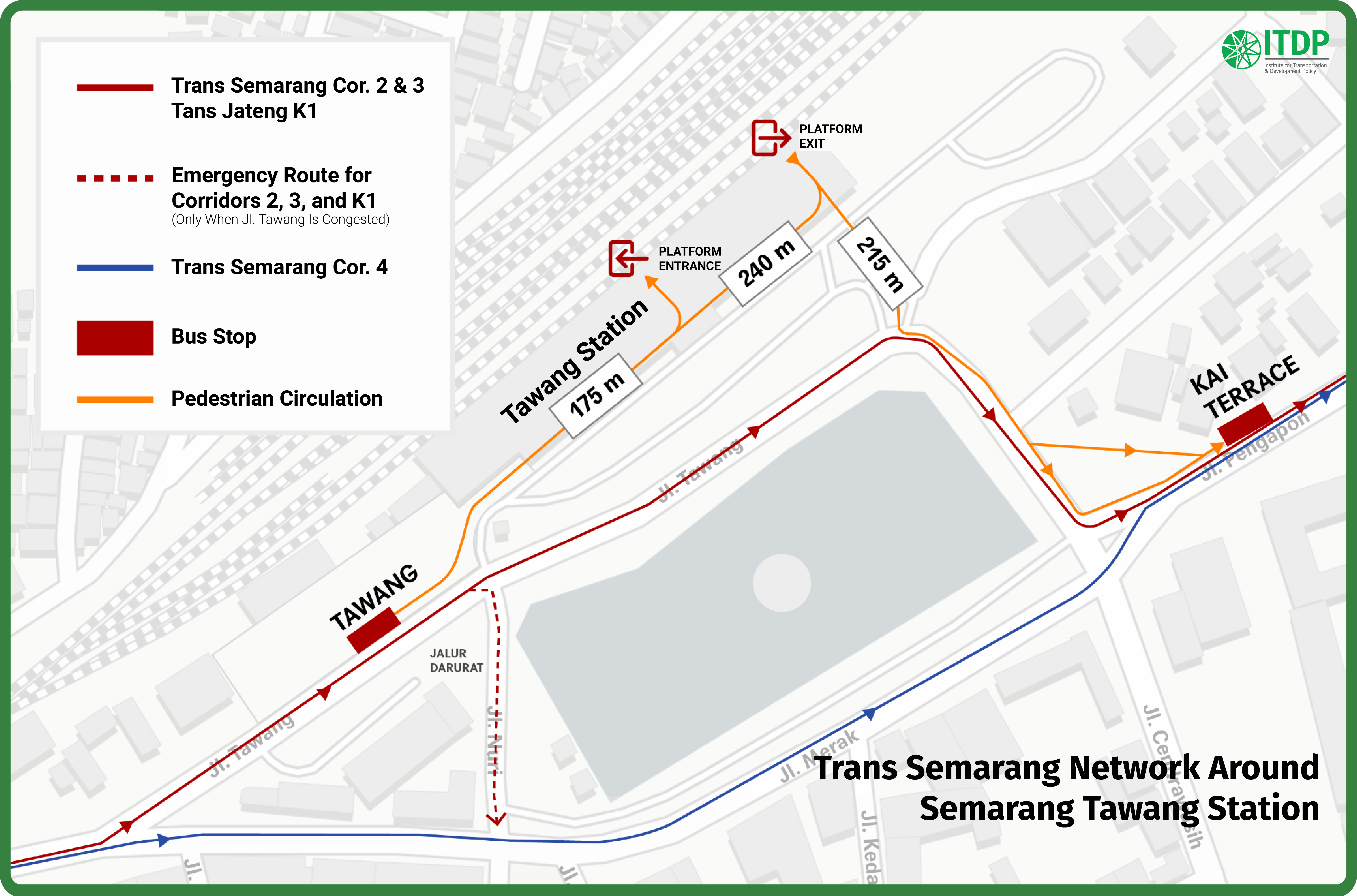
From a mobility perspective within the station area, ITDP has previously highlighted challenges related to mobility around the station17, including the limited accessibility of the two Trans Semarang and Trans Jateng stops due to their locations (see Figure 4). Accessibility to the station site has since become a key consideration in the government’s plans to improve Semarang Tawang Station.
ITDP’s study also identified limited connectivity between Semarang Tawang Station, Semarang Old Town, existing public transport services, and surrounding neighbourhoods. Within the Old Town area, pedestrian spaces remain inadequate, speed management interventions are limited, and the location and access to public transport stops are generally poorly positioned and insufficiently inclusive18,19.
These conditions demonstrate that transport integration needs to move beyond integration within the station site towards neighbourhood-scale integration. This is particularly important given Tawang Station’s potential to serve as an area-wide integration hub, alongside Semarang Old Town’s existing role in encouraging active mobility within the area. ITDP’s recommendations for Semarang emphasise that this potential integration hub should be supported by connections that allow residents to reach the node and continue their journeys to surrounding neighbourhoods, tourist destinations, activity centres, and public services by walking, cycling, public transport, and micromobility—without relying on private motorised vehicles20.
Planning for TOD at Tawang shares important mobility considerations with Jakarta, but must be adapted to its context as a heritage area. Improving connectivity across the existing built-up area can therefore become a critical component of TOD implementation. Public transport, together with feeder services and first- and last-mile connections, can strengthen the station’s role as a transfer hub while improving accessibility across the wider area.
However, improving accessibility is not only about people’s ability to reach an area. It is also about their ability to remain in the area and benefit from its development.
From a housing perspective, Semarang already has instruments to support improvements in the quality and density of residential areas, ranging from guidance for vertical housing development21, affordable housing programmes22, and informal settlement upgrading23 to self-help housing improvement assistance24. Yet, as with Jakarta, the government’s planned interventions for Tawang TOD do not currently include concrete action plans to address and improve housing conditions within the potential TOD area.
This is significant because improved mobility can increase an area’s attractiveness and, in turn, its value. At the same time, better-connected heritage areas can become an additional asset for a potential TOD area. However, a mobility-led approach cannot stand alone. It must be accompanied by comprehensive strategies and protections for existing housing to prevent gentrification.
Evidence of gentrification in Jakarta provides an important lesson for strengthening the housing dimension of TOD. Existing housing policies can be integrated with other policies to support ideal TOD development, including through creative approaches tailored to already-built-up areas. Housing provision and neighbourhood intensification, for example, can be pursued through upgrading existing settlements, protecting housing affordability, reviewing heritage-related regulations, and utilising existing national instruments for vertical land provision and land consolidation.
These approaches would allow Tawang’s TOD area to develop an identity of its own while ensuring that surrounding communities remain part of the area’s development and benefit from TOD implementation.
Standardising the Principles, Not the Form
Looking at both mobility and housing, a common thread emerges: TOD planning in Semarang has so far focused on detailed interventions within the station site, without extending sufficiently into the wider neighbourhood. Yet Semarang already has existing regulations, valuable neighbourhood assets, and a range of recommendations that could be brought together as part of a broader TOD development strategy. Jakarta, meanwhile, has translated TOD principles into more specific development directions, supported by dedicated policies and institutions, although implementation on the ground remains far from ideal.
The experiences of Jakarta and Semarang demonstrate that TOD in Indonesia cannot be implemented through a one-size-fits-all approach. What is needed instead is a shared set of foundational principles to guide planning. These principles should ensure that TOD remains aligned with its original objectives, while allowing the form and implementation process to respond to the characteristics of each city.
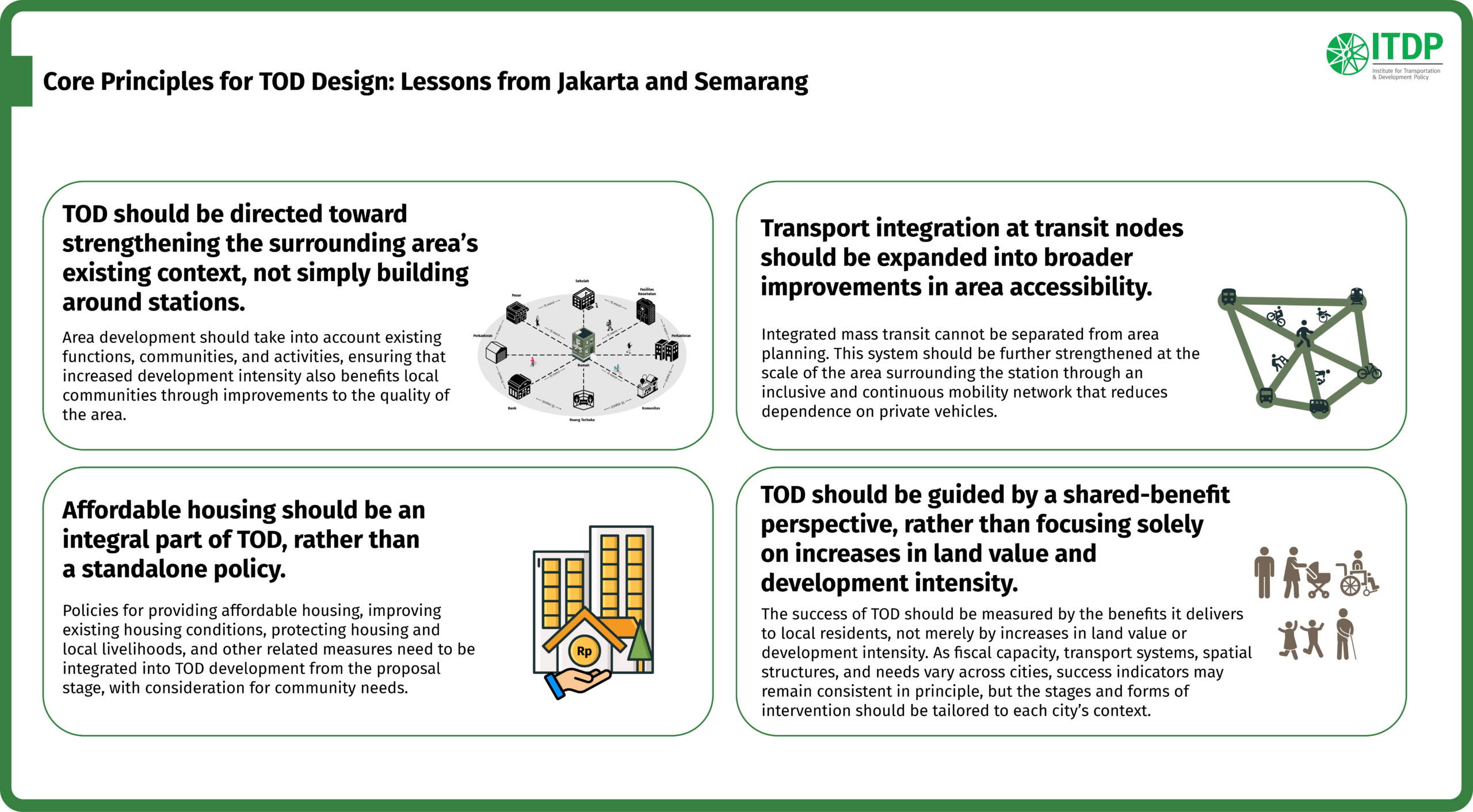
With these principles, Jakarta can serve as a reference without becoming a blueprint for developing TOD regulatory and institutional frameworks. Semarang, meanwhile, offers lessons on how these principles can be applied in an established area with different characteristics and needs.
By returning to the fundamental principles of TOD, metropolitan and secondary cities alike can develop approaches suited to their own contexts while ensuring that public transport, housing, and urban development reinforce one another and deliver broader benefits for communities.
Reference:
- ITDP. 2017. TOD Standard 3.0. New York: ITDP.
- Jakarta Governor Regulation No. 67 of 2019.
- Jakarta Governor Regulation No. 50 of 2021.
- Jakarta Governor Regulation No. 31 of 2022.
- Jakarta Governor Regulations No. 55, 56, 57, 99, and 107 of 2020 (subsequently revoked by Jakarta Governor Regulation No. 50 of 2021).
- Zaki, M. F. 2026. Transjakarta Passenger Numbers Average 1.4 Million per Day. https://www.tempo.co/ekonomi/penumpang-transjakarta-rata-rata-1-4-juta-orang-per-hari-2108367 (accessed 14 August 2026).
- Unit sale and rental prices are based on observations of property listings on rumah123.com (accessed 12 August 2026). Sale prices and unit availability are subject to change.
- World Bank. 2019. Time to ACT: Realizing Indonesia’s Urban Potential. World Bank. DOI: 10.1596/978-1-4648-1389-4.
- World Bank. 2016. National Affordable Housing Program. World Bank PID.
- Br Hutabarat, F. R., Savitri, T. N., Ningmas, T. A., Nurdiawan, R., Al-Fatih, S. M., & Swasto, D. F. (2024). Kawasan Transit Oriented Development (KBT) Dukuh Atas terhadap perubahan harga lahan di DKI Jakarta berdasarkan pendekatan keruangan [The Impact of the Dukuh Atas Transit-Oriented Development (TOD) Area on Land Prices in Jakarta Based on a Spatial Approach]. Jurnal Pembangunan Wilayah dan Kota, 20(4), 575–587. https://doi.org/10.14710/pwk.v20i4.58844
- Presidential Regulation No. 60 of 2022 on the Spatial Plan for the Kedungsepur Urban Area as a National Strategic Area.
- Central Java Provincial Regulation No. 8 of 2024 on the 2024–2044 Spatial Plan of Central Java Province.
- Semarang City Regional Regulation No. 5 of 2021 on the 2021–2035 Spatial Plan of Semarang City.
- Central Java Provincial Development Planning Agency (Bappeda). 2026. Central Java Promotes the Implementation of Transit-Oriented Development (TOD) to Strengthen the Semarang–Weleri–Batang Growth Corridor. https://bappeda.jatengprov.go.id/jawa-tengah-dorong-implementasi-transit-oriented-development-todKBT-untuk-perkuat-koridor-pertumbuhan-semarang-weleri-batang/ (accessed 13 August 2026).
- Central Java Provincial Development Planning Agency (Bappeda). 2026. Central Java Promotes Greenhouse Gas Emission Reductions through the Development of Urban Agglomeration Public Transport. https://bappeda.jatengprov.go.id/jawa-tengah-mendorong-penurunan-emisi-gas-rumah-kaca-melalui-pengembangan-angkutan-umum-aglomerasi-perkotaan/ (accessed 14 August 2026).
- Minister of Agrarian Affairs and Spatial Planning/Head of the National Land Agency Regulation No. 16 of 2017 on Guidelines for Transit-Oriented Development.
- ITDP Indonesia. 2023. Improving Connectivity and Accessibility in Semarang’s Old Town Area. https://itdp-indonesia.org/publication/peningkatan-konektivitas-dan-aksesibilitas-kawasan-kota-lama-semarang/
- ITDP Indonesia. 2022. Inclusive Mobility Recommendations for Semarang. https://itdp-indonesia.org/publication/rekomendasi-mobilitas-inklusif-kota-semarang/
- ITDP Indonesia. 2023. Technical Guidelines for Planning and Developing Bike-Sharing Services in Semarang. https://itdp-indonesia.org/publication/panduan-teknis-pengembangan-layanan-sepeda-sewa-di-kota-semarang/
- ITDP Indonesia. 2025. Developing Green Corridors in Semarang. https://itdp-indonesia.org/publication/pengembangan-koridor-hijau-kota-semarang/
- Semarang City Regional Regulation No. 7 of 2024 on the 2025–2045 Regional Long-Term Development Plan of Semarang City.
- Semarang City Regional Regulation No. 10 of 2024 on the Provision of Housing and Residential Areas.
- Semarang Mayor Regulation No. 19 of 2023 on the 2022–2026 Plan for the Prevention and Improvement of the Quality of Slum Housing and Settlements.
- Ministry of Housing and Settlement Areas. BSPS Beneficiaries. https://pkp.go.id/cek-penerima-bsps (accessed 9 August 2026).