
November 24, 2026
Unlocking E-Bus Investment Across the Global South: Lessons from Indonesia and Africa
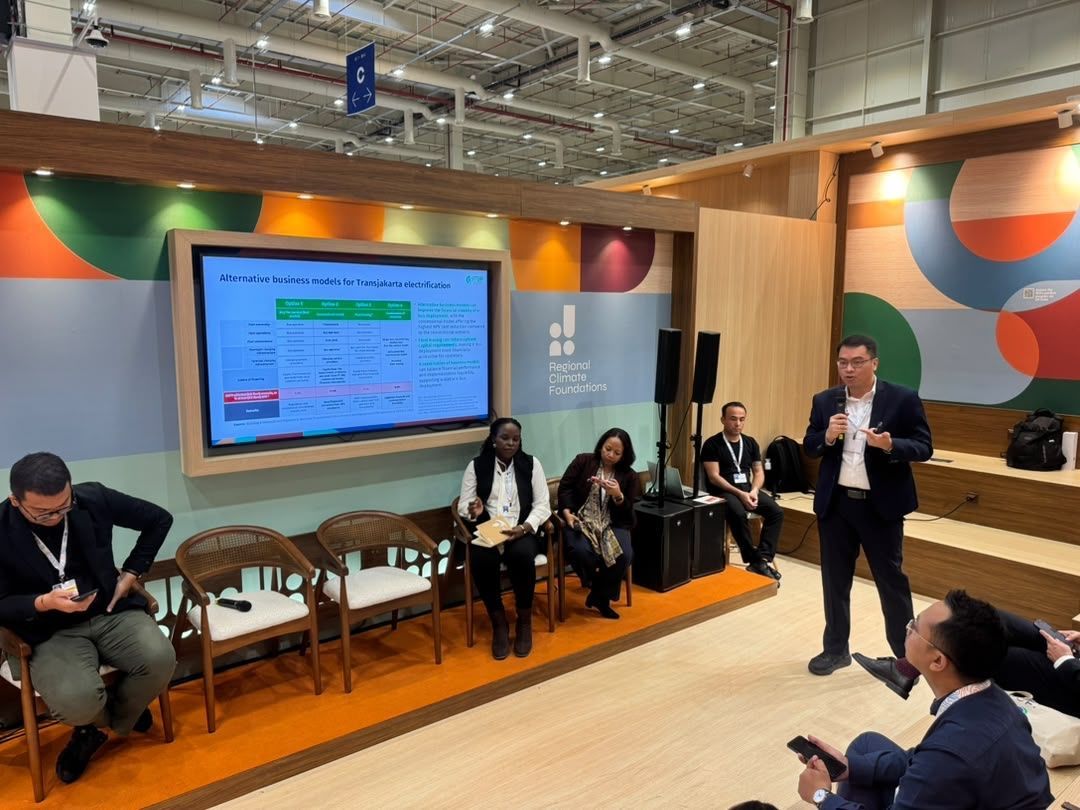
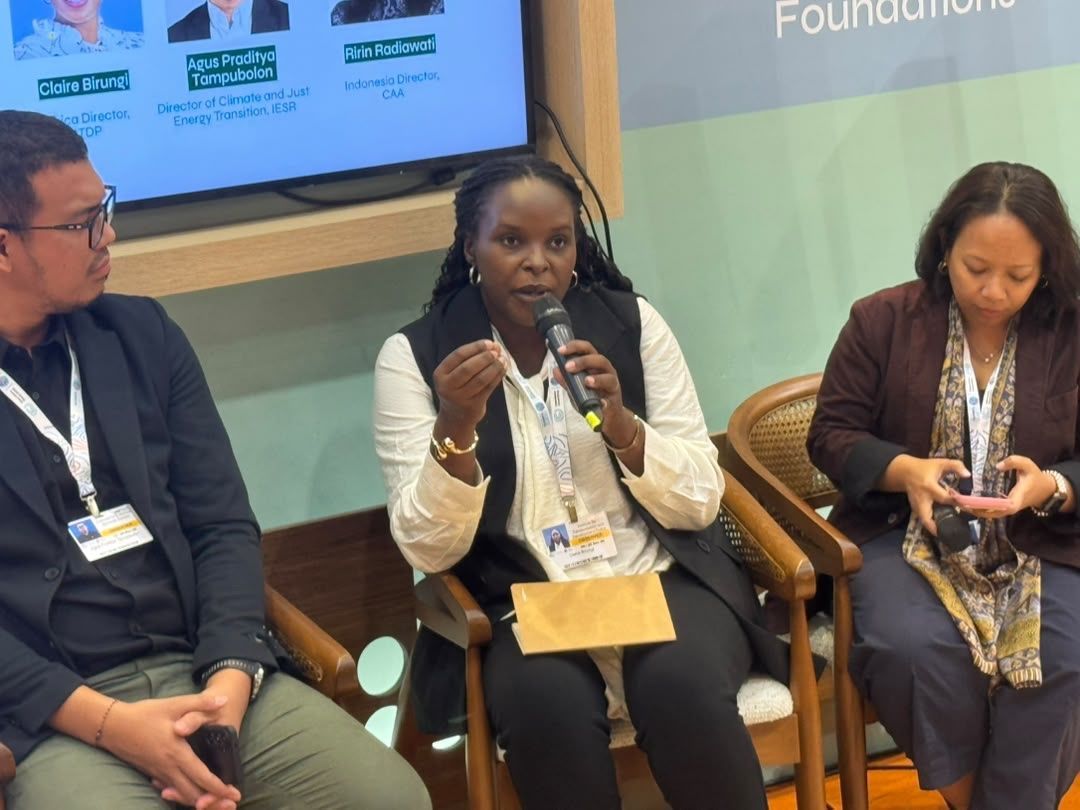
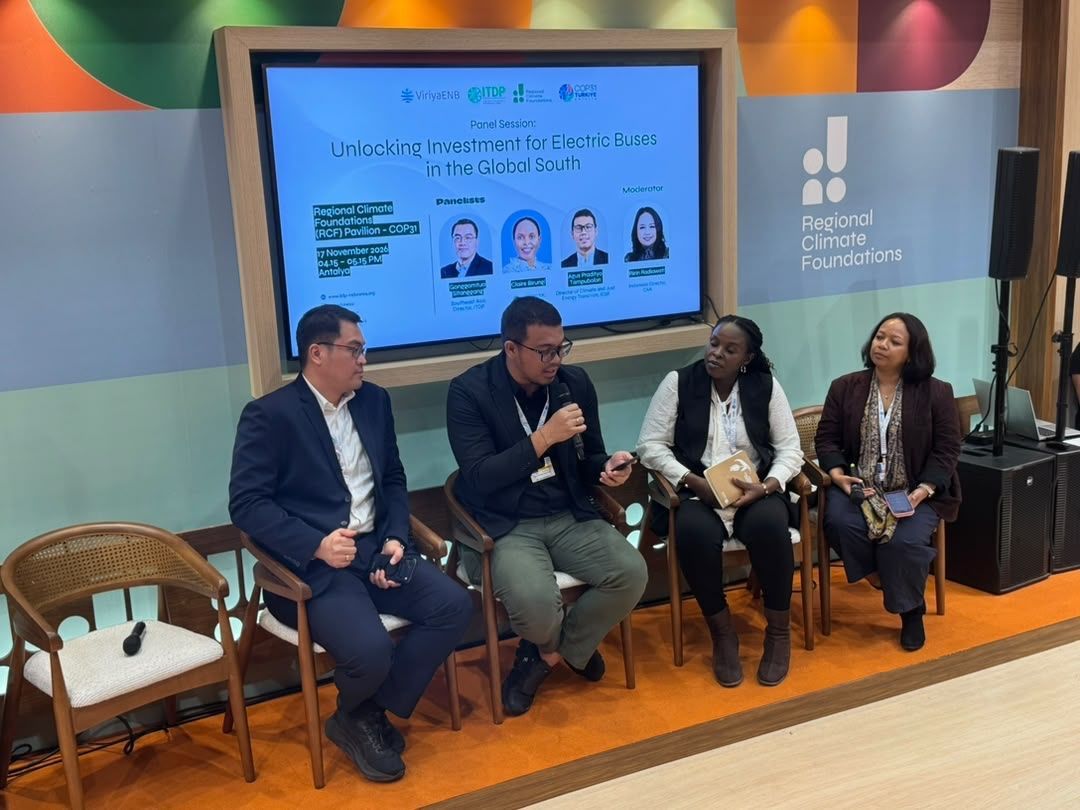
At COP31 in Antalya, Türkiye, transport and climate leaders gathered at the Regional Climate Foundations (RCF) Pavilion to tackle a pressing question for emerging economies: how to turn electric bus investments into a bankable and financially feasible reality. The discussion featured ITDP Southeast Asia Director, Gonggomtua Sitanggang; ITDP Africa Program Director, Claire Birungi; and IESR Director of Climate and Just Energy Transition, Agus Praditya Tampubolon. Moderated by Clean Air Asia’s Indonesian Director, Ririn Radiawati, the session brought together perspectives from Southeast Asia and Africa to explore financing, governance, and energy security in the field of fleet electrification for cities in the Global South.
Gonggomtua Sitanggang shared Indonesia’s ambitions toward 100% urban public transport electrification by 2045. With 588 electric buses already operating across seven Indonesian cities, including Jakarta, Medan, Semarang, and Denpasar, and pilot projects underway in other cities, Indonesia is exploring different financing and business models for electric bus deployment. For Transjakarta, these include Buy-the-Service, fleet leasing, concessional financing, and blended approaches to overcome high upfront costs and accelerate electrification.
In conjunction with these financing mixes, is the parallel need to develop a comprehensive policy and regulatory framework that emphasizes clear mandates, targets, incentive schemes, and technical guidelines. These instruments form a policy mix that could provide certainty for city governments, private sector actors, and multilateral development banks (MDBs). This regulatory clarity is essential to unlocking financing for the electric bus transition, which in turn generates broad economic and social co-benefits, including greenhouse gas (GHG) reductions, job creation, cleaner air, and lower healthcare and transport costs.
Sharing lessons from across the continent, Claire Birungi spotlighted Ethiopia’s rapid e-mobility push, Rwanda’s institutional management model through Ecofleet, and Senegal’s electric Bus Rapid Transit (BRT) rollout in Dakar. Her core takeaway lies in that capital alone cannot scale zero-emission fleets without strong public institutions, clear regulatory mandates, and coordinated implementation.
Meanhwhile, Agus Praditya Tampubolon connected fleet electrification directly to national energy resilience. Drawing on Indonesia’s fossil fuel subsidy arrangements, he highlighted the importance of directing public resources toward more sustainable transport options.
As COP31 elevates global electrification and launches the UN Decade of Sustainable Transport, South-South peer exchange proves essential in continuing the discussion on how these forms of sustainable investment, paired with innovative finance and institutional readiness is how cities across the Global South can deliver cleaner air, lower emissions, and resilient mobility.