July 27, 2026
ITDP Indonesia and the Ministry of Transportation Foster Cross-Ministerial Collaboration on Electric Bus Policy
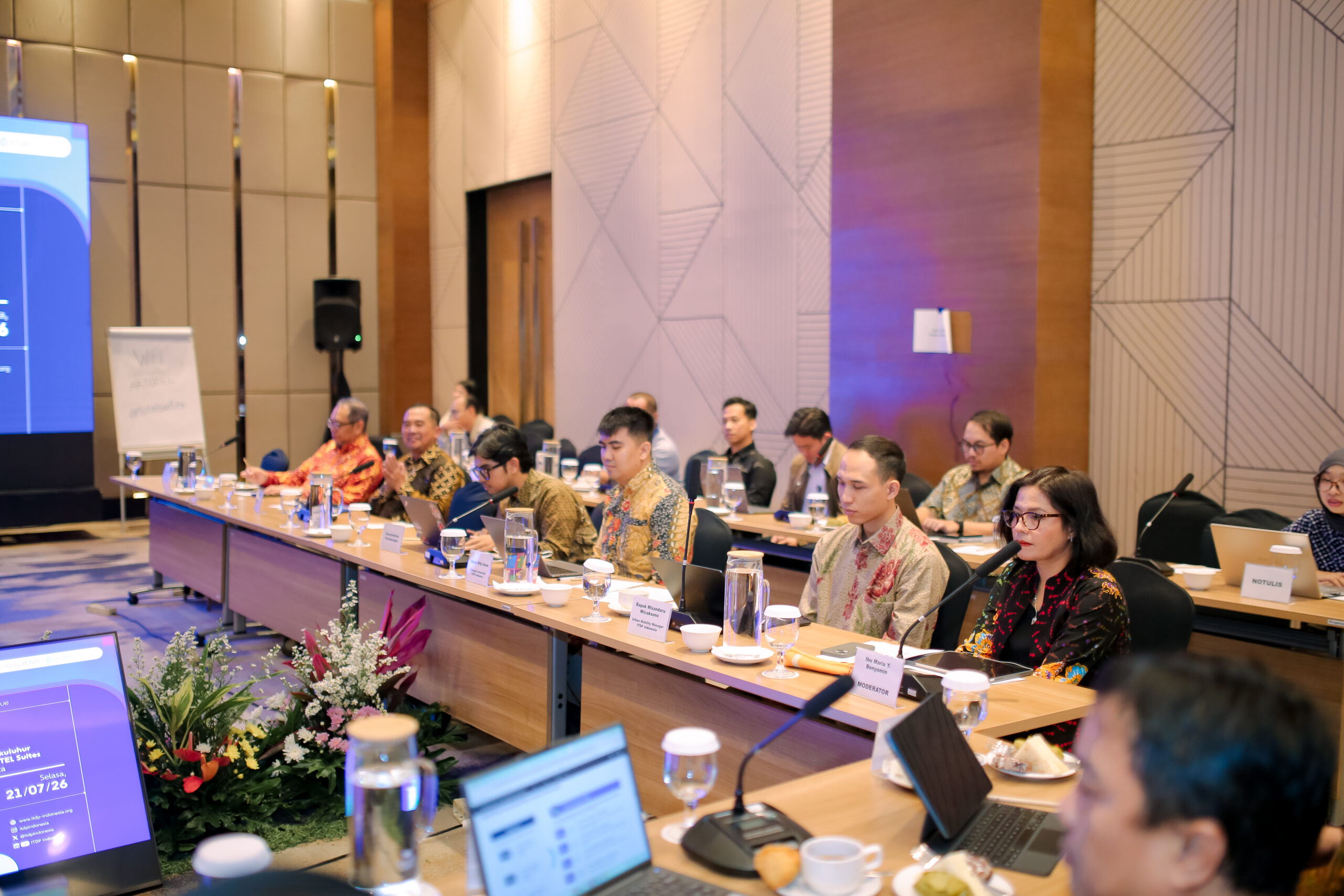
On Tuesday, July 22, 2026, Indonesia’s Ministry of Transportation (MoT), in collaboration with ITDP Indonesia, convened an interministerial dialogue titled “Developing the Legal Framework and Action Plan for the Adoption of Electric Buses in Urban Public Transport in Indonesia.” Held in Jakarta, the forum brought together representatives from the Coordinating Ministry for Infrastructure and Regional Development, the Coordinating Ministry for Economic Affairs, the Ministry of Finance, the Ministry of National Development Planning (Bappenas), the Ministry of Energy and Mineral Resources, the Ministry of Industry, the Ministry of Home Affairs, and Perum DAMRI to align on national targets, the legal framework, and a coordinated action plan to accelerate the electrification of urban public transport fleets.
The dialogue served as a platform to develop solutions to key transportation challenges identified as priorities under Indonesia’s 2025–2029 National Medium-Term Development Plan (RPJMN). These challenges include the high cost of transportation, which accounts for 16–24% of household expenditure (Statistics Indonesia/BPS, 2023), as well as the transport sector’s significant contribution to greenhouse gas emissions, with road transport responsible for nearly 90% of the sector’s total emissions.
Accelerating the development of urban public transport systems and scaling up the adoption of electric buses are strategic solutions to address these challenges. However, the adoption of electric buses remains below 10% of the national urban bus fleet (ITDP, 2025), well short of the government’s target of 90% electrification as outlined in the E-Mobility Plan (Ministry of Transportation, 2020).
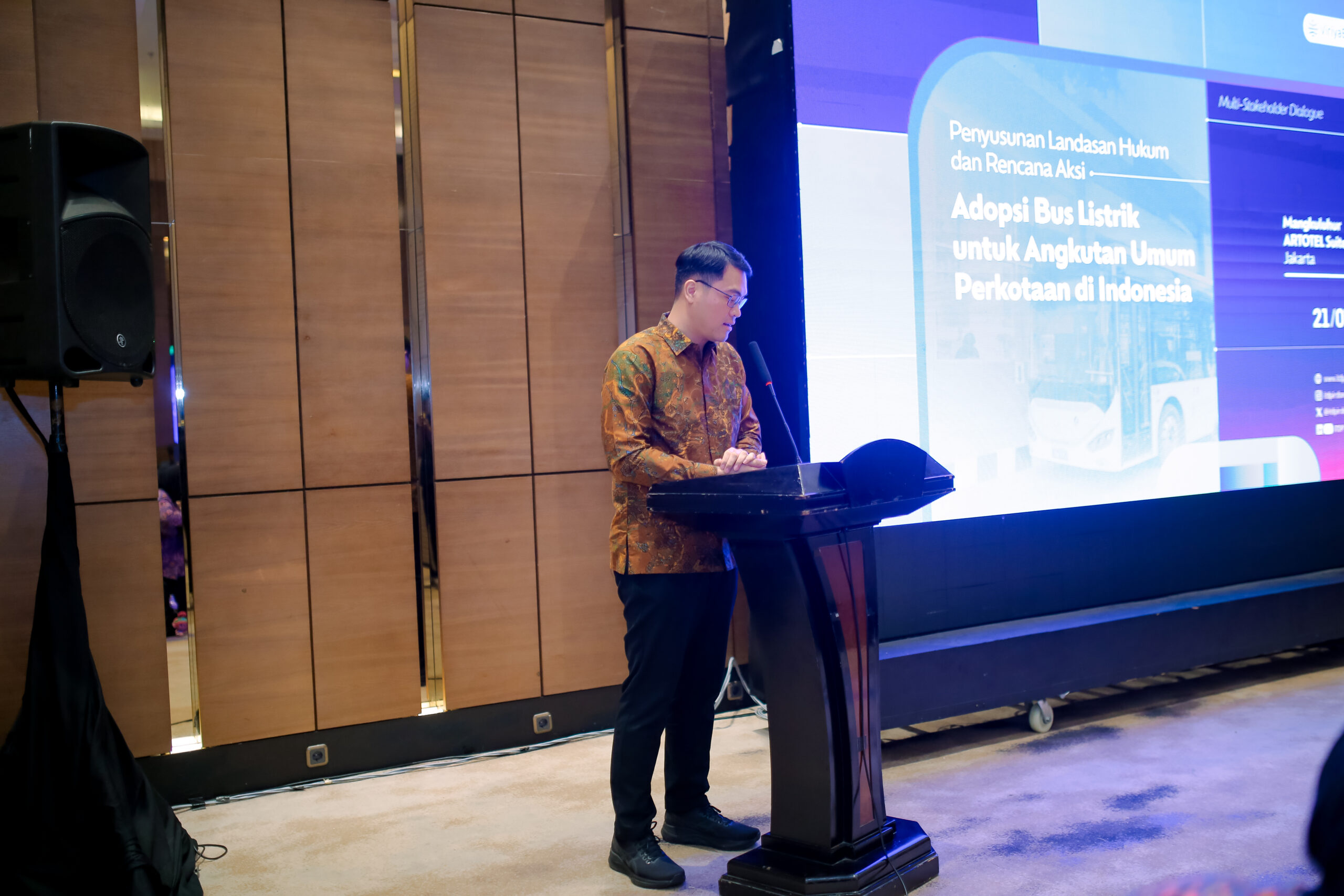
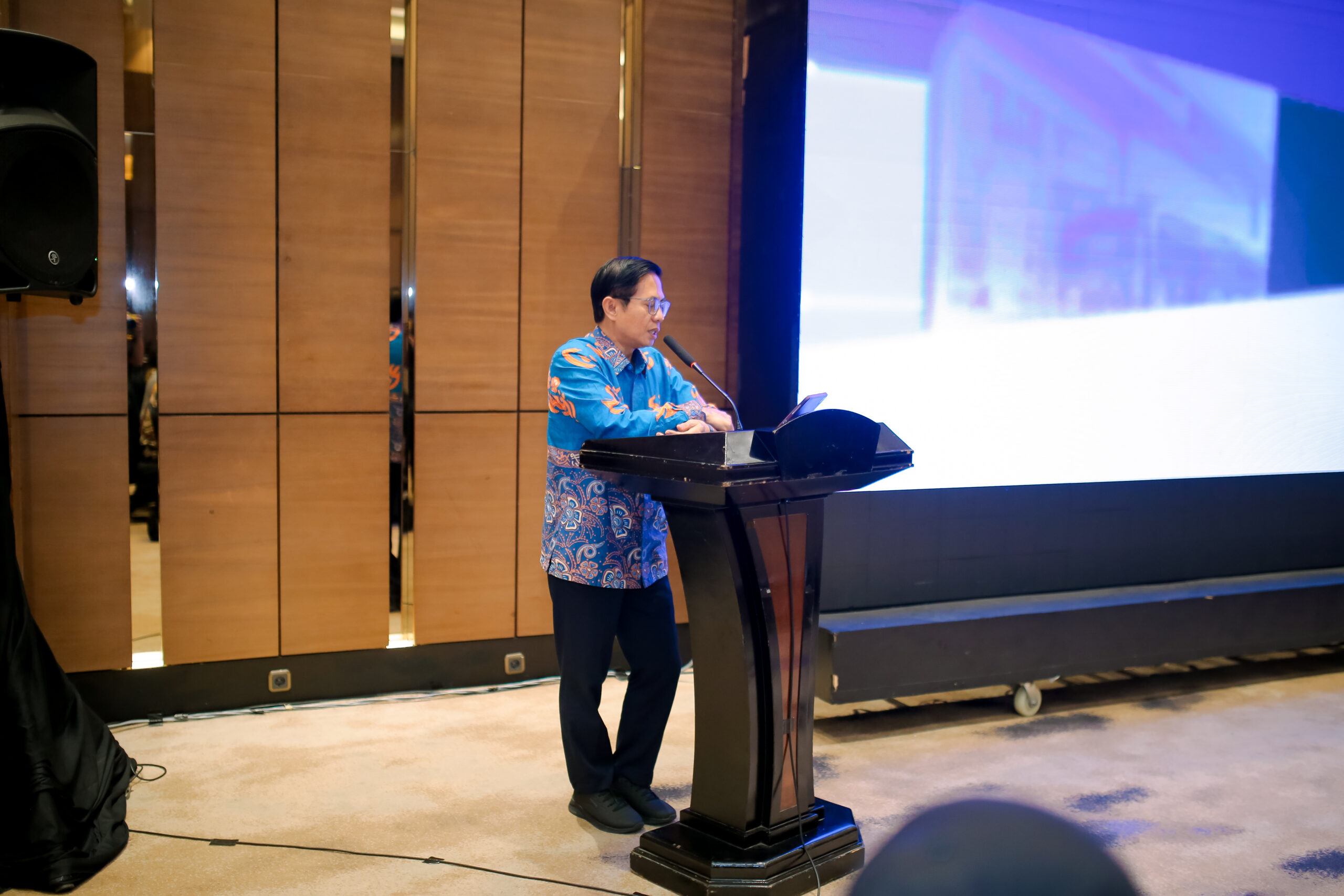
In his opening remarks, Dr. Muiz Thohir, Director of Road Transport, speaking on behalf of Aan Suhanan, Director General of Land Transportation at the Ministry of Transportation, emphasized that the electrification of urban public transport is a critical strategy for advancing Indonesia’s transportation sector.
“However, the successful adoption of electric buses requires a strong regulatory framework, sustainable financing mechanisms, adequate charging infrastructure, and a robust domestic manufacturing industry,” he said.
Dr. Muiz expressed hope that the dialogue would produce actionable policy recommendations that can be implemented in the future. He noted that achieving this goal will require alignment on national targets and the strategic direction for electric bus deployment, a clear division of roles and responsibilities among ministries and agencies, and concrete follow-up actions.
ITDP Indonesia Southeast Asia Director Gonggomtua Sitanggang echoed the Ministry’s remarks, emphasizing that the success of public transport electrification depends on more than technological advancements alone.
“The successful electrification of public transport is determined not only by technology, but also by coherent policies, strong institutional capacity, effective coordination among stakeholders, and sustainable financing models. The challenge is no longer deciding on the direction—we know where we need to go. The priority now is ensuring that all enabling elements move in sync and are supported by a strong regulatory framework,” he said.
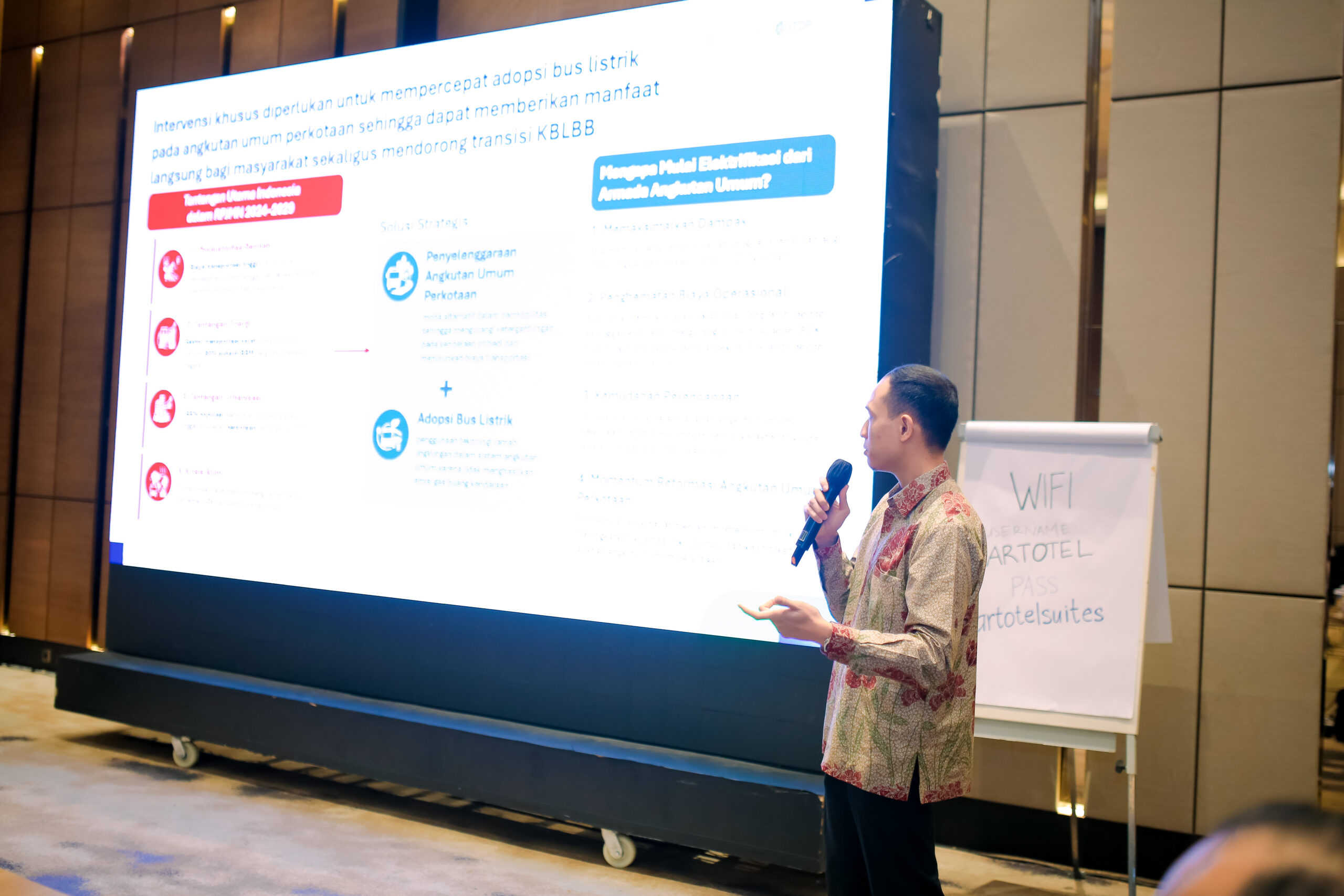
Forum Reaches Consensus on Policy Direction and Next Steps for Accelerating Electric Bus Adoption
The forum concluded with consensus on several key priorities to accelerate the adoption of electric buses in Indonesia’s urban public transport system.
First, participants agreed that a Presidential Regulation should serve as the initial legal framework to establish national electrification targets, define the roles and responsibilities of ministries and agencies, local governments, public transport operators, and electric bus providers, and strengthen cross-sector coordination.
Second, participants agreed that the proposed adoption targets should be further refined through optimistic, moderate, and conservative implementation scenarios. They also emphasized the need to strengthen the roadmap’s economic and fiscal narrative by highlighting the benefits of lower operating costs, reduced fuel subsidy expenditures, lower greenhouse gas emissions, and the growth of Indonesia’s domestic electric vehicle industry.
The forum also identified several issues requiring further discussion, including cross-sector coordination mechanisms, the designation of a lead implementing agency, the allocation of responsibilities among relevant institutions, and consultation with local governments.
The agreed priorities will be translated into a comprehensive action plan outlining the roles and responsibilities of each stakeholder, implementation milestones, designated lead agencies, and monitoring and evaluation mechanisms to support the accelerated deployment of electric buses nationwide.
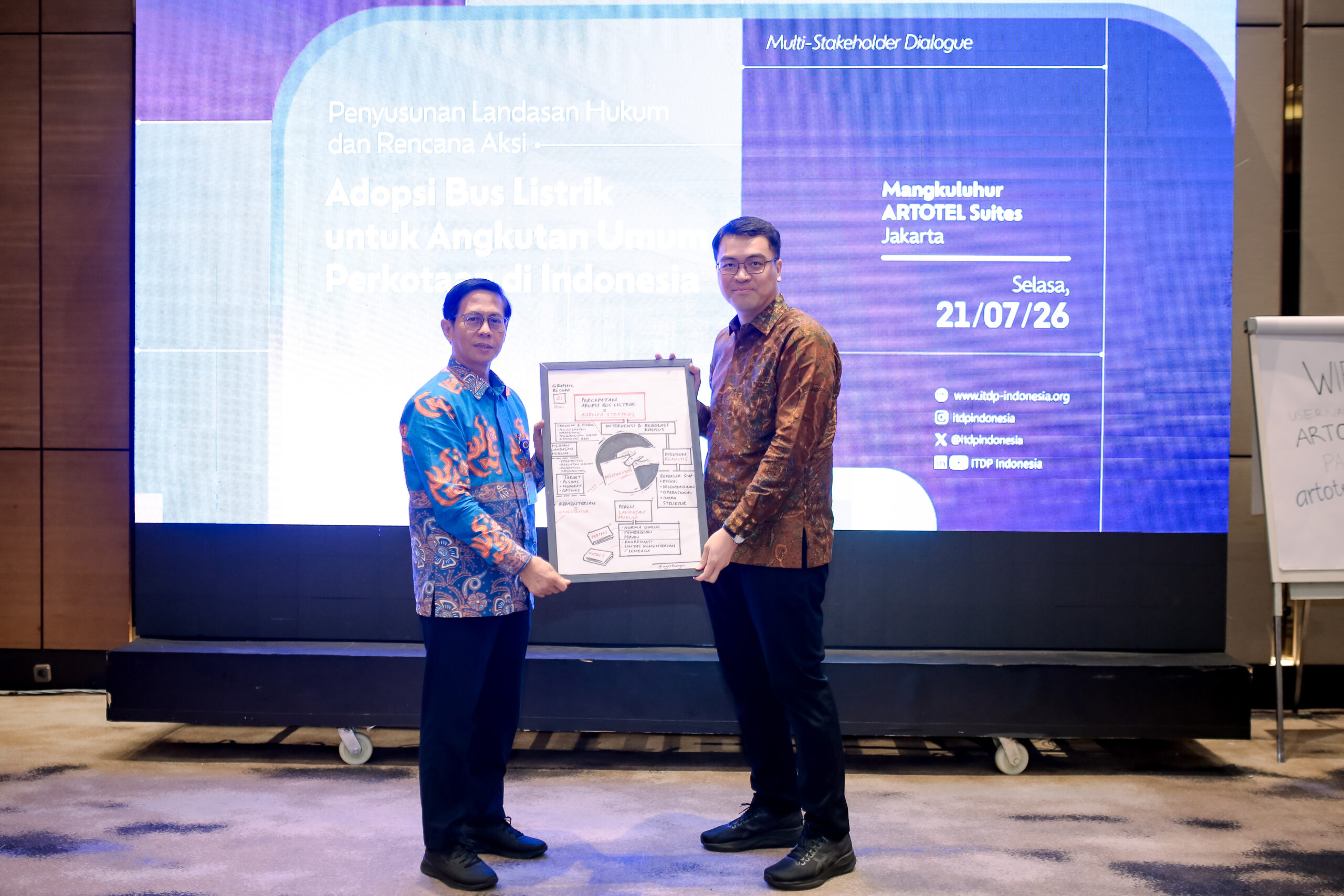
The event concluded with the presentation of a graphic recording created live by Agah Nugraha Muharam throughout the dialogue. The artwork was formally presented by Gonggomtua to Dr. Muiz as a visual summary of the forum’s key discussions and outcomes.