November 05, 2026
ITDP Indonesia Launches E-Bus Hub, a Platform to Support Accelerated Bus Electrification in Indonesia
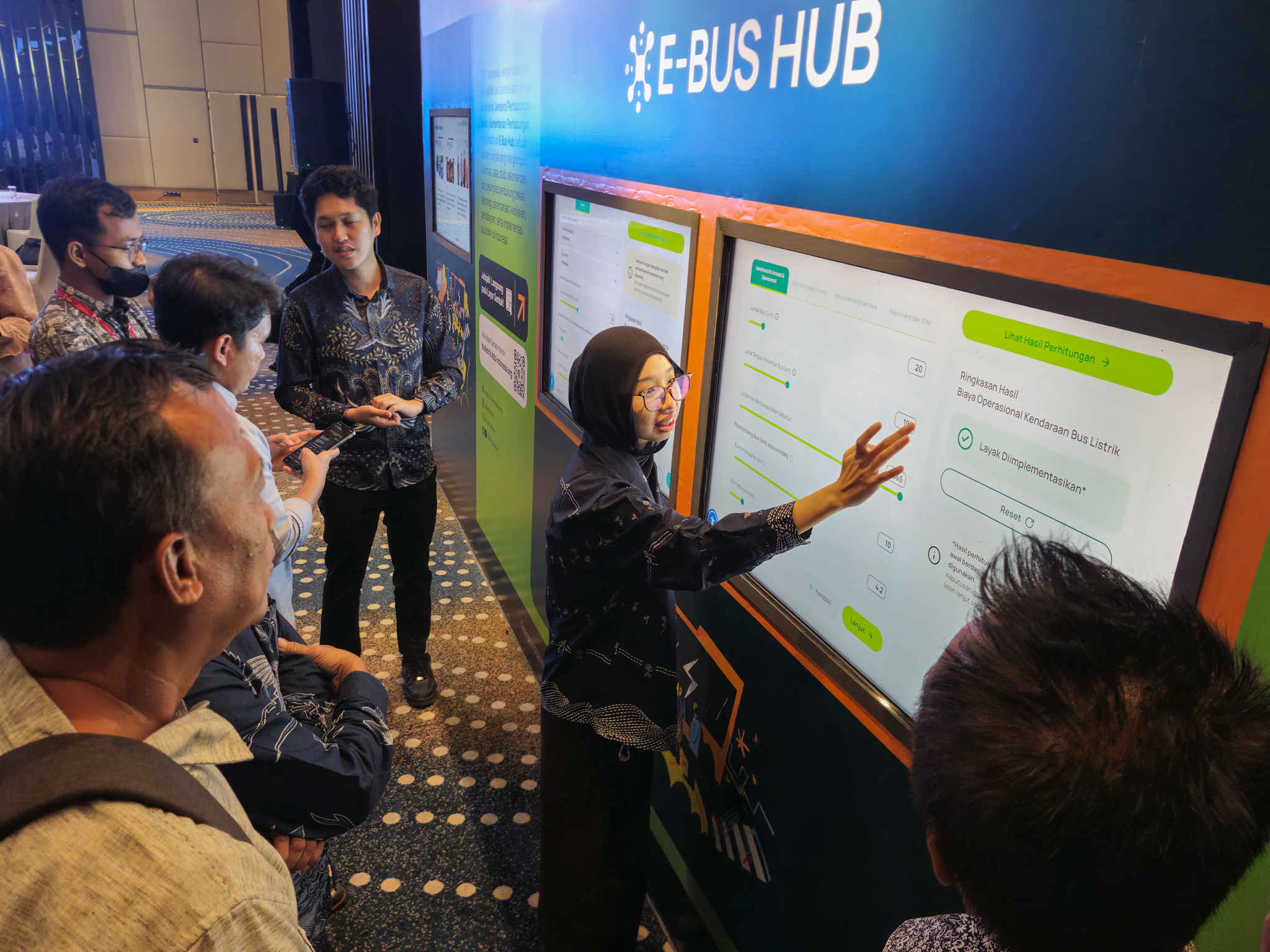
Accelerating the electrification of urban public transport requires more than simply procuring electric buses. Local governments and operators must also prepare various supporting aspects, ranging from service and route readiness to charging infrastructure, investment requirements, and operational costs. To support this process, the Institute for Transportation and Development Policy (ITDP) Indonesia, with support from ViriyaENB and in collaboration with the Ministry of Transportation of the Republic of Indonesia, has launched E-Bus Hub, a platform providing information, data, references, and planning tools to support bus electrification in Indonesia.
The launch of E-Bus Hub marks an effort to strengthen Indonesia’s knowledge and planning ecosystem for bus electrification. Each city has its own characteristics, needs, and level of readiness when it comes to implementing electric buses. Meanwhile, various studies, datasets, policy recommendations, and planning tools remain scattered across different sources. This can make it challenging for local governments and operators to access the information they need to develop effective electrification strategies.
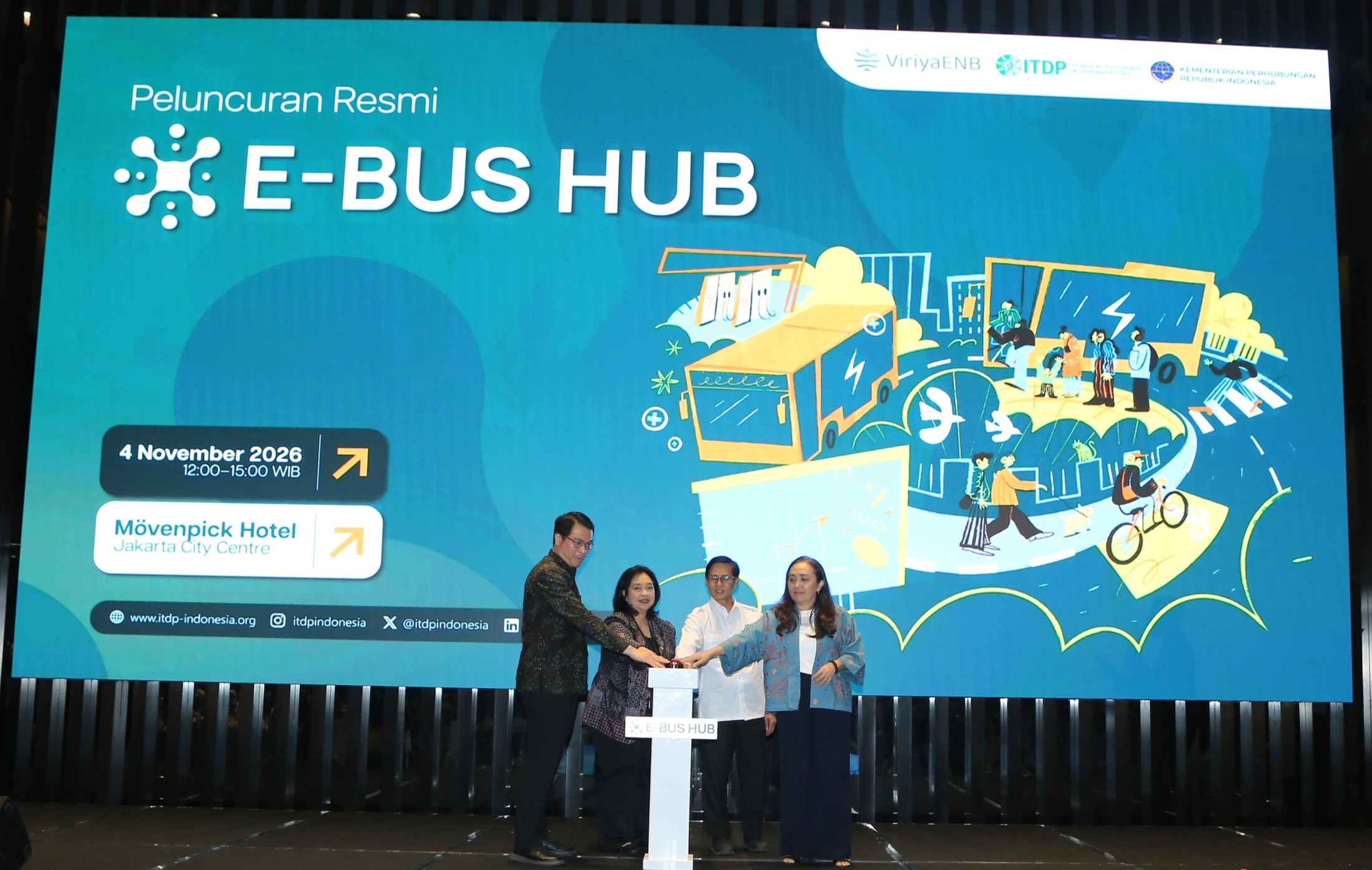
In response to this need, E-Bus Hub was developed to bridge the gap between the availability of knowledge and the implementation of bus electrification at the local level. ITDP Southeast Asia Director Gonggomtua Sitanggang emphasized that the success of electrification should not be measured solely by the number of electric buses in operation, but also by a city’s readiness to plan for and integrate this technology into its public transport system.
“Bus electrification is not simply about replacing vehicles; it is also about ensuring that cities have the right plans in place for implementation. Through E-Bus Hub, we aim to help local governments and operators access the knowledge and planning tools they need without having to start from scratch. Ultimately, the goal of electrification is not just to introduce more electric buses, but to deliver better, low-emission public transport,” said Gonggomtua.
Director of Road Transport at the Directorate General of Land Transportation, Ministry of Transportation, Muiz Thohir, stated that the government is currently strengthening the national policy framework to accelerate the electrification of urban public transport.
“The Ministry of Transportation is working to establish a national legal framework for the electrification of urban public transport. This framework is expected to provide greater certainty and clear policy direction, including mandates for both central and local governments to accelerate bus electrification. With such a policy framework in place, the transition to electric buses, as part of efforts to promote a cleaner and more sustainable transport system, can be planned and implemented gradually with the support of all stakeholders,” said Muiz.
ViriyaENB Executive Director Suzanty Sitorus explained that the development of E-Bus Hub builds on ViriyaENB’s partnership with ITDP Indonesia, which has been working to advance public transport electrification since 2023. Following their collaboration on the development of the Public Transport Electrification Roadmap at the national level, the next step is to strengthen local governments’ capacity to translate policies into concrete implementation measures.
“Our collaboration with ITDP Indonesia began with the development of the Public Transport Electrification Roadmap at the national level. Now, these efforts need to be strengthened at the local level, where provincial and city governments play an important role in improving public transport services. Through E-Bus Hub, we hope local policymakers will gain access to the knowledge and references they need to take the first steps towards providing a low-carbon and affordable urban land transport system,” said Suzanty.
Three Key Features to Support Bus Electrification Planning
To address these information and planning needs, E-Bus Hub offers three key features designed for local governments, operators, and other stakeholders.
First, the Electric Bus Distribution Map, an interactive map providing an overview of electric bus deployment and implementation across cities in Indonesia. Through this feature, users can explore fleet distribution and monitor the progress of bus electrification in cities such as Jakarta, Medan, Semarang, Surabaya, and Yogyakarta.
Second, the Electric Bus Planning Calculator, which allows users to explore various electrification scenarios through preliminary simulations. The tool covers estimated capital investment and operational costs, potential reductions in greenhouse gas (GHG) emissions and air pollution, as well as the potential benefits of electrification. The simulation results can serve as an initial reference for local governments and operators when developing electrification plans, while recognizing that further technical assessments and consideration of actual local conditions are still necessary.
Third, the Knowledge Hub, which brings together studies, publications, datasets, and policy recommendations related to bus electrification. Its resources cover a wide range of topics, from technology and operations to financing and policy. E-Bus Hub can therefore serve as a reference for government institutions, operators, practitioners, researchers, journalists, and members of the public seeking to better understand the development of bus electrification in Indonesia.
The launch of E-Bus Hub also involved representatives from Semarang, Medan, and Yogyakarta, three cities currently at different stages of electric bus planning and implementation. The participation of these cities highlights that electrification planning cannot follow a one-size-fits-all approach. Each region requires an approach tailored to its specific service characteristics, institutional capacity, and level of readiness.
Going forward, ITDP Indonesia will be responsible for managing and maintaining E-Bus Hub, including updating datasets, expanding its information resources, and improving its features in line with the ongoing development of bus electrification in Indonesia. Through this platform, ITDP Indonesia hopes that local governments and operators will have easier access to the knowledge and planning tools needed to make data-driven decisions and develop clearer, more structured electrification implementation pathways.
Ultimately, bus electrification is not merely about replacing vehicle technology; it is part of a broader effort to build a better, low-carbon, and affordable public transport system. By improving access to information and planning tools, E-Bus Hub is expected to support more cities in taking concrete steps towards developing sustainable urban public transport systems.
E-Bus Hub is accessible at: https://buslistrik.itdp-indonesia.org