July 29, 2026
ITDP Indonesia and Transjakarta Highlight the Role of Electric Mobility in Advancing Gender Equality
Electrifying urban mobility is not only a pathway to reducing emissions—it also has the potential to advance gender equality and create new employment opportunities for women. This was the central theme of the discussion, “Advancing Gender-Responsive Urban Mobility Transition in Mega Cities: Women’s Role in Driving Sustainable Urban Mobility”, held during the Jabodetabek Study Forum 2026 on July 23, 2026.
The 75-minute session featured Deliani Siregar, Deputy Director of ITDP Indonesia, and Mayangsari Dian Irwantari, Director of Finance, Human Resources, and General Affairs at Transjakarta, as keynote speakers. The discussion also included responses from Reza Hertyanto, Head of the Center for Sustainable Transport Management at Indonesia’s Ministry of Transportation; a Senior Planner from the Ministry of Women’s Empowerment and Child Protection; and Dorina Pojani, Associate Professor at the School of Architecture, Design and Planning, The University of Queensland.
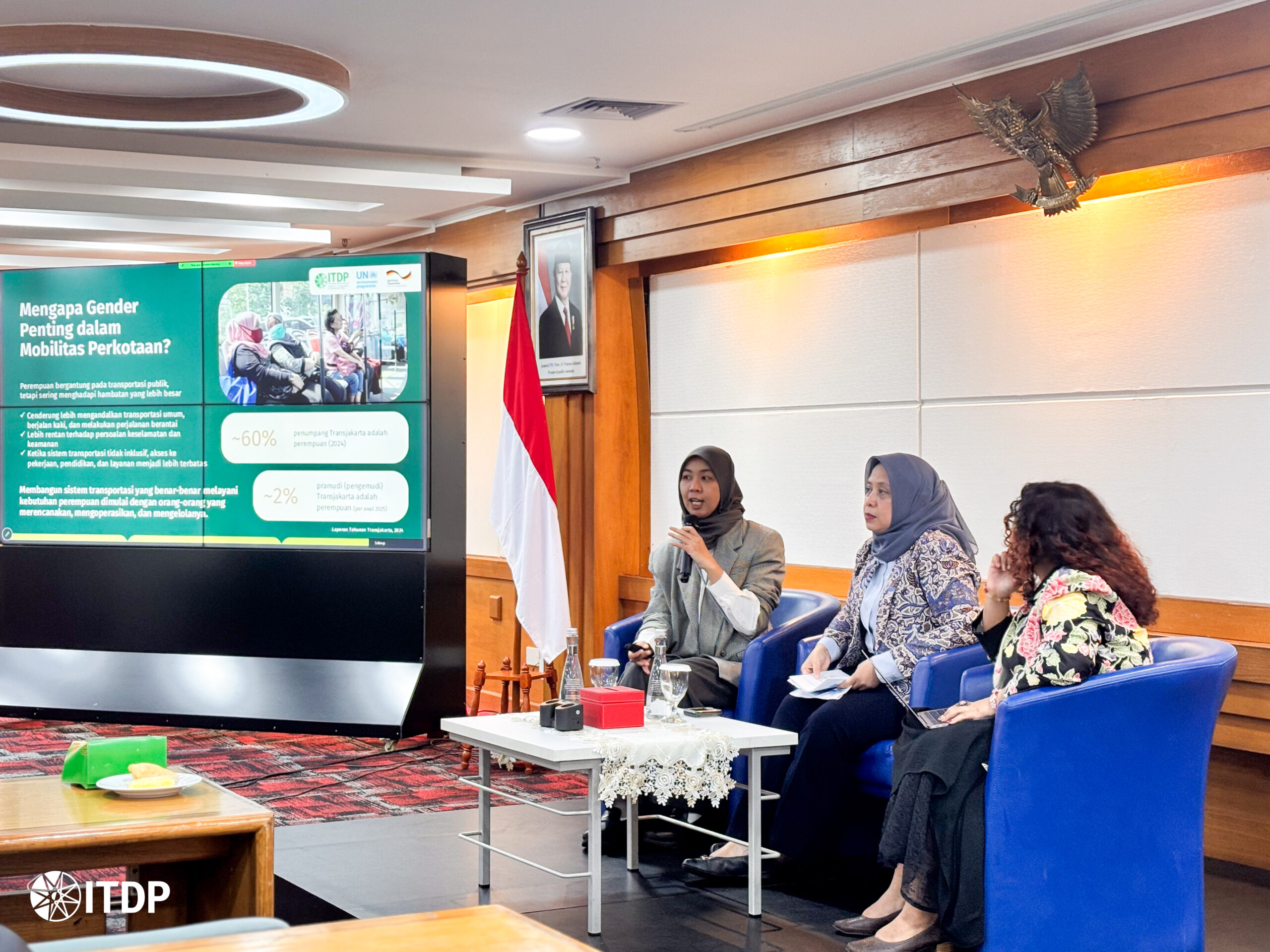
The discussion opened with a presentation by ITDP Indonesia, which highlighted the importance of women’s participation in the transformation of urban mobility. Women currently account for approximately 60% of Transjakarta’s passengers. However, as of early 2025, only 2% of Transjakarta’s bus drivers were women. This disparity underscores the need for a public transport system that not only responds to women’s needs as passengers, but also creates greater opportunities for them to participate as part of the workforce delivering public transport services.
In this context, bus electrification presents greater opportunities for women to pursue careers as both bus drivers and electric bus technicians. As electric bus technology is still relatively new, the ecosystem continues to evolve, requiring many workers to acquire new skills from the ground up. This transition is also creating a wide range of new roles across the public transport electrification value chain, including bus and battery manufacturing, charging infrastructure development and depot operations, operational data analysis, fleet maintenance, transport planning, and vehicle operations. The emergence of these new career pathways offers a tangible opportunity to increase women’s participation in the transport sector while supporting a more inclusive and equitable urban mobility system.
La Rolita, Bogota adalah contoh utama dalam melibatkan perempuan di operasional bus listrik, baik sebagai pramudi maupun teknisi. Mereka dilatih dalam program yang berjalan selama 2-4 bulan yang meliputi pengetahuan umum, keterampilan teknis dan non-teknis, serta kesadaran gender. Program ini berjalan dengan sukses: di tahun 2024, 60% pramudi La Rolita adalah perempuan.
Deliani menekankan membangun tenaga kerja yang inklusif perlu menerapkan beberapa hal, yaitu memperluas akses rekrutmen, merancang pelatihan responsif gender, melembagakan kemitraan, memperkuat transisi ke dunia kerja, dan mendorong lingkungan kerja yang responsif gender.
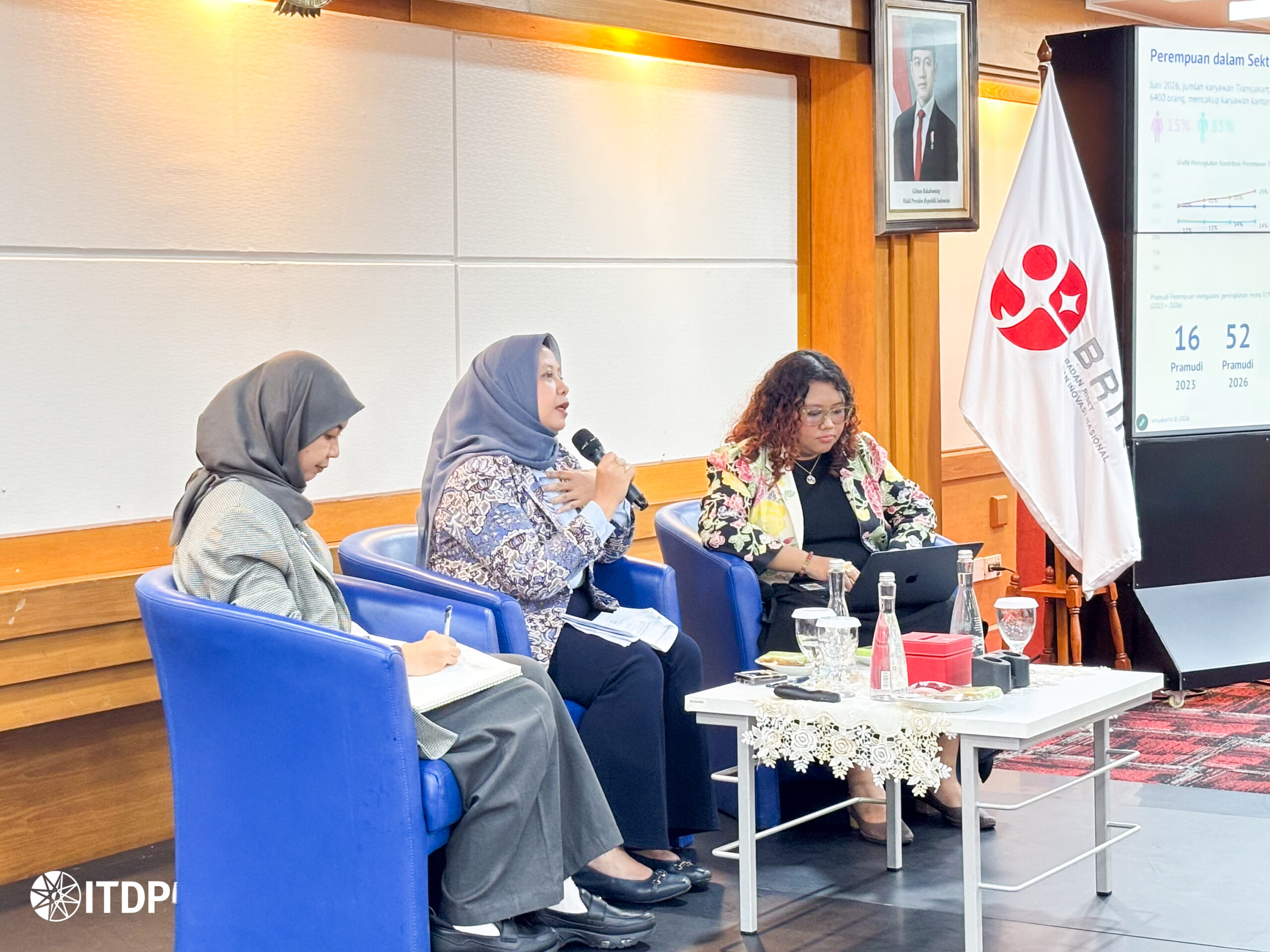
The discussion continued with a presentation from Transjakarta outlining the company’s programs, policies, and facilities aimed at supporting women, both within the organization and among its passengers. Transjakarta’s strategic commitment to gender equality spans three key areas: gender-inclusive attraction and recruitment, human resources policies and workplace facilities, and representation targets. These initiatives include implementing the Gender-Inclusive Recruitment Certification (GIRC) for 50% of recruitment panelists, providing STEM scholarships for women aspiring to become electric bus technicians, integrating gender-disaggregated data into customer satisfaction surveys, establishing on-site daycare facilities, introducing gender-responsive grievance mechanisms, and setting targets of 30% female representation in managerial positions and a 5% quota for women bus drivers and technicians.
On the programmatic side, Transjakarta has launched two cohorts of the Transjakarta Academy with support from BMZ Germany, UNEP, and ITDP Indonesia. The program provides professional training for women bus drivers, graduating 23 participants in February 2025 and another 13 in November 2025. Building on the success of La Rolita—Transjakarta’s women-operated bus service—the company expanded its efforts by collaborating with ITDP Indonesia, with support from UNEP and BMZ Germany, to deliver the second cohort of Transjakarta Academy, which was dedicated entirely to training women bus drivers.
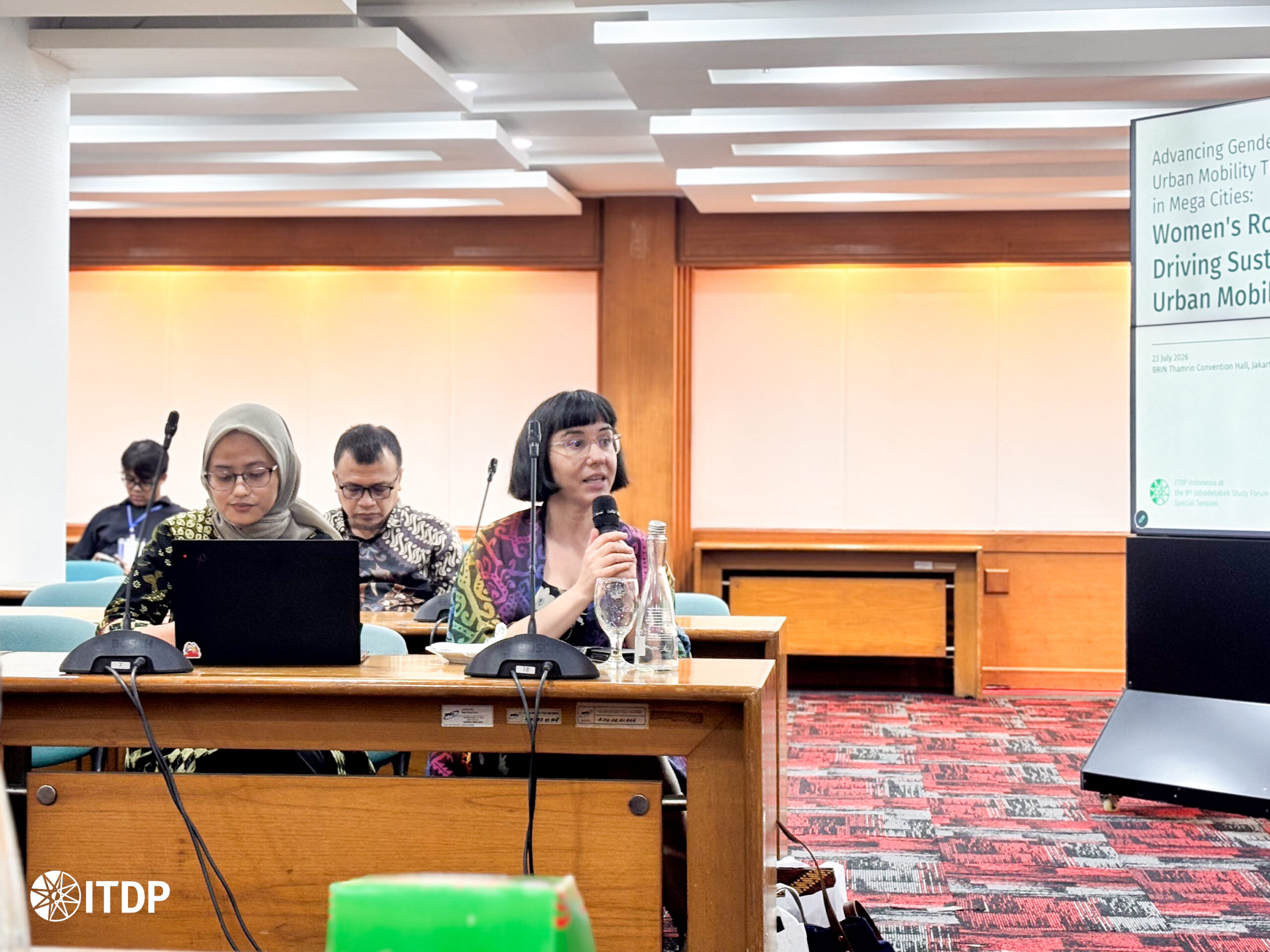
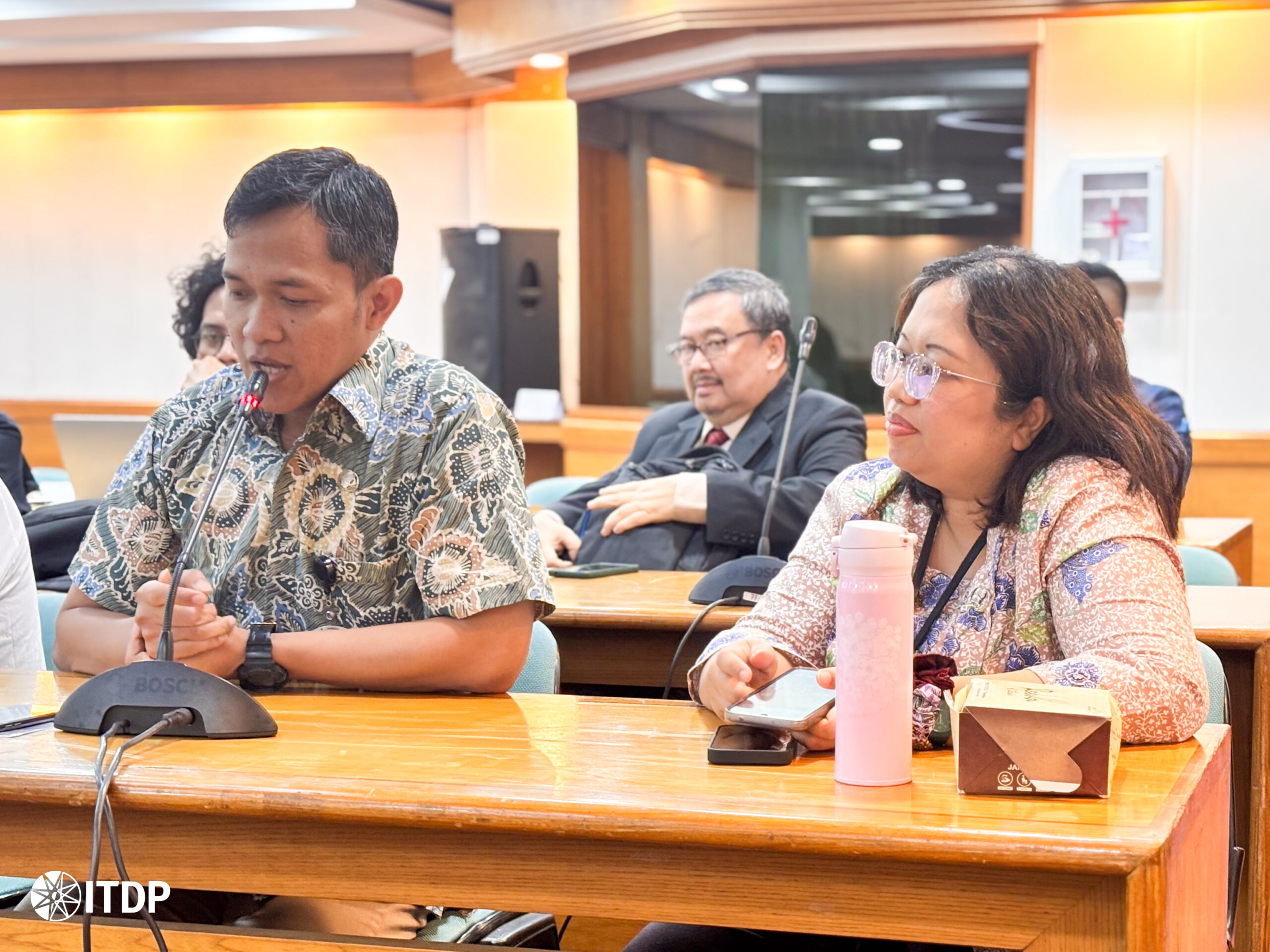
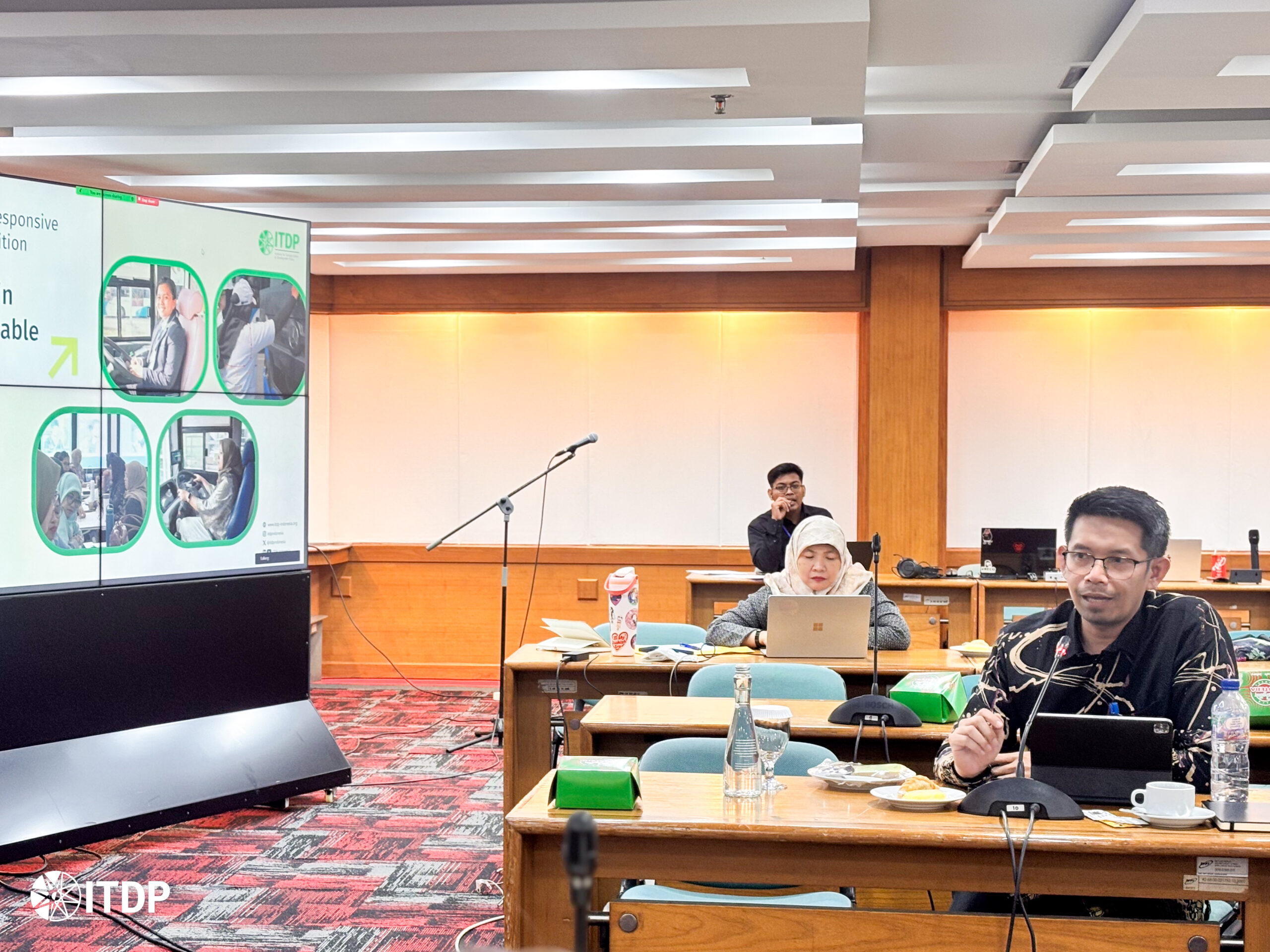
The session concluded with a panel of expert respondents, featuring Reza Hertyanto, Head of the Center for Sustainable Transport Management at Indonesia’s Ministry of Transportation; Ratih Rachmawati, Senior Planner at the Assistant Deputy for the Protection of Women Workers’ Rights and the Prevention of Human Trafficking under the Ministry of Women’s Empowerment and Child Protection; and Dorina Pojani, Associate Professor of Urban Planning at The University of Queensland, Australia. The panelists commended Transjakarta’s efforts to implement gender-inclusive policies and programs, while emphasizing that ensuring the safety of women passengers—particularly by preventing sexual harassment and gender-based violence—must remain a key priority in advancing inclusive public transport.
The discussion concluded with a shared aspiration among speakers and participants that Transjakarta will continue to expand opportunities for women to participate in and shape the future of sustainable urban mobility.
ITDP Indonesia believes that the transition to electric public transport should be both environmentally sustainable and socially inclusive. By fostering greater participation of women across the public transport ecosystem—from planning and operations to technical roles and leadership—the transition can deliver broader economic opportunities while creating safer and more equitable mobility for everyone.