September 30, 2026
ITDP Indonesia Supports Electric Bus Electrification to Advance Indonesia’s Net-Zero Emissions Target
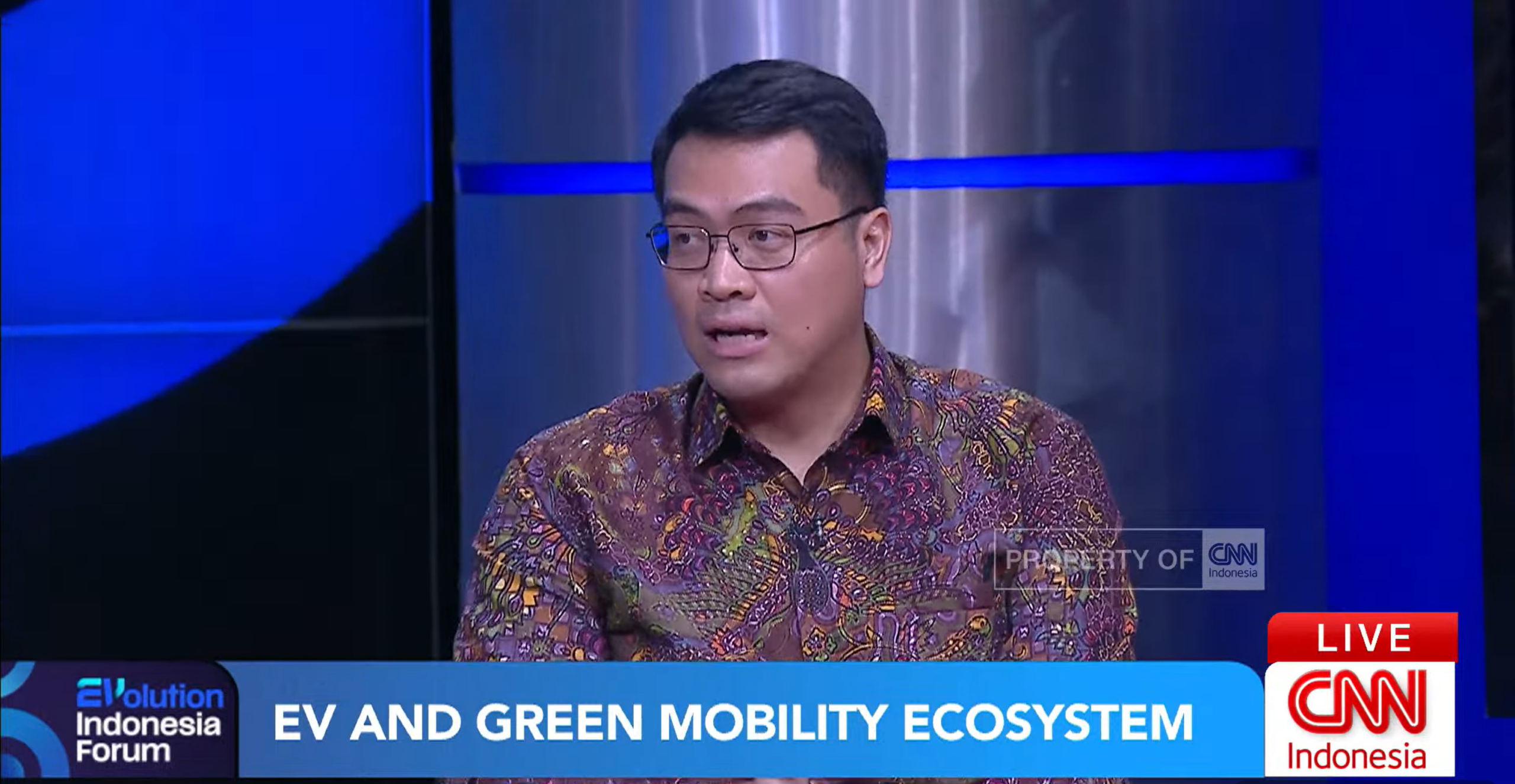
Indonesia’s target to achieve net-zero emissions by 2060 at the latest will require concerted efforts across sectors. One way to advance this target is by promoting low-emission cities, including through the electrification of public transport. This solution was highlighted by ITDP Southeast Asia Director Gonggomtua Sitanggang at the CNN Indonesia EVolution Forum on 30 September 2026. The interactive discussion, titled “Powering Indonesia’s Future: Green Cars, Blue Skies,” brought together experts to discuss solutions for supporting Indonesia’s net-zero target.
Gonggomtua joined the second discussion session alongside Pertamina University Professor Iman Kartolaksono Reksowardojo and General Chairperson of Periklindo and Senior Manager of Marketing Communications at MA, Achmad Rofiqi.
The discussion opened with Iman, who spoke about the potential of 50 percent biodiesel (B50) as an alternative energy source that could help reduce vehicle emissions. The Pertamina University professor noted that B50 and electric vehicles can be adopted in parallel, arguing that B50 can reach areas across Indonesia where supporting EV infrastructure is not yet available.
“We have to be pragmatic. We should not pit EVs against biofuels. Both need to move forward because each has its own advantages,” he explained.
The discussion then turned to electric buses. Gonggomtua highlighted the importance of bus electrification in creating low-emission cities. Electrifying buses can deliver several benefits:
- Reduced emissions
- Lower operating costs – electric buses have lower operating costs than conventional internal combustion engine (ICE) buses
- Easier planning – routes, depot locations, and charging schedules can be planned more predictably
- An opportunity to reform public transport through fleet renewal and improved service quality
However, the government has yet to establish a regulatory framework for public transport electrification. “We continue to urge the Ministry of Transportation to develop a roadmap for electric bus adoption,” he said. Such a roadmap could provide incentives and guidance for local governments to electrify their bus fleets, while also sending a positive signal to industry.
“There are currently no incentives for electric buses or the industry, whether in the form of price reductions, R&D support, or sales incentives. This is also something local governments frequently ask about,” Gonggomtua said.
In response, Achmad, in his capacity as General Chairperson of Periklindo, said that the industry needs not only consistent government policies, but also harmonization between central and local government policies. He also emphasized the importance of supporting infrastructure for electric buses to encourage people to shift from private vehicles to public transport.
Beyond bus electrification, Gonggomtua also highlighted ITDP’s efforts to promote low-emission (compact city electrified) cities. In these cities, residents can easily access public, commercial, and healthcare facilities by walking or cycling. Low-emission cities can help Indonesia move closer to its net-zero emissions target while also contributing to efforts to keep the rise in global temperatures below 1.5°C.
Through the event, ITDP Indonesia reaffirmed its commitment to supporting Indonesia’s net-zero emissions target through electric bus electrification.