
October 27, 2026
ITDP Indonesia, Singapore, and Malaysia Discuss the Importance of Service Excellence and Public Transport Integration at Transport Expo Asia 2026
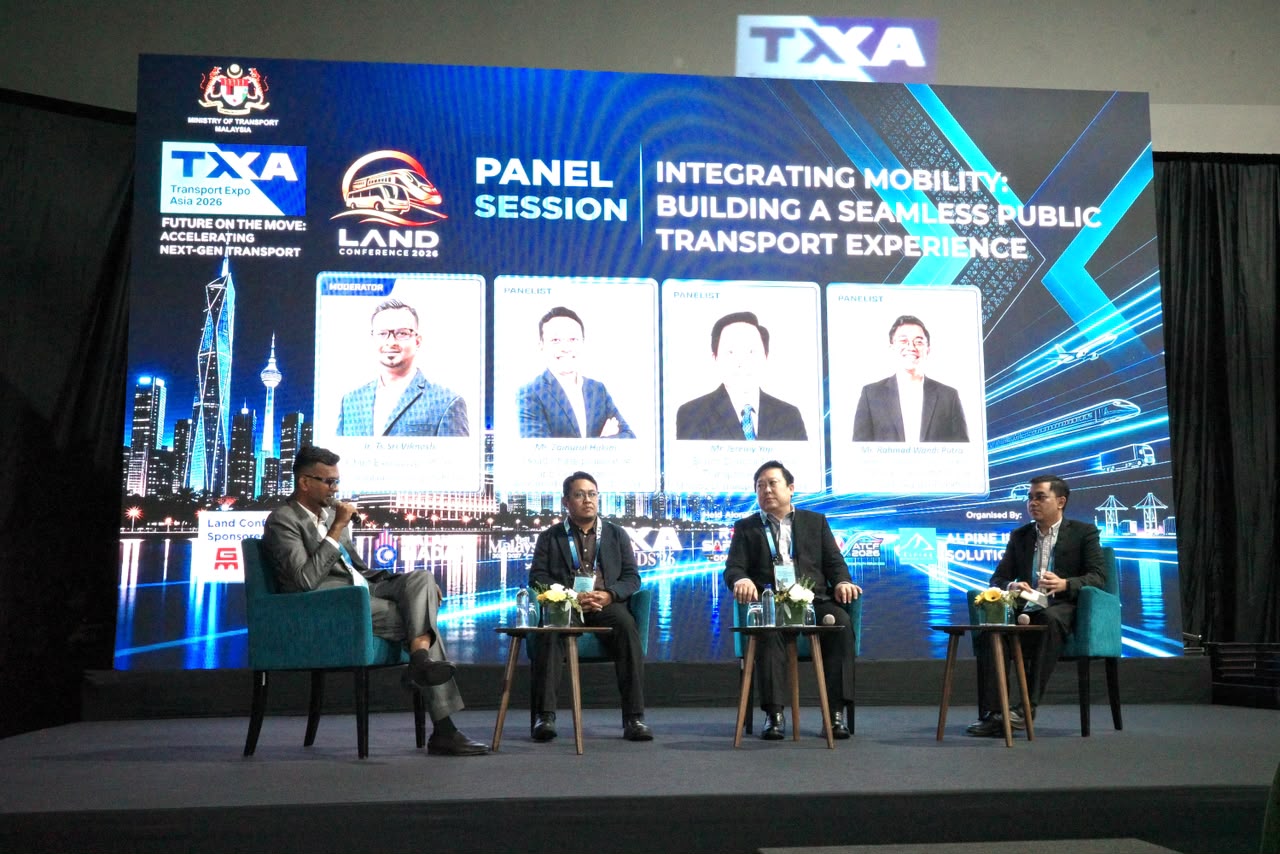
Developing a public transport network requires more than adding routes or building new infrastructure. Service reliability, ease of transfers between modes, fare integration, and pedestrian access to bus stops and stations all play a role in determining whether people choose public transport for their daily mobility needs.
These issues were among the topics discussed during the panel session “Integrating Mobility: Building a Seamless Public Transport Experience” at Transport Expo Asia 2026, held on 22 October 2026 at the Malaysia International Trade and Exhibition Centre (MITEC) in Kuala Lumpur, Malaysia. During the discussion, representatives from ITDP Indonesia and transport practitioners from Malaysia and Singapore shared their experiences and insights into the challenges and strategies for delivering a more integrated public transport service.
Service Reliability Is Key
Zainurul Hakim, Head of Initiatives and Strategic Partnerships and Chief of Bus Infrastructure Development at Prasarana – Rapid Bus Sdn. Bhd., highlighted service reliability and long waiting times as some of the biggest barriers to creating a seamless public transport experience in Malaysia. Citing survey findings, Hakim noted that passengers are generally willing to wait only around 15 minutes before considering alternative modes of transport.
To address these challenges, Malaysia has been improving service reliability through the provision of dedicated bus lanes. The implementation of a dedicated bus lane along the Ampang–Kuala Lumpur corridor successfully reduced travel time from 17 minutes to 14 minutes. In addition, the Malaysian government has been upgrading approximately 500 of Kuala Lumpur’s 5,000 bus stops.
Beyond infrastructure improvements, Prasarana Rapid Bus has developed demand-responsive transit (DRT), a service that operates on demand within designated service areas. This approach offers a more efficient alternative in areas with relatively low travel demand. Approximately 300 vans are currently operating to meet these needs.
Two years of DRT operations have demonstrated the importance of understanding travel demand patterns, providing an accessible service-booking application, and maintaining a maximum waiting time of 15 minutes. Moving forward, the service will be complemented by scheduled feeder routes connecting residential areas to LRT stations.
Hakim emphasized that improving public transport services requires government support. Public transport operations are not always financially viable on their own, making government-backed business models essential to ensuring service continuity and attracting investment.
Integration Requires Cross-Jurisdictional and Institutional Coordination
From Indonesia’s perspective, daily mobility across the Greater Jakarta (Jabodetabek) metropolitan area extends beyond city administrative boundaries. This makes institutional integration and interregional coordination essential to planning and managing public transport services that meet people’s travel needs.
Rahmad therefore emphasized that public transport integration must begin with a shared vision among all stakeholders involved in service operations. Without cross-jurisdictional coordination, network development, operational management, and payment integration risk being pursued separately. Fare integration through JakLingko, therefore, needs to be expanded to cover a wider metropolitan area.
Rahmad also highlighted the importance of improving pedestrian and cycling access to public transport. Adequate infrastructure and convenient access can encourage people to shift from private vehicles to public transport. These improvements should also include clear wayfinding, signage, and real-time arrival information that is easy to understand and accessible to all users.
Meanwhile, park-and-ride facilities can still play a role, particularly at suburban stations and terminal stations. However, their development needs to be carefully planned to avoid encouraging more trips by private vehicle. These facilities should serve as a transitional solution until reliable public transport services are available more widely.
Reducing Dependence on Private Vehicles
Singapore’s experience demonstrates that improving public transport services must go hand in hand with managing private vehicle use. Jeremy Yap, Senior Director at the National Transport Academy and former Deputy Chief Executive of Singapore’s Land Transport Authority (LTA), explained that the country’s limited land availability has driven the government to provide an extensive, high-quality public transport network.
In service planning, Yap highlighted three key priorities: reliability, comfort, and first- and last-mile connectivity. Punctual services build passenger confidence, while fewer transfers and covered pedestrian walkways can make journeys more comfortable.
On the supply side, Singapore has invested in expanding its public transport network and developing transport infrastructure. These efforts are complemented by policies to stop building new roads, limit the validity of Certificates of Entitlement (COEs) to 10 years, and implement the Electronic Road Pricing (ERP) system. During the discussion, Yap also underscored the importance of fare integration as one of the aspects that most directly shapes the passenger experience.
Account-based ticketing enables integrated public transport payments through an account-based system. Singapore has also encouraged the use of credit cards for payments across different transport modes to make journeys more convenient and reduce passengers’ concerns about payment arrangements.
Integration Goes Beyond Infrastructure
The experiences of Jakarta, Kuala Lumpur, and Singapore demonstrate that building an integrated public transport system requires more than connecting routes and transport modes. Service reliability, passenger comfort, accessibility, payment integration, and interinstitutional coordination must all be planned as components of a cohesive mobility ecosystem.