May 21, 2026
Stakeholder Dialogue Unpacks Institutional Challenges of Integrated Transportation in Greater Jakarta
The Greater Jakarta region records more than 4.4 million commuter movements every day, with around 1.5 million trips originating from the surrounding Bodetabek areas into Jakarta. However, the transportation system serving this mobility is still managed separately by various institutions across jurisdictions and administrative boundaries.
In response to these challenges, the Institute for Transportation and Development Policy (ITDP) Indonesia, together with the Visi Indonesia Raya Emisi Nol Bersih Foundation (ViriyaENB), held a Focus Group Discussion (FGD) titled “Towards an Integrated Transportation Institution for Greater Jakarta” on May 13, 2026, in Jakarta. The event was part of the Comprehensive Low-Emission Action for Resilient Transport in Jabodetabek (CLEAR Jabodetabek) project.
The forum brought together more than 60 participants from ministries, local governments, transport operators, transport business associations, academics, and civil society organizations. The discussion focused on the challenges, opportunities, and institutional needs required to achieve transportation integration in Greater Jakarta, particularly regarding asset management, cross-regional authority, inter-agency coordination, and financing schemes for regional transport services.
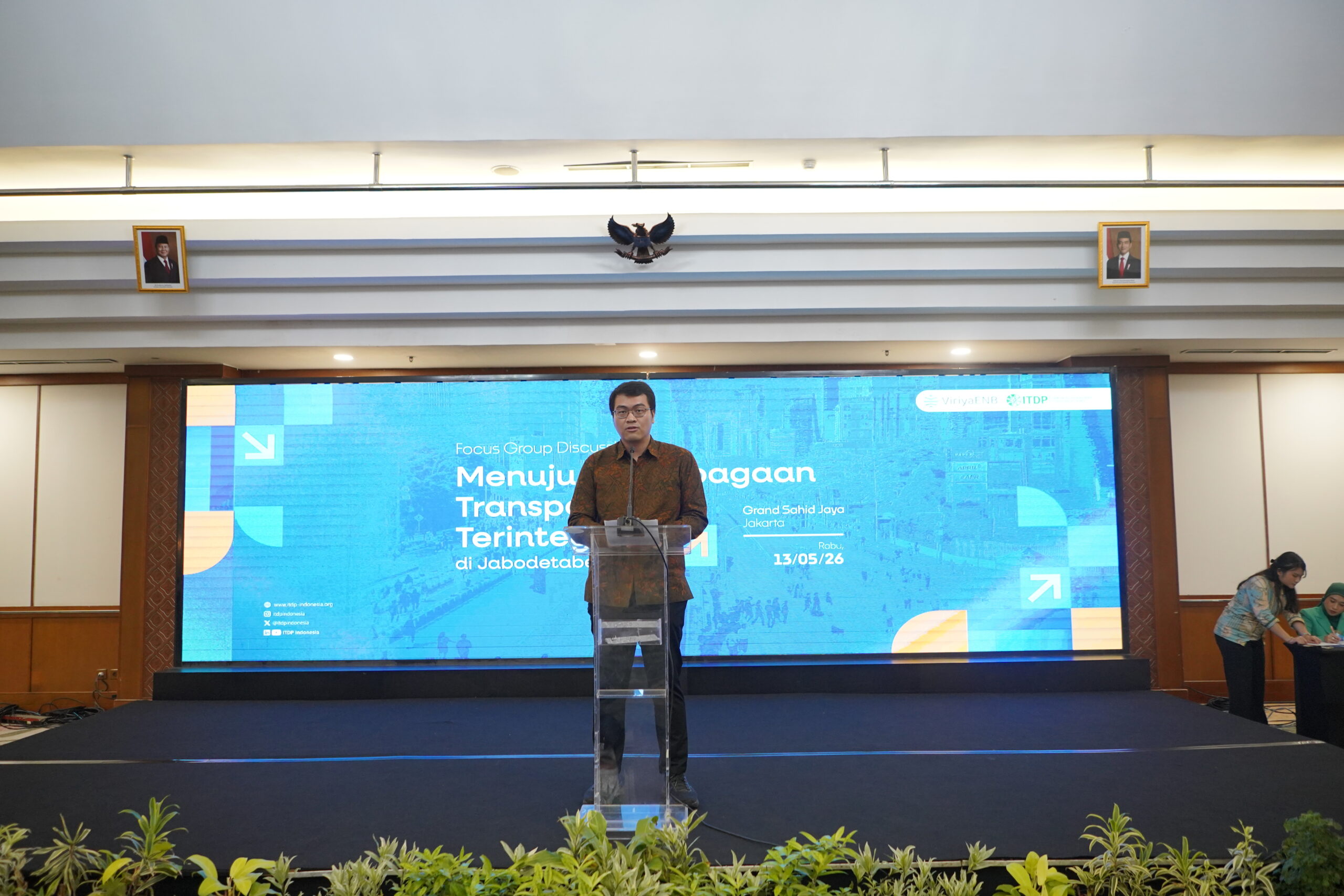
In his opening remarks, ITDP Indonesia Southeast Asia Director Gonggomtua Sitanggang stated that transportation integration in Greater Jakarta would require a long-term process across institutions and regions.
“This forum marks the beginning of a much longer process to integrate various institutions, authorities, and transportation funding schemes across Greater Jakarta. As part of this effort, ITDP and ViriyaENB are committed to developing an agglomeration-scale transportation model for Greater Jakarta as a contribution to Jakarta ahead of the city’s 500th anniversary next year,” he sai
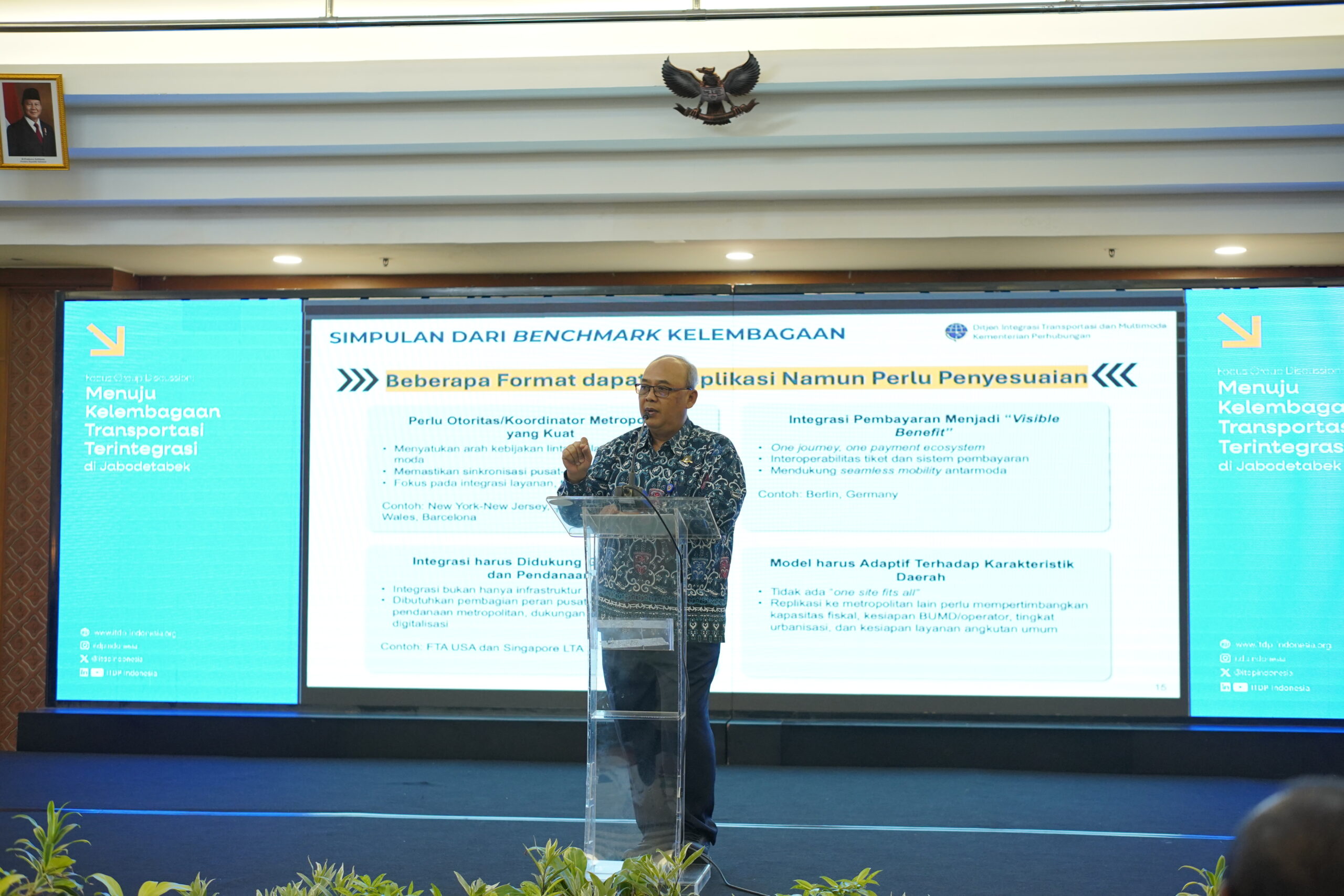
In the opening presentation, Taufiq Hidayat Putra, Director of Infrastructure Development Partnership and Integration at the Ministry of National Development Planning (Bappenas), emphasized the need for integrated transportation governance across the Jakarta agglomeration area.
“More than 1.5 million commuter trips are made from Bodetabek to Jakarta every day, creating a real need for integrated services, governance, and transportation systems across the Jakarta agglomeration area. The upcoming Jakarta Agglomeration Area Development Master Plan (RIPKA) is expected to synchronize cross-regional and cross-sector planning so that more connected and higher-quality transportation services can truly be realized,” he explained.
The urgency of integration is also reflected in existing service conditions on the ground. The Transjabodetabek service, which currently operates 18 routes extending into Bodetabek areas, is still largely financed by Jakarta’s regional budget, while recipient regions do not yet have clear contribution mechanisms. Fragmented authority and cross-regional transportation asset management also remain major barriers to service integration.
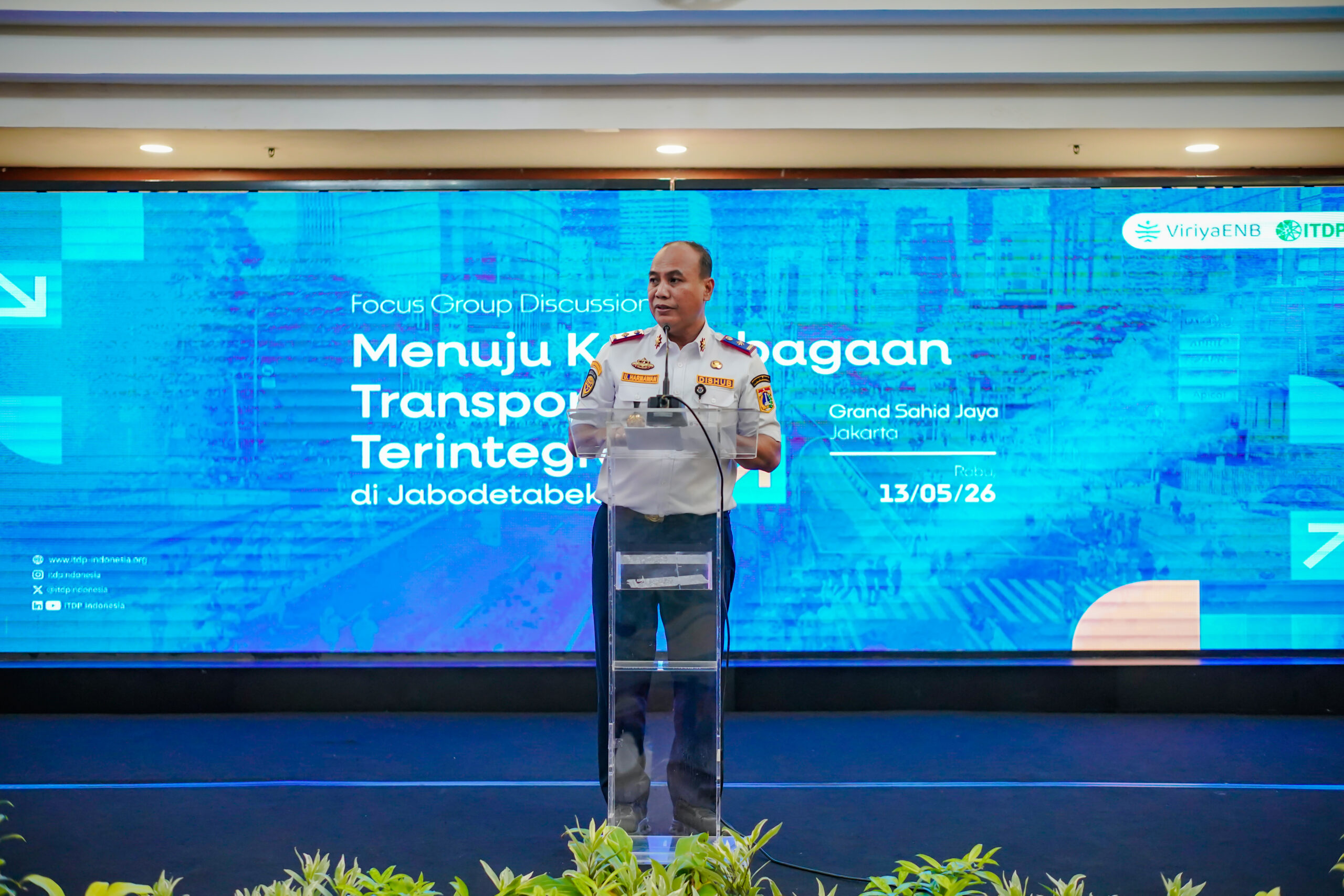
The Government of DKI Jakarta emphasized that institutional integration is no longer an option, but a necessity.
“Mobility across the Greater Jakarta (Jabodetabek) region can no longer be viewed separately based on administrative boundaries. Public transport integration must continue to be strengthened. One key aspect that needs to be implemented is transport institutional integration—not merely as a coordination forum, but as a mechanism truly capable of accelerating solutions to cross-boundary transport challenges, reducing emissions burdens, and improving the quality of public transport services for people across Jabodetabek,” said Suharini Eliawati, Assistant for Economy and Finance to the Regional Secretary of DKI Jakarta Province, represented by Ujang Harmawan, Acting Head of the DKI Jakarta Provincial Transportation Agency.
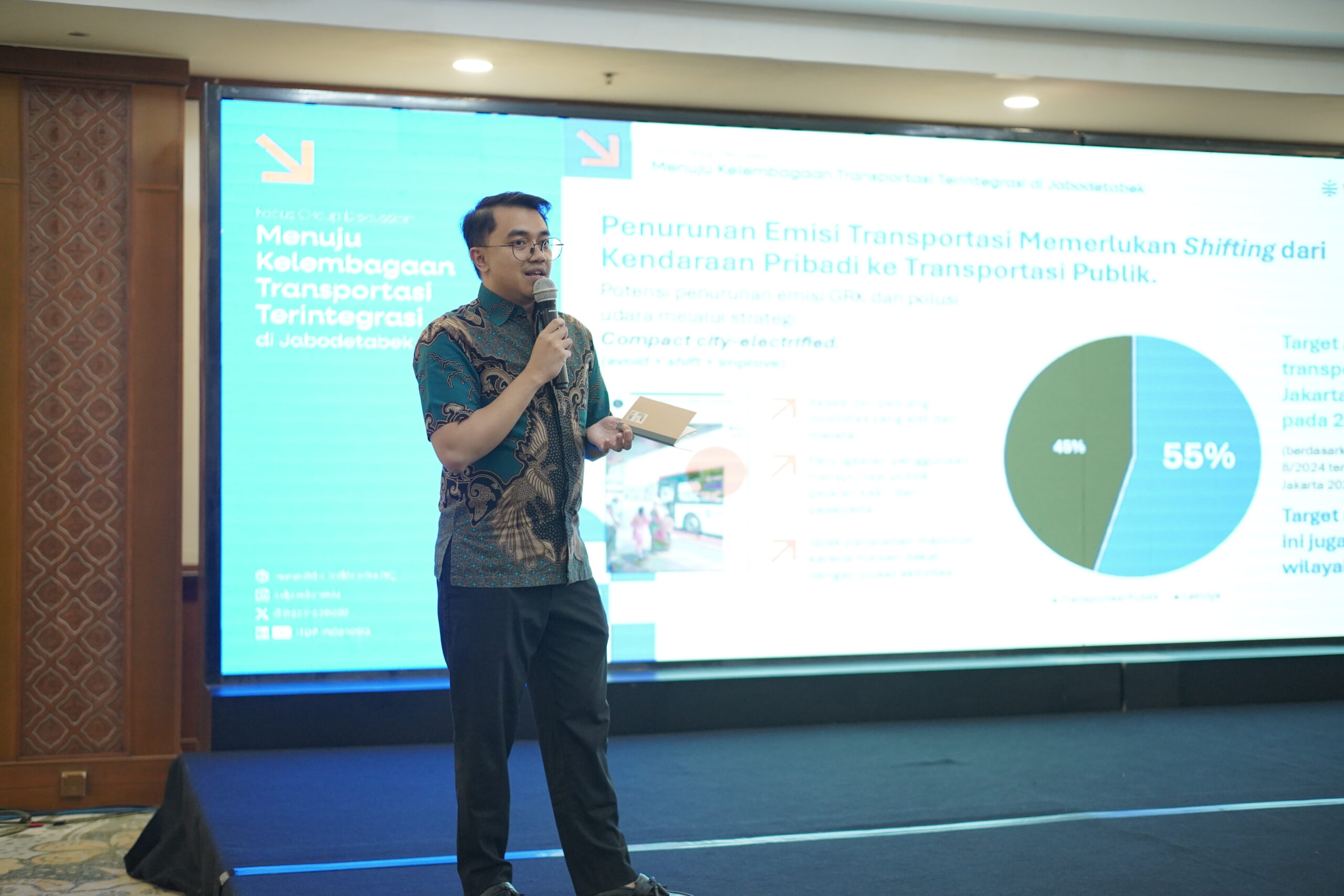
Preliminary findings from an ITDP Indonesia study, presented by Rahmad Wandi Putra, Senior Transport Associate at ITDP Indonesia, highlighted several key challenges, ranging from the absence of an institutional framework with clear authority, the lack of interregional fiscal-sharing formulas, to fragmented asset management and service expansion.
The discussion was then divided into three groups based on these main issues. The first group discussed regulation and leadership within the Greater Jakarta agglomeration area. Participants highlighted the risks of establishing a new institution that could potentially create conflicts with existing regional transport service providers. Participants also emphasized the importance of feeder services, park-and-ride facilities, first-mile and last-mile infrastructure, as well as synchronized regulations and cross-regional funding mechanisms.
The second group discussed fiscal schemes and subsidies. One of the main issues raised was the absence of a financing-sharing formula among regions in Greater Jakarta. Proposed alternatives included cross-regional green financing schemes and the establishment of a Joint Service Agency (Badan Layanan Bersama / BLB) to expand access to funding beyond regional budgets while simplifying transportation service development.
However, participants also highlighted the social impacts of such institutional changes. Existing public transport operators in Tangerang, for example, are facing declining fleet numbers due to funding limitations. The proposed BLB was seen as potentially creating concerns among angkot operators, as it could affect the sustainability of their businesses.
Meanwhile, the third group discussed issues related to cross-provincial assets and authority. Participants noted that the management of bus stops, routes, and transportation services is still divided between municipal/regency and provincial governments, resulting in suboptimal operational coordination. This situation has led to overlapping services, bus stop placements that do not match passenger needs, and uneven service standards across regions.
To address these challenges, participants proposed regulatory synchronization across provinces with support from the central government as both facilitator and provider of a clear legal framework. Participants also emphasized the importance of clear authority-sharing arrangements, fiscal commitments from local governments, and the management of potential political resistance across regions to ensure that transportation integration in Greater Jakarta can be implemented effectively and sustainably.
The discussion also produced initial recommendations for establishing an integrated transportation institution in Greater Jakarta as an entity responsible for managing services beyond administrative boundaries. Participants emphasized that the institution should not replace existing operators, but rather serve as an integration platform that provides legal certainty, service standards, and fair shared financing mechanisms for all regions.
This FGD is part of the broader CLEAR Jabodetabek initiative, which will continue with the development of institutional recommendations based on stakeholder input, as well as the development of an agglomeration-scale transportation model for Greater Jakarta as a contribution toward Jakarta’s 500th anniversary.