August 26, 2026
ITDP Indonesia Encourages Public Participation in Urban Design at the JAKI & Fellowship Cities Forum 2026
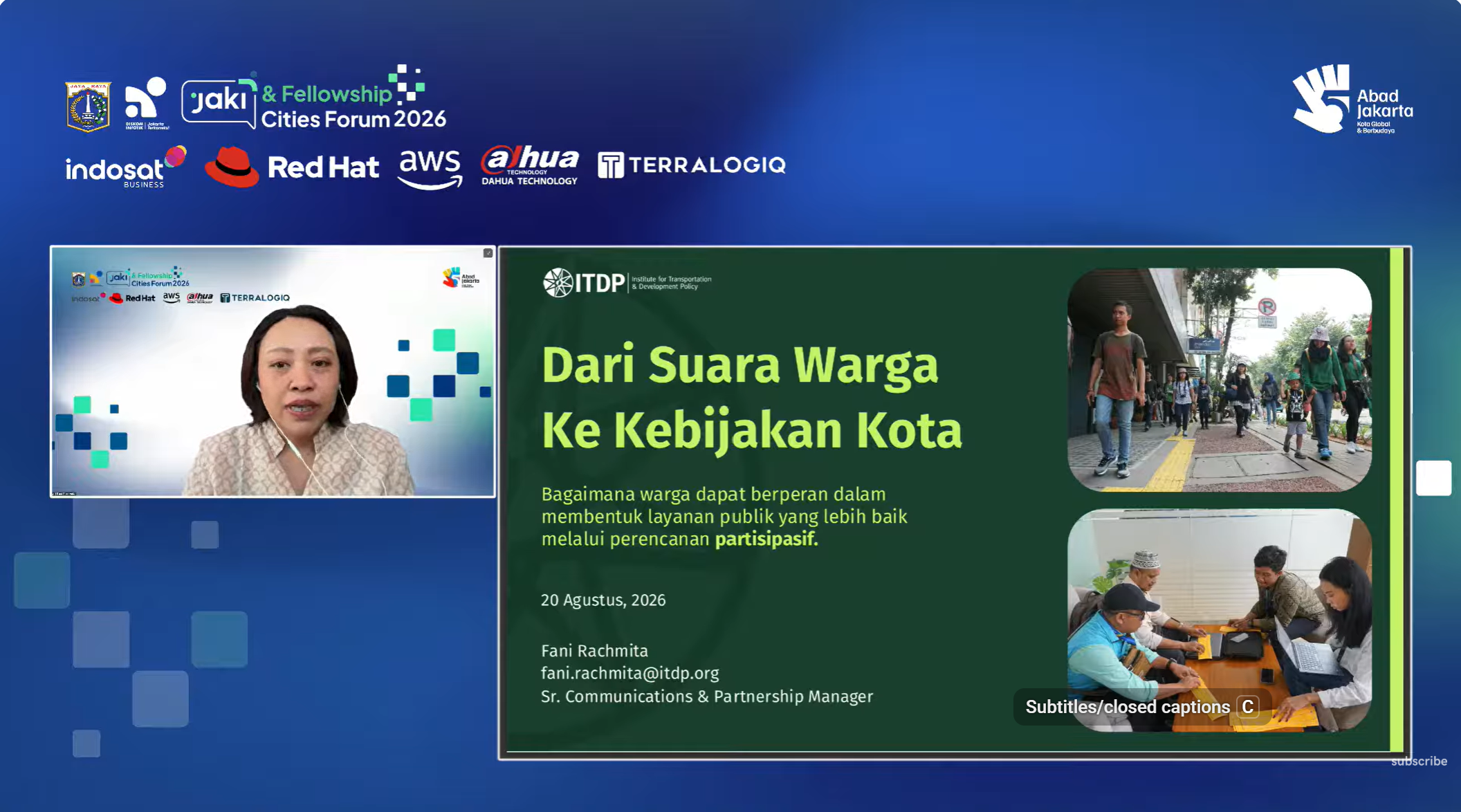
On Thursday, 20 August 2026, ITDP Indonesia participated in the JAKI & Fellowship Cities Forum (JFCF) 2026. Held in a hybrid format on 19–20 August 2026, the forum carried the theme “Sharing Best Practices in Digital Transformation and Public Innovation.” Discussions explored various aspects of digital transformation and public innovation to improve the quality of urban governance, from the use of artificial intelligence (AI) and big data, integration of public complaints, and digital communications to innovations in public services.
ITDP Indonesia Senior Communications and Partnership Fani Rachmita spoke at the session “Understanding Urban Needs: Citizen Voices for Better Public Service.” The session also featured Head of the Jakarta City Management Unit Ponirin Ariadi Limbong, who presented how the Jakarta Provincial Government uses AI and social media to process and follow up on citizen complaints, as well as Co-Founder of What Is Up Indonesia? (WIUI) Abigail Limuria, who shared her experience as a content creator advocating for the importance of public participation in government policymaking.
The discussion opened with ITDP Indonesia’s presentation on the importance of involving communities in the urban development planning process. For ITDP, public participation is essential to ensuring that urban design and policies respond to the needs of diverse groups of users.
“ITDP applies universal design as a core principle that guides our work, where every output aims to create urban environments that can be enjoyed and used by everyone, regardless of background, activity, age, or gender,” said Fani.
One approach consistently applied by ITDP is participatory planning and co-design. This approach enables communities to participate not only as beneficiaries, but also in understanding needs, designing solutions, and testing outcomes.
“One approach we consistently apply is participatory planning and co-design, such as Kota Kampung Bersama in 2018, where ITDP worked with urban kampung residents to create more comfortable environments for walking and cycling; Jalan Jakarta, which worked with MRT to create better walking and cycling experiences to and from MRT stations; as well as the Sudirman–Thamrin cycling lanes, although their total length was still less than a quarter of the approximately 300-kilometre target,” Fani said.
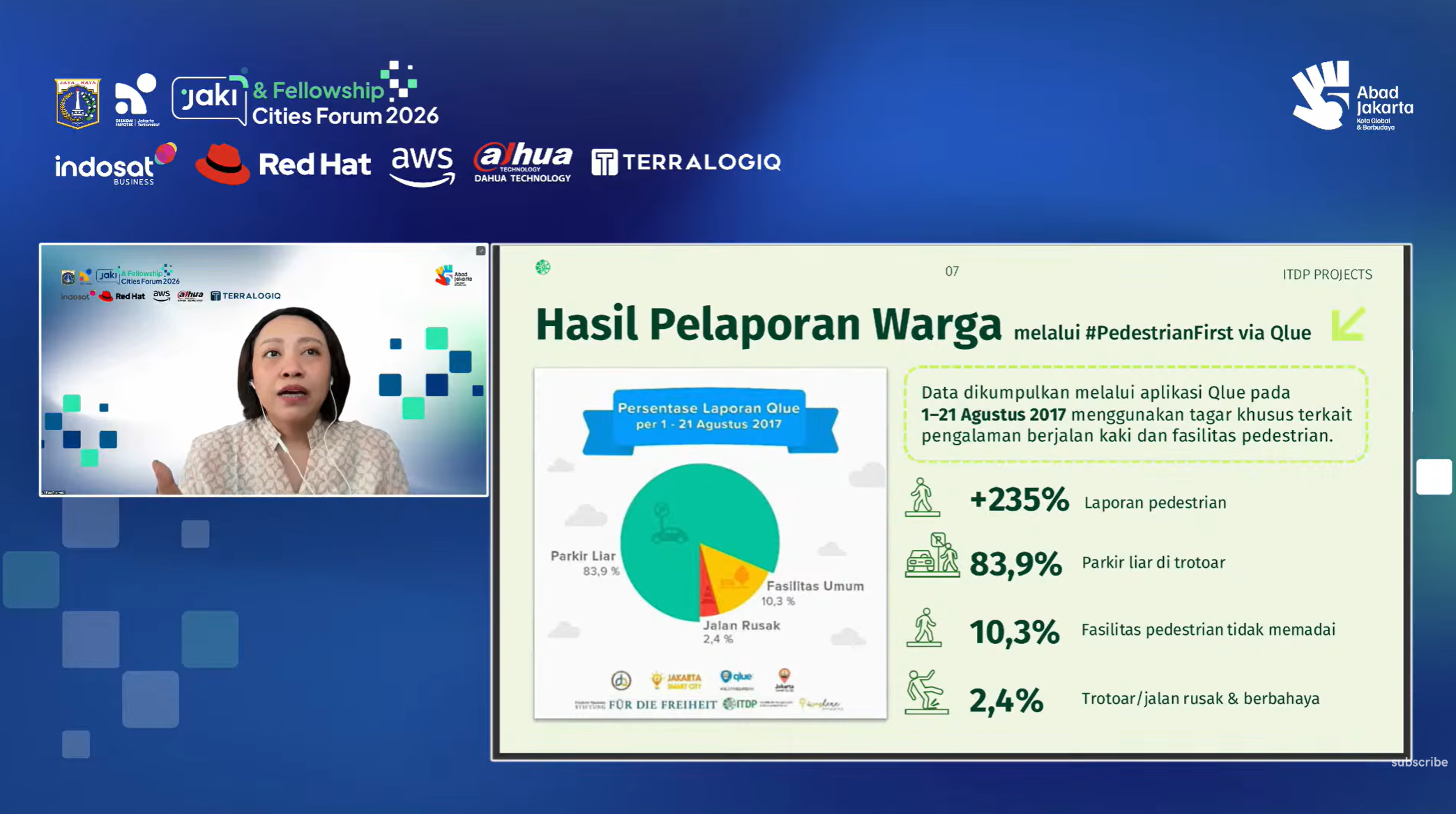
One of ITDP’s early examples of participatory planning was the #PedestrianFirst project. The initiative involved collaboration with FNF, Qlue, Jakarta Good Guide, and iWasHere to encourage residents to share their walking stories and experiences through photos, videos, and community activities.
“In 2017, ITDP Indonesia worked with Qlue to encourage Jakarta residents to report on the condition of pedestrian facilities—from sidewalk conditions and illegal parking on sidewalks to sanitation, alleyway conditions, and the presence of street vendors on sidewalks. Through the dedicated #PedestrianFirst hashtag, these citizen reports were automatically compiled into new datasets, which were then used as references for planning improvements to pedestrian facilities,” Fani said.
According to Fani, the data subsequently became one of the foundations for the DKI Jakarta Cross-Jakarta Street Design Capacity Building Workshop, which aimed to implement the complete streets concept and universal design principles in Jakarta.
The #PedestrianFirst findings also informed the identification of priority areas for pedestrian facility improvements in Jakarta over the following five years, which were subsequently incorporated into the Jakarta NMT Vision and Design Guideline. One example of its implementation is the development of Cikini Sidewalk.
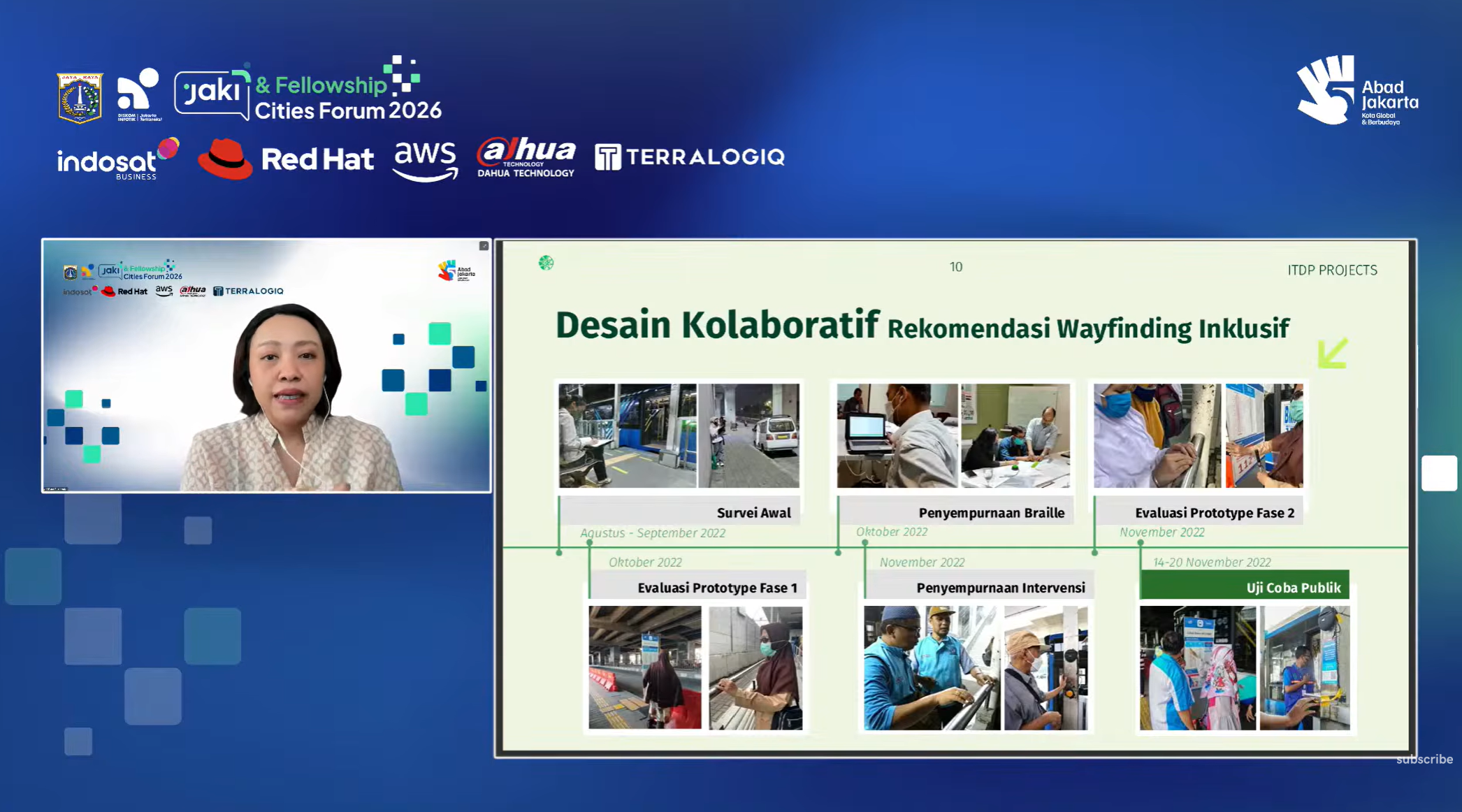
Beyond #PedestrianFirst, Fani presented another example of co-design through the Menuju Halte Inklusif Jakarta (Towards Inclusive Transjakarta Stops) program. The program involved people with disabilities as experts to understand the barriers they face, develop solutions, and test the accessibility of bus stops.
The process consisted of three stages: collaborative design, prototype development and testing, and implementation. Throughout 2022, various solutions were tested, including tactile maps, tapping-gate indicators, and audio information. In 2023, 13 Transjakarta stops permanently implemented the designs, increasing to 144 stops in 2024.
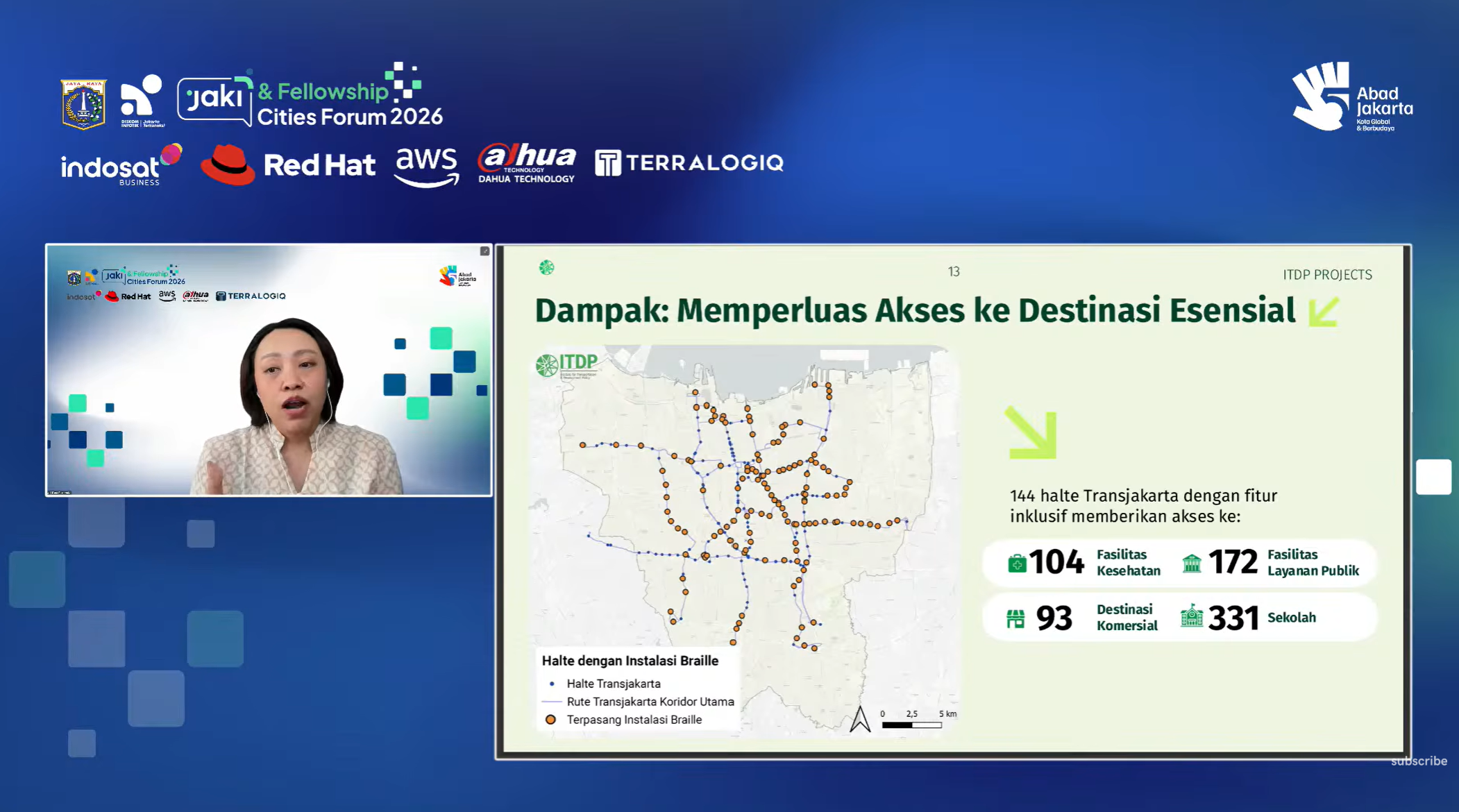
Drawing from these experiences, Fani highlighted three key lessons from planning and design processes that involve communities.
“There are several lessons to be learned: first, the process needs to give residents space to influence design and policy; second, the government needs to be involved from the formulation of recommendations through implementation to ensure that policies are sustainable; and third, stakeholders need to be willing to continue supporting and advancing programmes after the pilot stage has ended,” Fani said.
At the end of the discussion, Fani reiterated the importance of involving communities from the earliest stages of the design process through to the completion of development. Public participation can not only help ensure more efficient use of budgets and time, but also ensure that infrastructure development genuinely responds to the needs of its users.
Through participatory and co-design approaches, ITDP Indonesia is committed to advancing integrated, sustainable, and inclusive public transport while supporting the development of cities that are more responsive to the needs of their communities.
Watch the recording of the discussion here.