
August 17, 2026
ITDP Indonesia Holds Capacity-Building Workshop on Electric Bus Planning for Urban Public Transport
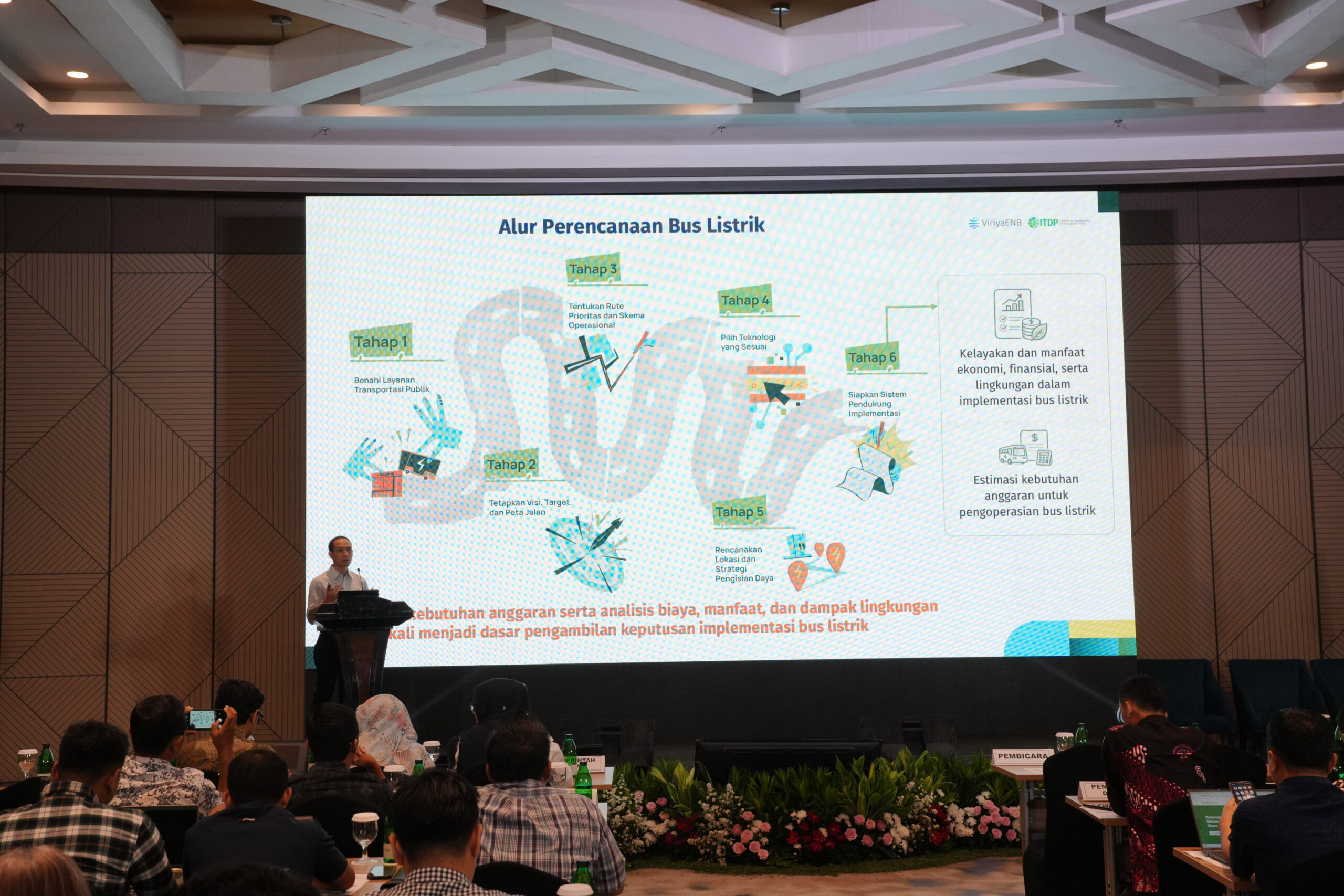
During the session, participants provided input on the development of the E-Bus Hub, including the Electric Bus Distribution Map and Electric Bus Calculator. Suggestions included adding route, corridor, operating hours, and bus model and capacity information to the electric bus distribution map; enabling real-time data updates from local governments and operators; and using colours and additional icons to improve accessibility for users with colour vision deficiencies.
For the development of the electric bus calculator, participants highlighted the importance of accounting for the diverse operating conditions across regions. Key considerations included travel distances, overnight charging and opportunity charging schemes, long-term battery maintenance costs, human resource requirements, fluctuations in component prices, as well as geographical and weather conditions that may affect battery performance.
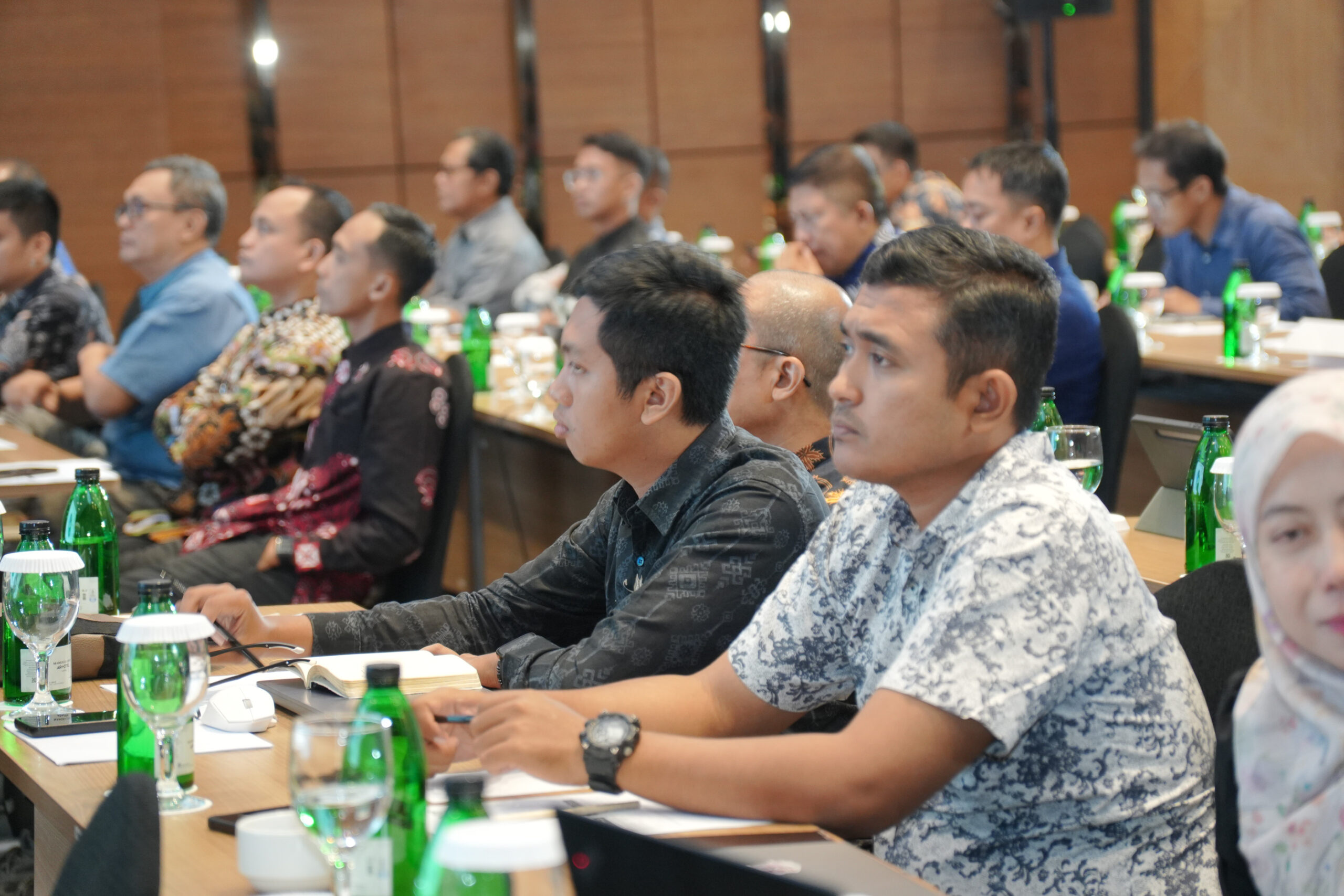
The discussion also highlighted the need for the calculator to go beyond assessing feasibility and provide recommendations on potential financing schemes and possible next steps when a scenario is not yet financially viable. Access to the calculator and platform is also intended to remain open so that they can be used by a broad range of stakeholders.
Institutional, Financing, and Infrastructure Challenges Remain
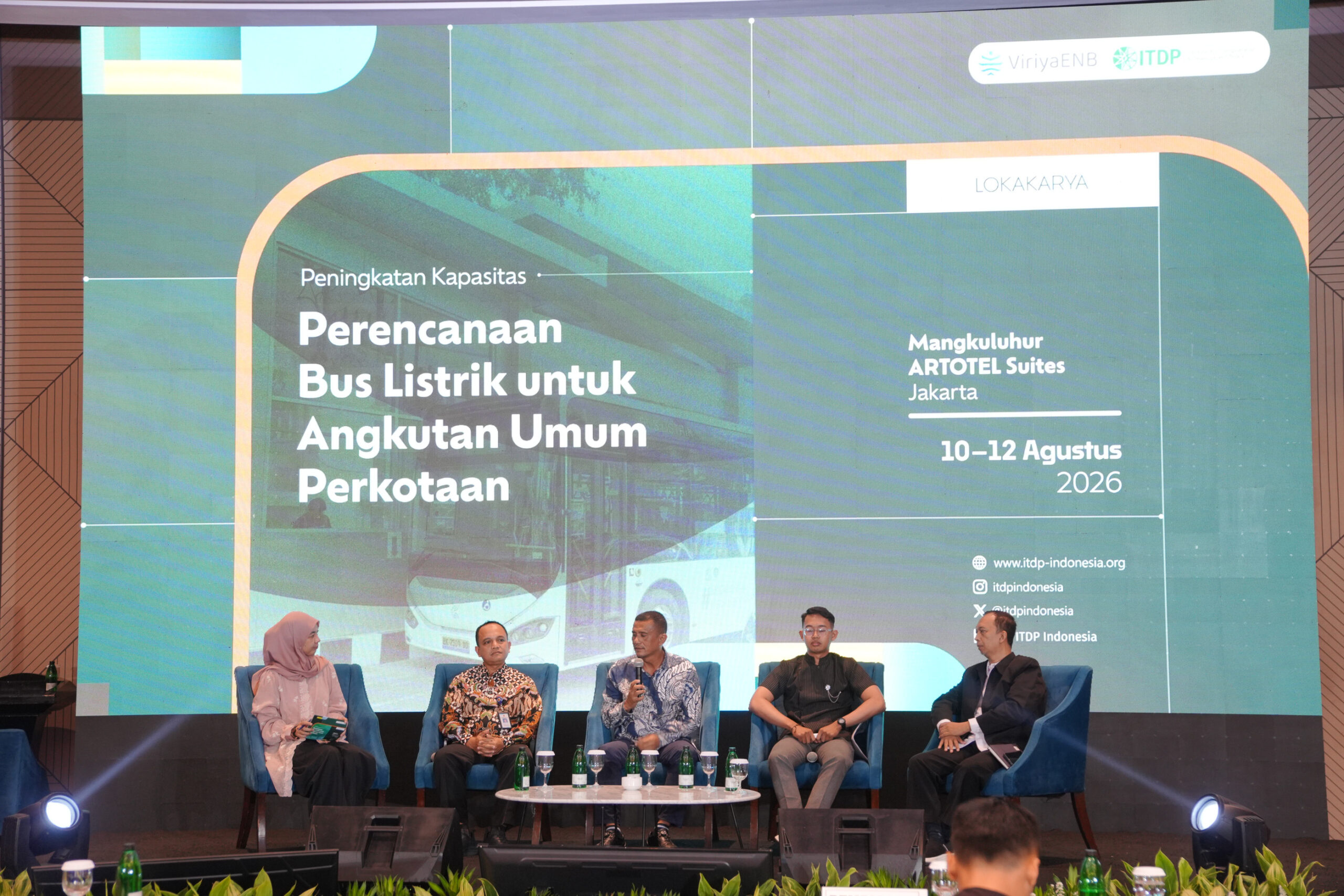
The second session began with presentations on the experiences of local governments and operators in operating electric buses. Moderated by ITDP Indonesia Representative Deliani Siregar, the discussion featured representatives from the Special Region of Yogyakarta (DIY) and Medan, representing regions that have already begun operating electric buses, alongside DAMRI as an operator. Speakers shared their experiences, challenges, and strategies throughout the electrification process.
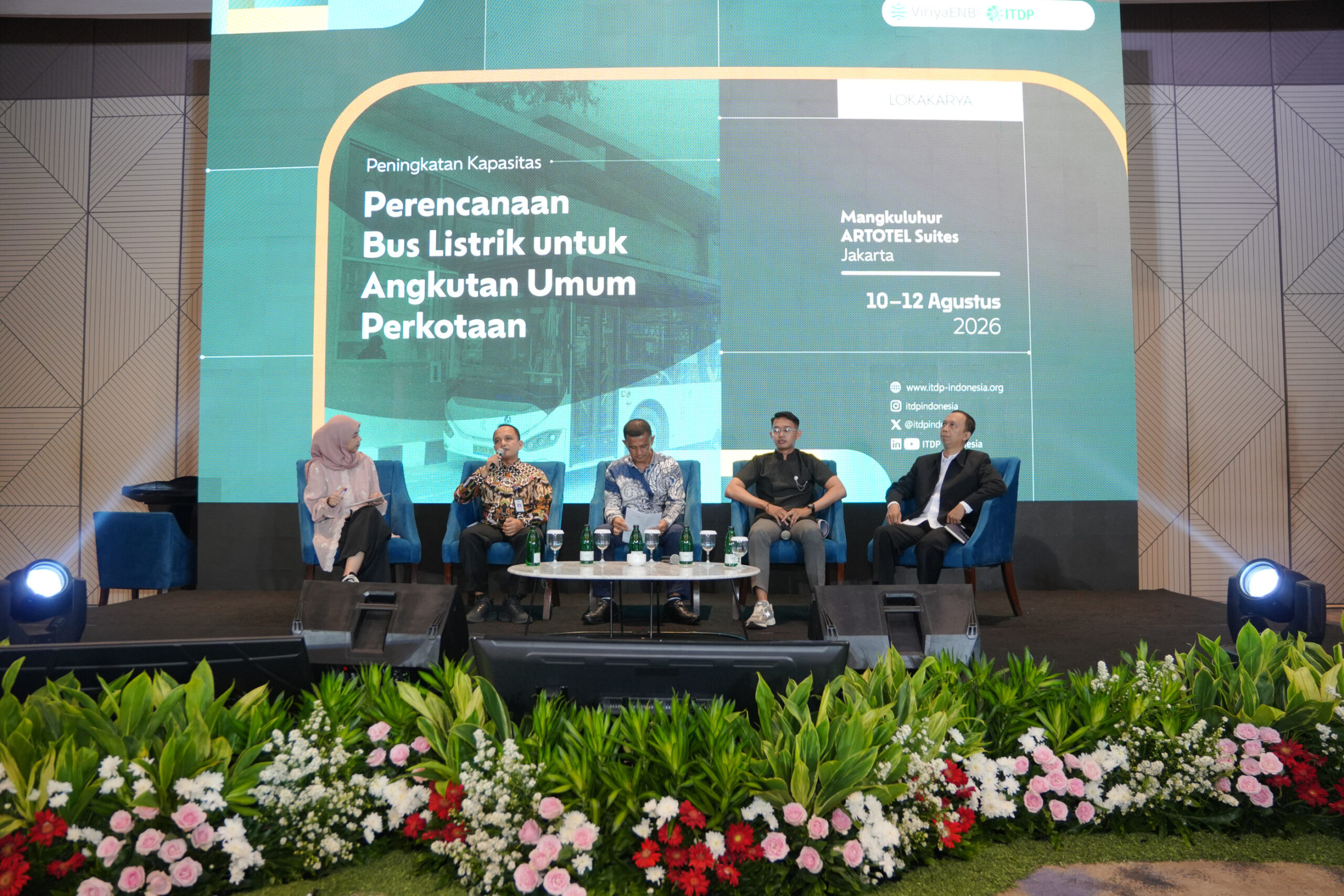
The experience of DIY demonstrated that route selection, battery capacity, travel distance, and charging locations need to be planned in an integrated manner to avoid disruptions to operations. High investment costs for charging infrastructure, electricity tariffs, and continued reliance on regional budgets (APBD) or intergovernmental transfers remain key challenges to electrifying TransJogja.
In Medan, institutional capacity plays an important role in managing electric bus services. As additional services and fleets increase the workload of local government, establishing a UPTD (Technical Implementation Unit) was identified as an initial solution. In the longer term, the institutional structure could be developed into a BLUD (Regional Public Service Agency) or BUMD (Regionally Owned Enterprise) to support more effective operational and budget management.
From the operator’s perspective, DAMRI emphasised that electrification requires a comprehensive supporting ecosystem. Charging infrastructure must be planned alongside bus procurement, while human resource requirements for charging operations and maintenance at depots must also be taken into account.
A Closer Look at Jakarta’s Electric Bus Ecosystem
The programme continued with a site visit to DAMRI’s Pupar Cakung Depot on 12 August 2026. Participants from various local governments—including Surakarta, Medan, West Java, Bogor, Semarang, Bandung, Batam, Pekanbaru, Padang, Bali, and DKI Jakarta—along with representatives from Transjakarta and DAMRI, had the opportunity to observe first-hand fleet management, charging infrastructure, and operational monitoring systems for electric buses.
During the visit, DAMRI shared its experience in developing its electric bus fleet, including the process that began in 2020 and the deployment of electric buses across different service needs. DAMRI currently operates 316 electric buses in Jakarta, supported by depot and charging facilities as part of its operational ecosystem.
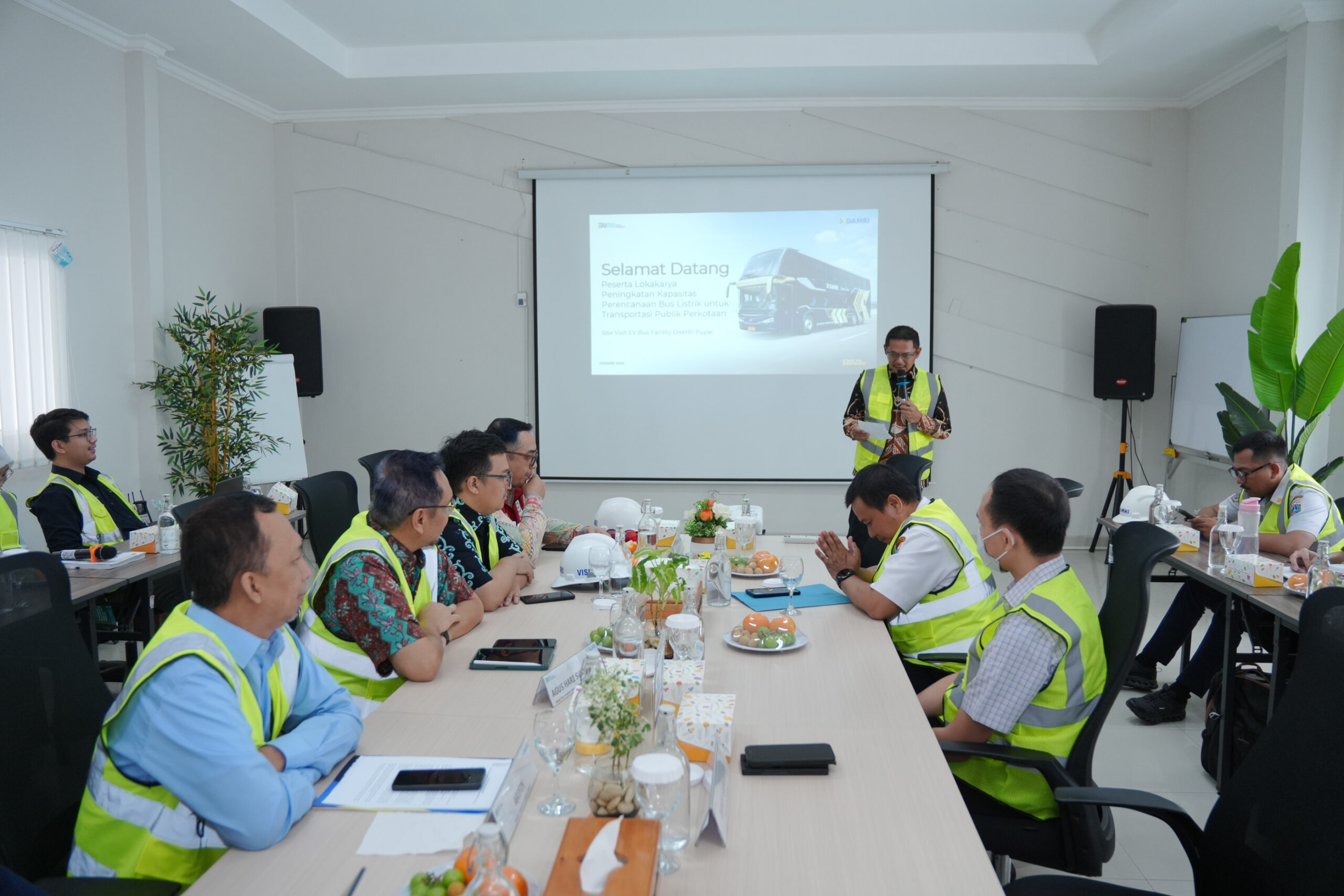
Participants also observed the monitoring process in the control room, charging facilities, and battery and depot management systems. Particular attention was given to how route conditions, road gradients, and potential flooding need to be incorporated into electric bus operational planning.
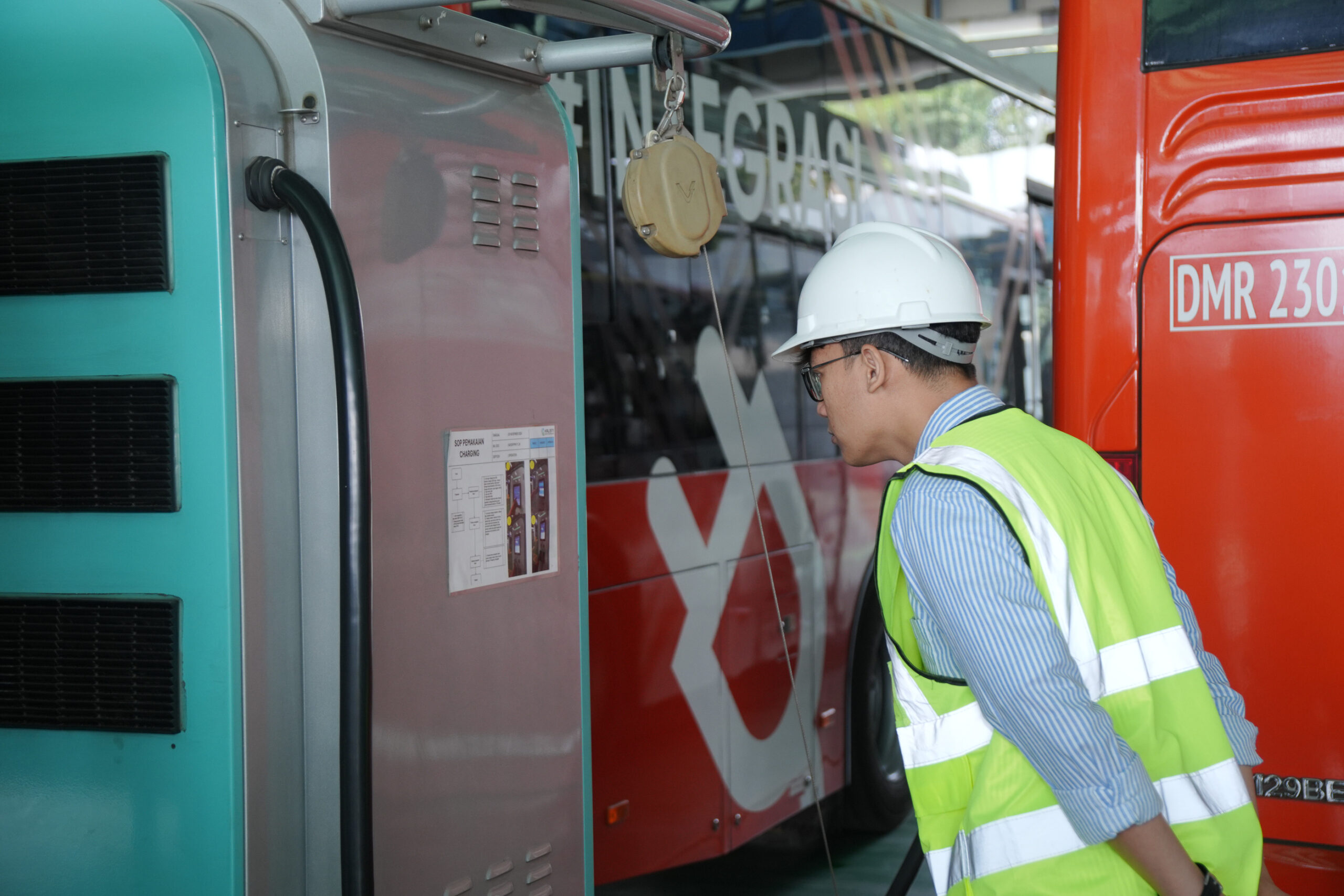
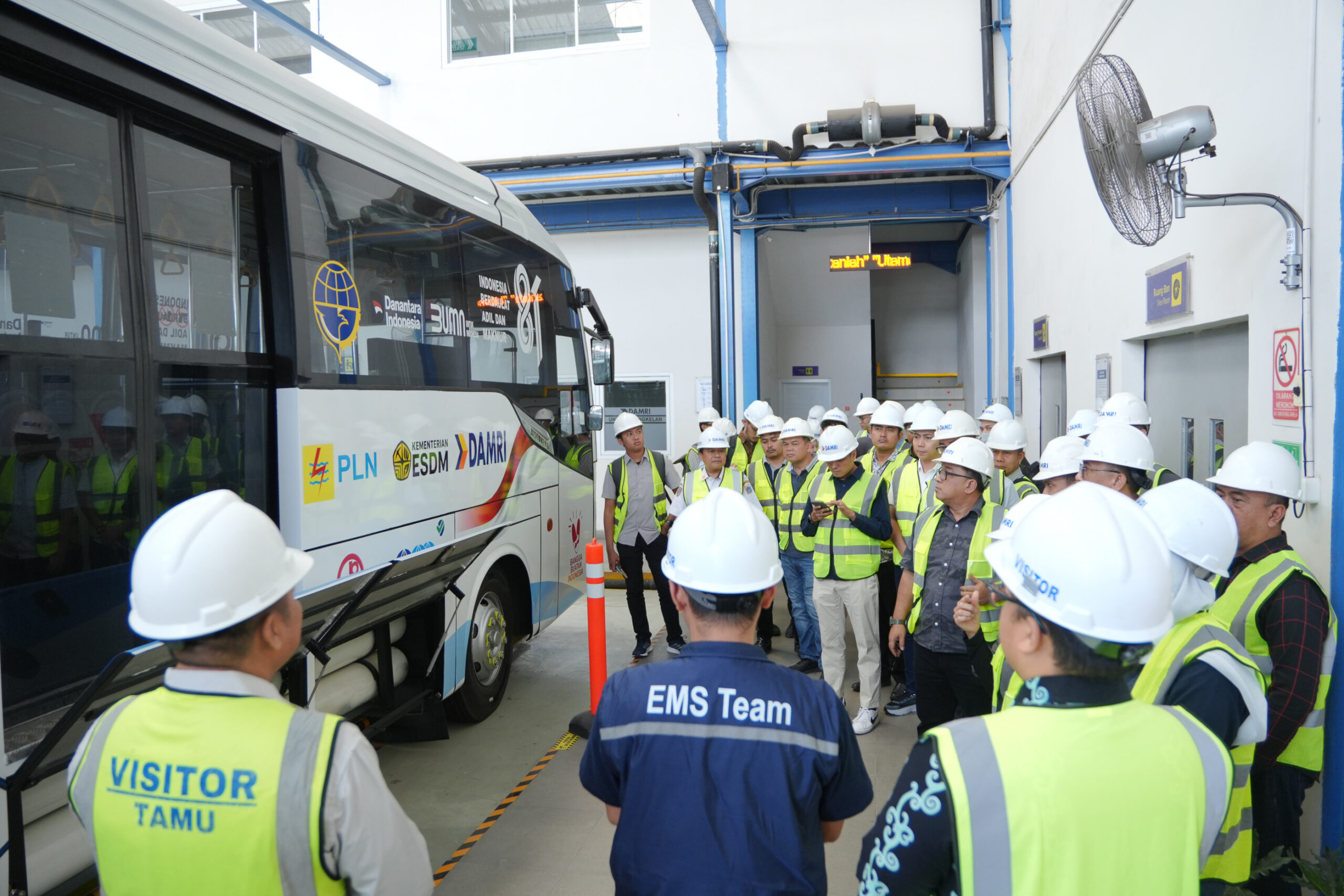
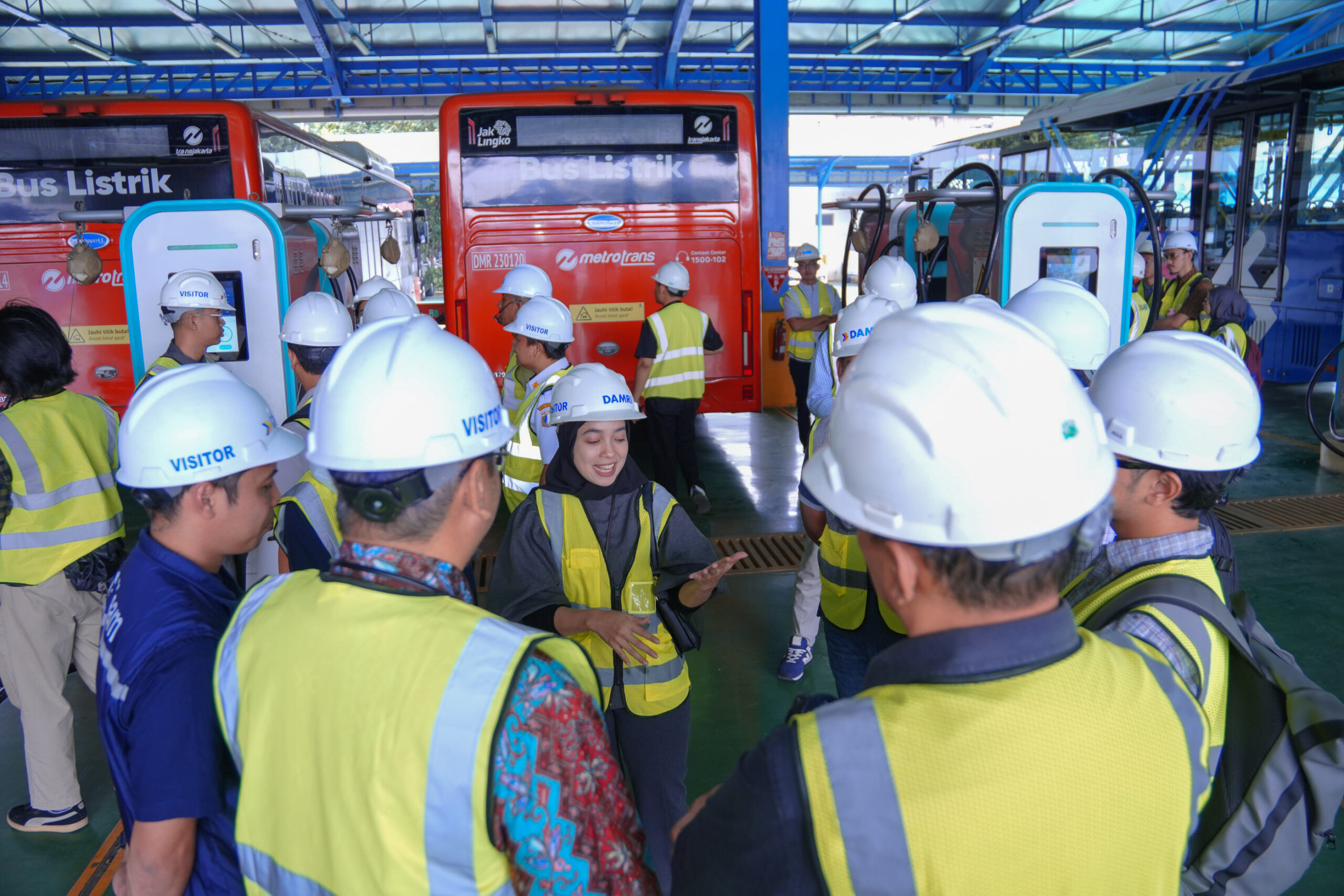
Representatives from the Jakarta Transportation Agency emphasised that electrification is part of a broader transformation of the transport system. Electric bus planning needs to account for travel demand and patterns, depot capacity, energy requirements, charging infrastructure, human resource readiness, maintenance, and long-term operational sustainability.
The discussions and field visit reinforced a key conclusion: public transport electrification is not simply a matter of replacing vehicle technology. It requires building an enabling transport ecosystem that can support more sustainable public transport services over the long term. Integrated planning, predictable financing, supportive regulations, infrastructure readiness, and collaboration among governments, operators, industry, and development partners are essential foundations for making this transition possible.