
August 31, 2026
ITDP Indonesia Returns to Urban Social Forum to Advance Inclusive and Sustainable Public Transport
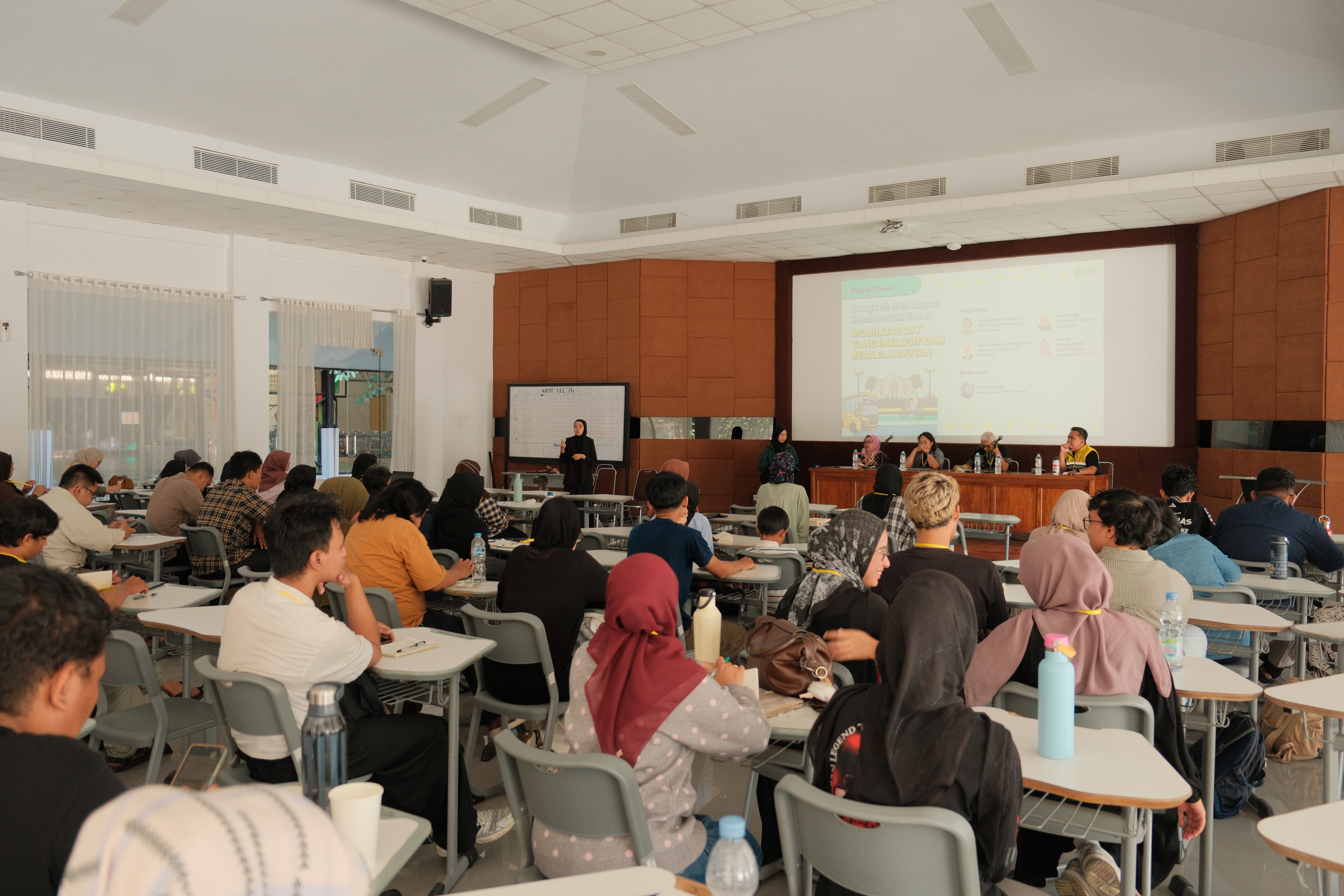
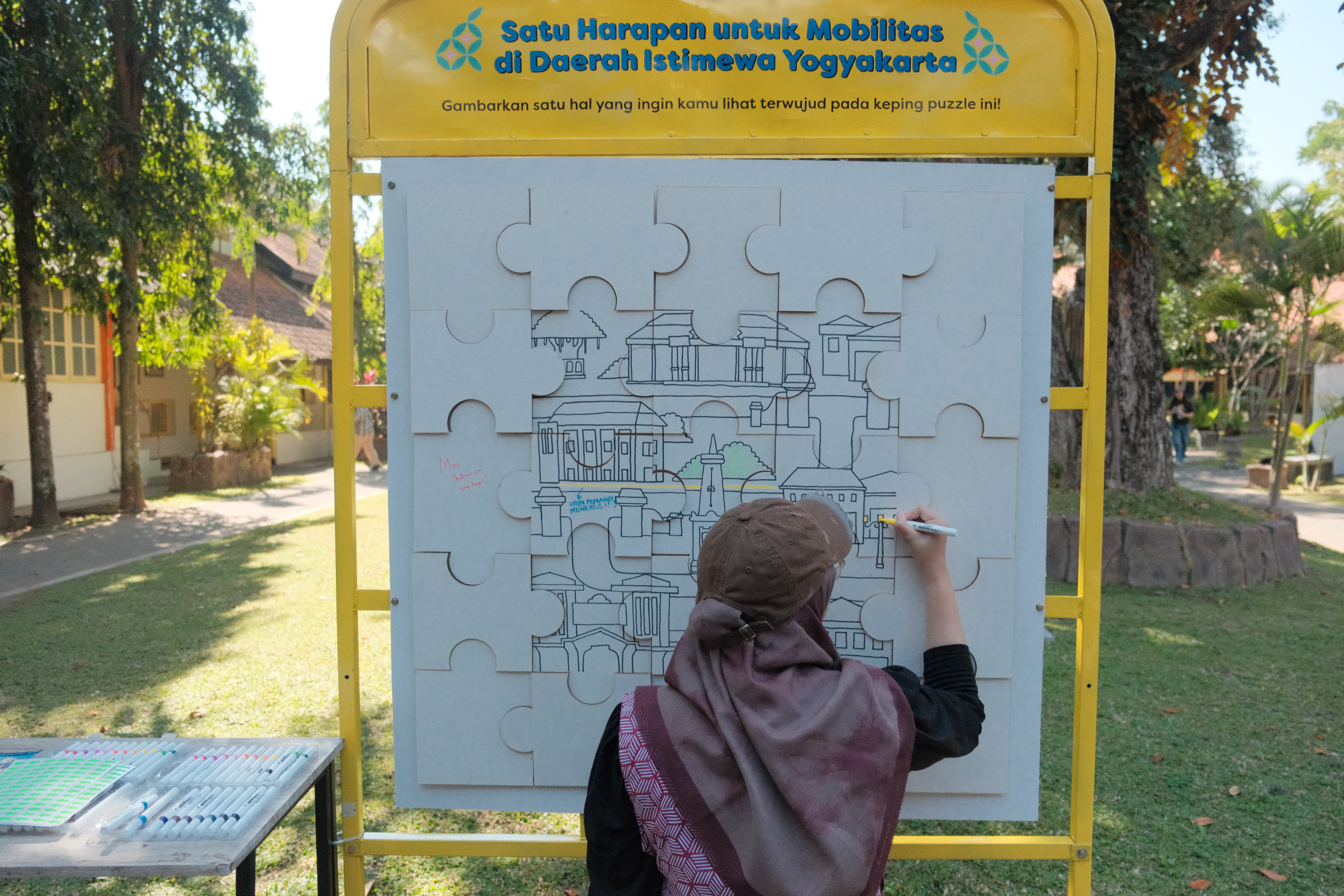
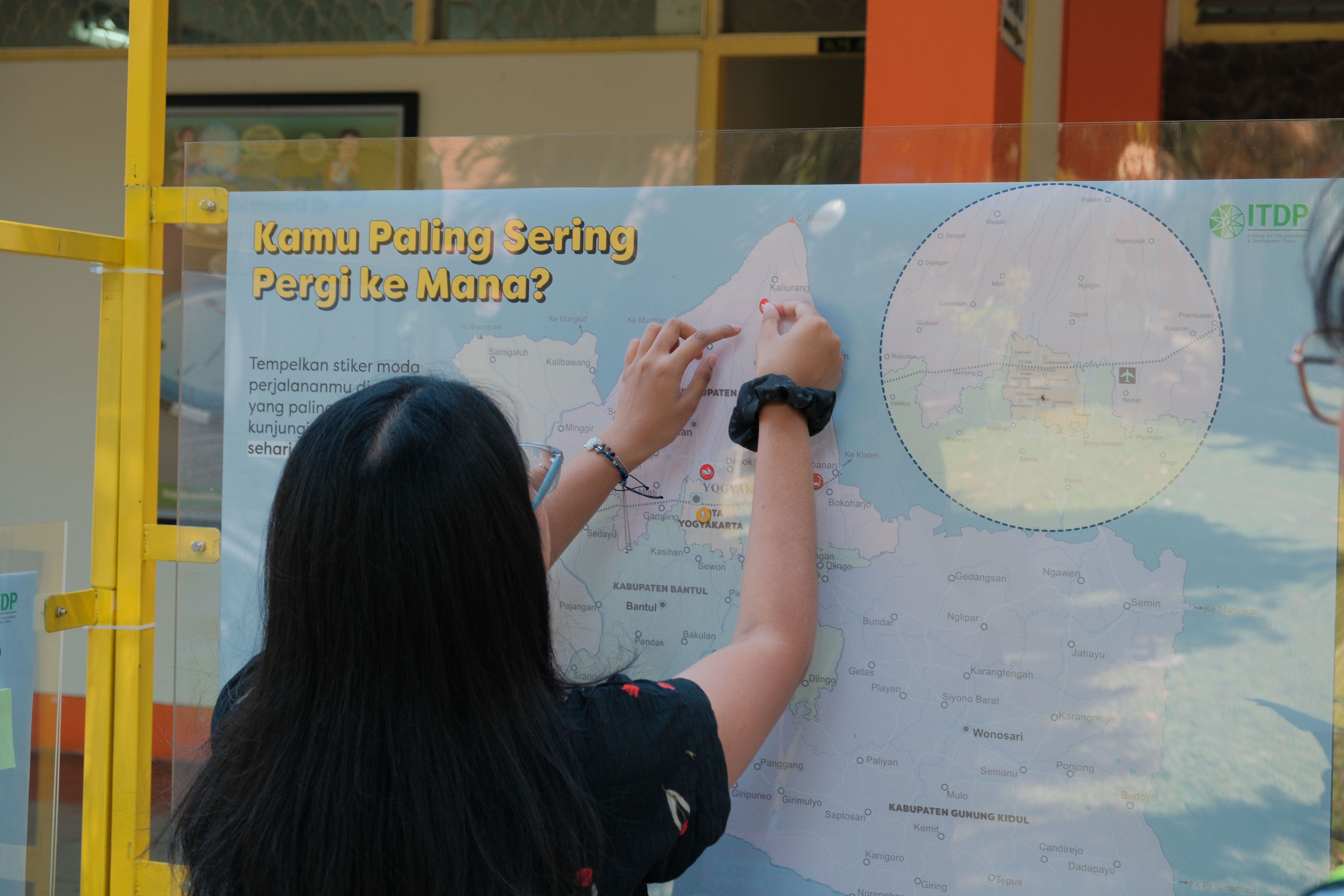
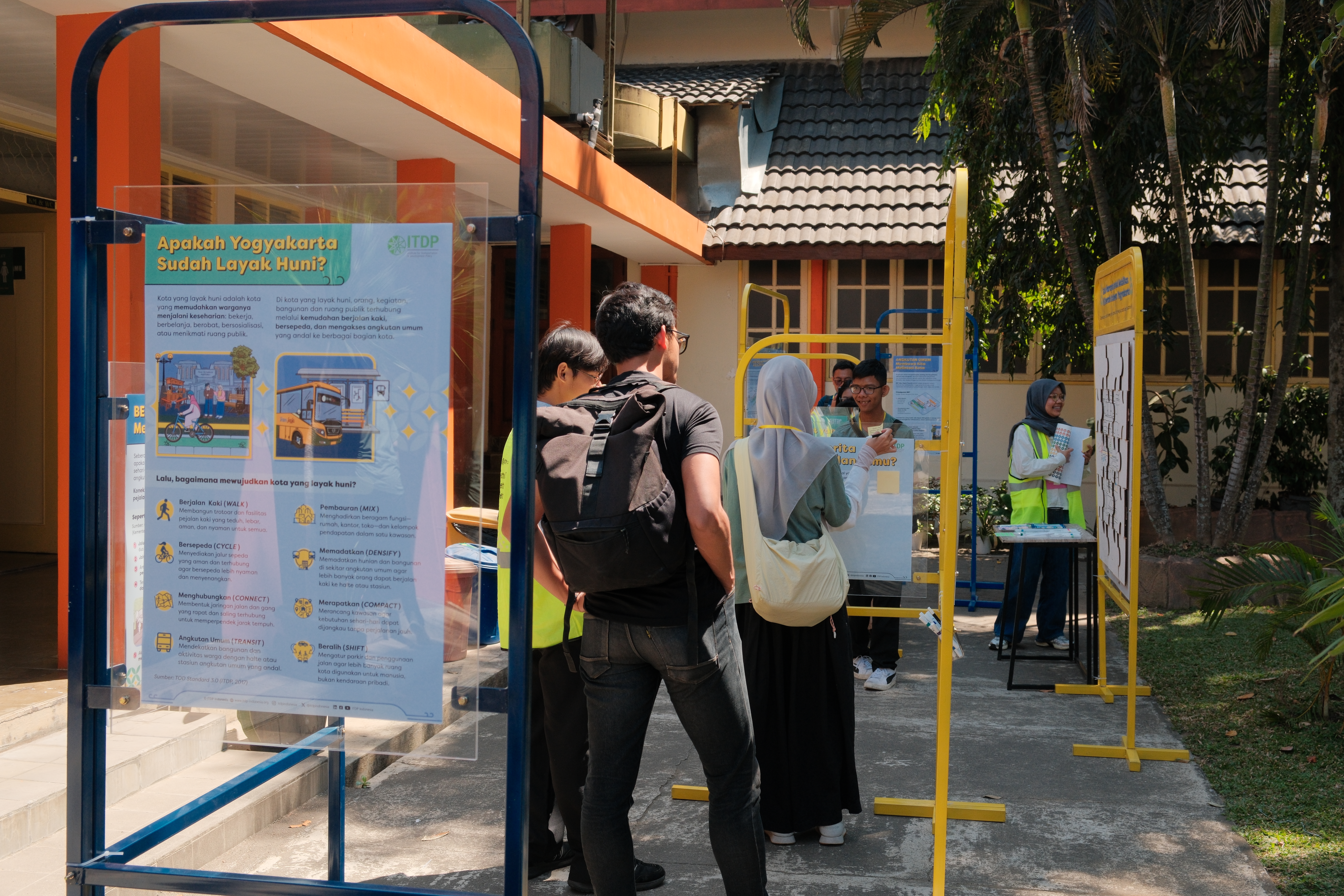
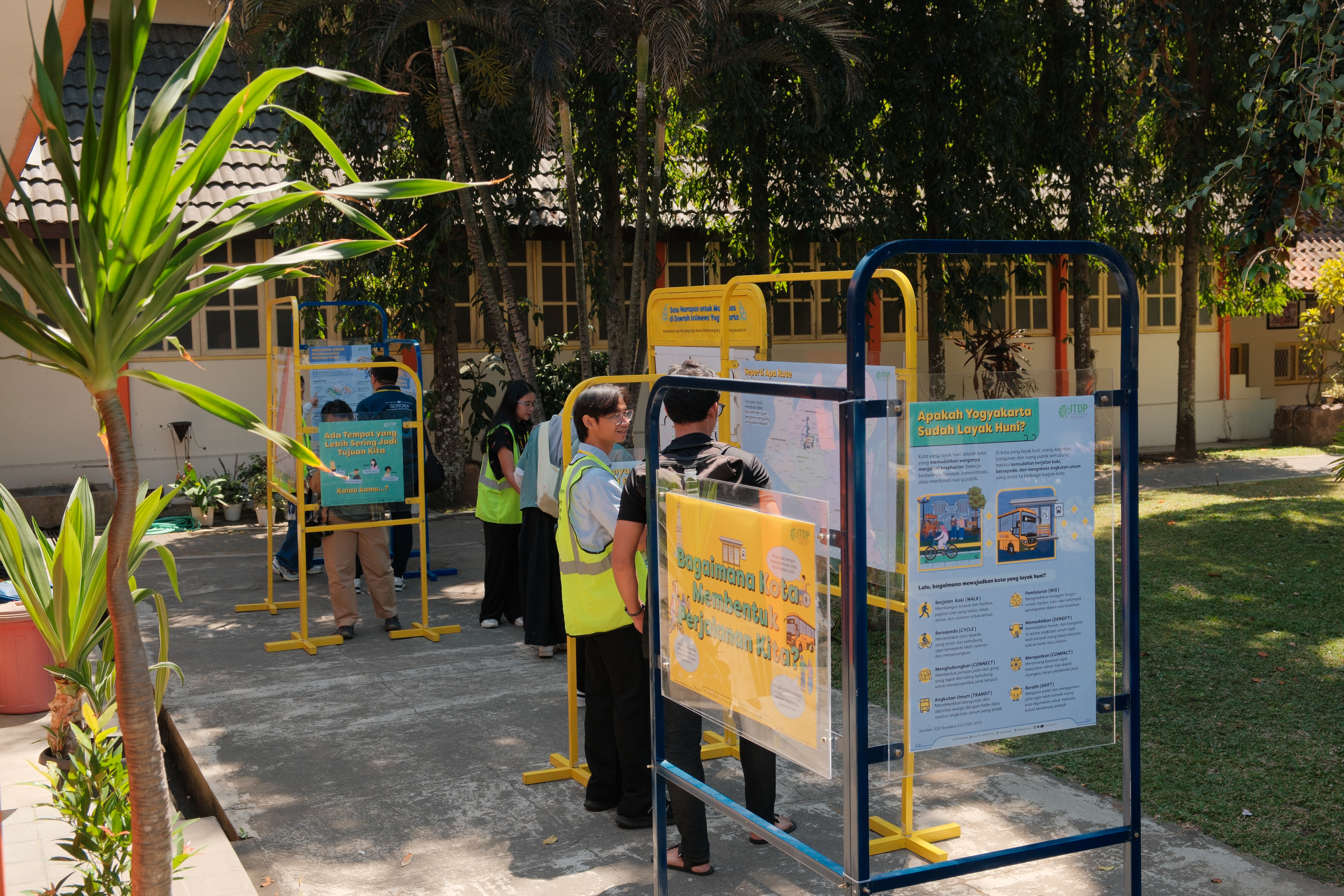
TDP Indonesia returned to the Urban Social Forum #12, marking its latest participation since first joining the forum in 2014. Held at SMA Kolese de Britto Yogyakarta on 29 August 2026, the event—better known as USF—carried the theme “Another City is Possible!”. This year, ITDP Indonesia presented the interactive installation “Rekam Langkahmu, Raih Kotamu” (“Trace Your Steps, Shape Your City”) alongside a panel discussion titled “Langkah dan Kayuh yang Membentuk Kota: Merancang Ulang Mobilitas DIY yang Inklusif dan Berkeadilan” (“The Steps and Pedals that Shape a City: Redesigning Inclusive and Equitable Mobility in Yogyakarta”).
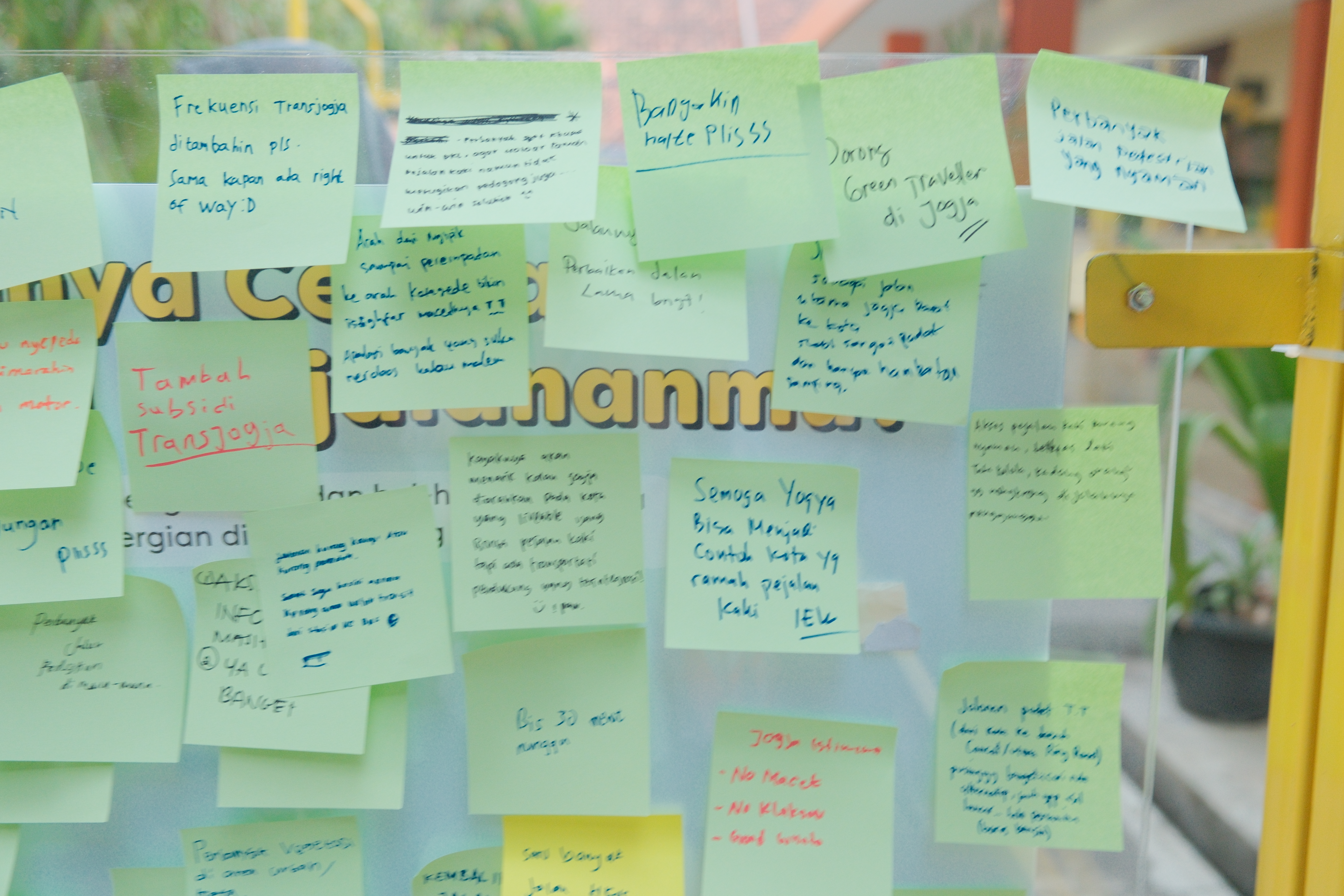
Through the installation, visitors were invited to explore how cities shape the ways people move. They were then encouraged to share their daily journeys and the modes of transport they use, before expressing their hopes for the future of public transport in Yogyakarta.
The panel discussion explored how Yogyakarta’s public transport system can better accommodate the daily mobility needs of residents, commuters, school and university students, tourists, and economic activities.
As a national education hub, Yogyakarta hosted approximately 439,200 university students in 2025. Tourist mobility is also significant, with 1.59 million visitors recorded in just one month, between 13 June and 13 July 2026. This high level of mobility is accompanied by high rates of private vehicle ownership, with approximately 2.97 million motorcycles registered across Yogyakarta in 2025. This places growing pressure on road capacity, parking, public space, and energy consumption, particularly as many journeys remain poorly connected to public transport networks.
These conditions underscore the need for mobility options that can connect people to their destinations without continued dependence on private vehicles—a key question that set the stage for the afternoon’s discussion. Before the panel began, ITDP Indonesia Senior Communications and Partnership Manager Fani Rachmita and Deputy Director Deliani Siregar invited participants to take part in an interactive game, where they responded to a series of prompts by indicating whether they agreed or disagreed.
The first prompt—“Women face greater challenges when using public transport than men”—generated arguments on both sides. Those who agreed shared experiences of catcalling linked to long distances between stops, difficult sidewalk conditions, and concerns about safety due to inadequate street lighting. Those who disagreed pointed to women’s higher representation among public transport users.
The second prompt asked whether electric buses are a waste of public funds. Some participants agreed, arguing that the transition simply shifts energy consumption from fuel to electricity, while others questioned whether the transition was necessary at all. Others disagreed, citing the importance of transitioning to electric buses given the heavy black smoke emitted by Trans Jogja buses. The ITDP team highlighted that electric buses can reduce operating costs by 30–40% compared with diesel buses. These savings can then be redirected towards improving services and expanding routes.
The third prompt asked whether cycling is a realistic mode of transport for mothers. ITDP pointed to Amsterdam and Copenhagen as examples of cities where adequate infrastructure has helped create more cycling-friendly environments for women. Surveys conducted by ITDP in several cities have also shown that, beyond bicycle parking infrastructure, cyclists need access to information on bicycle repair shops and changing facilities to better support their daily activities.
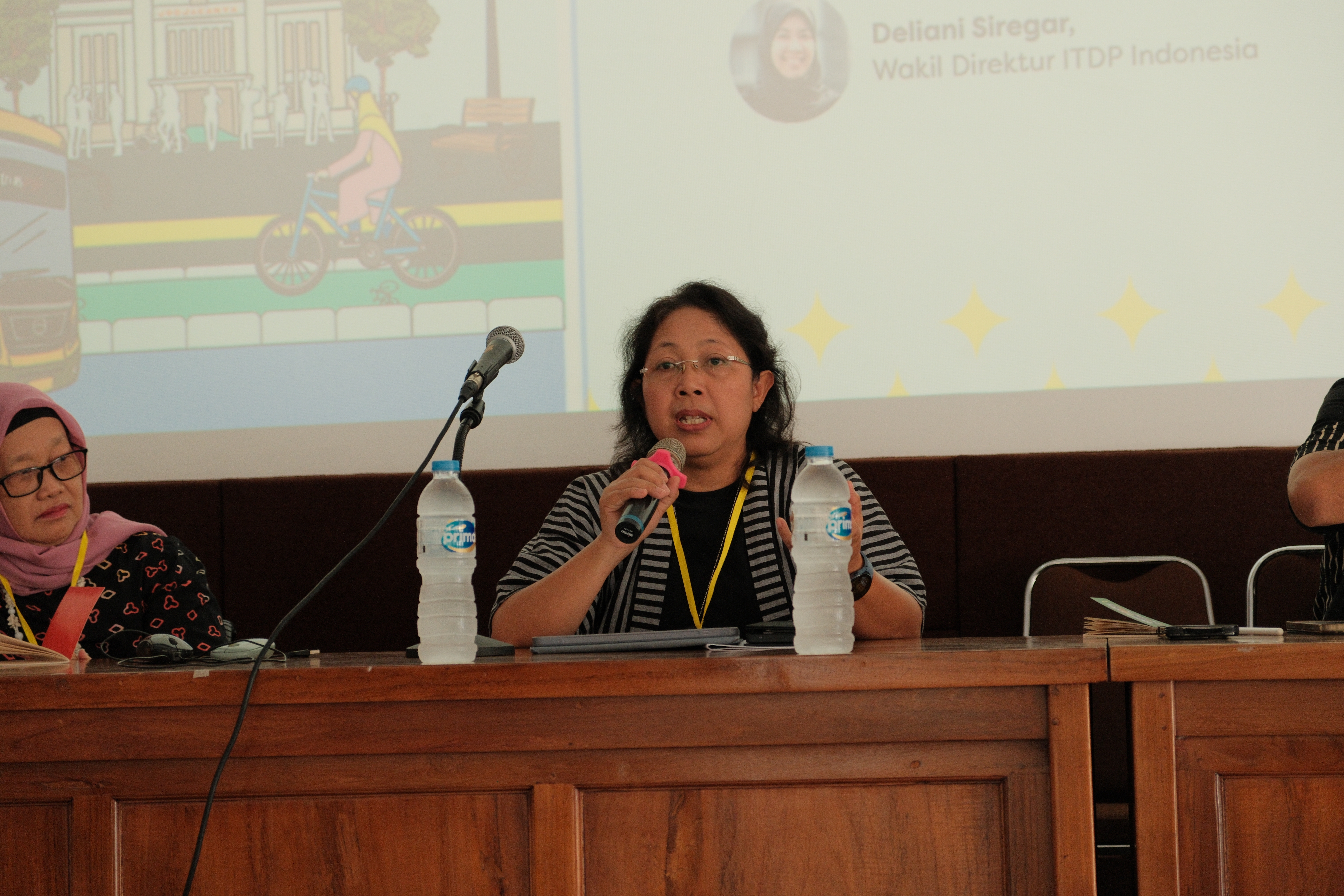
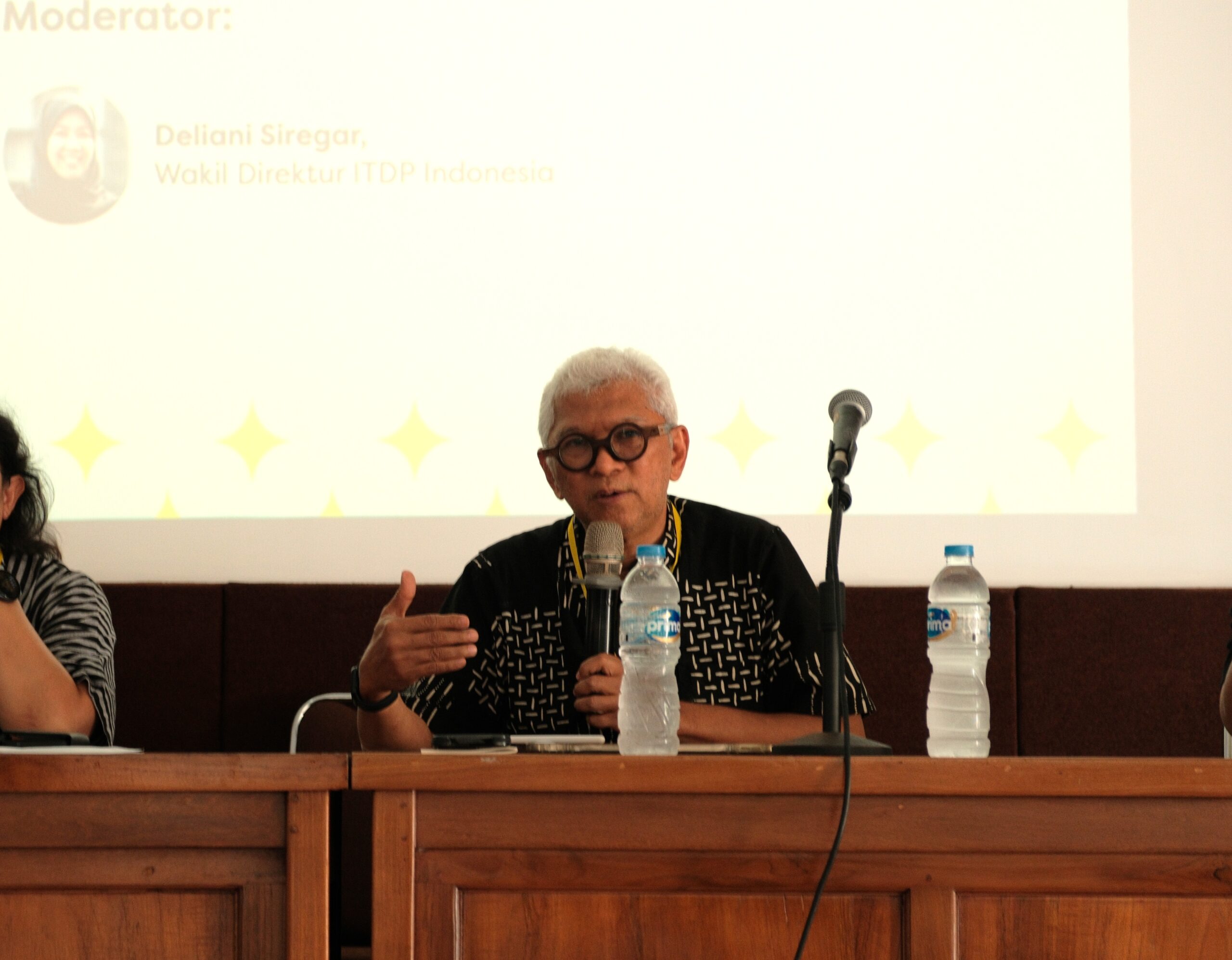
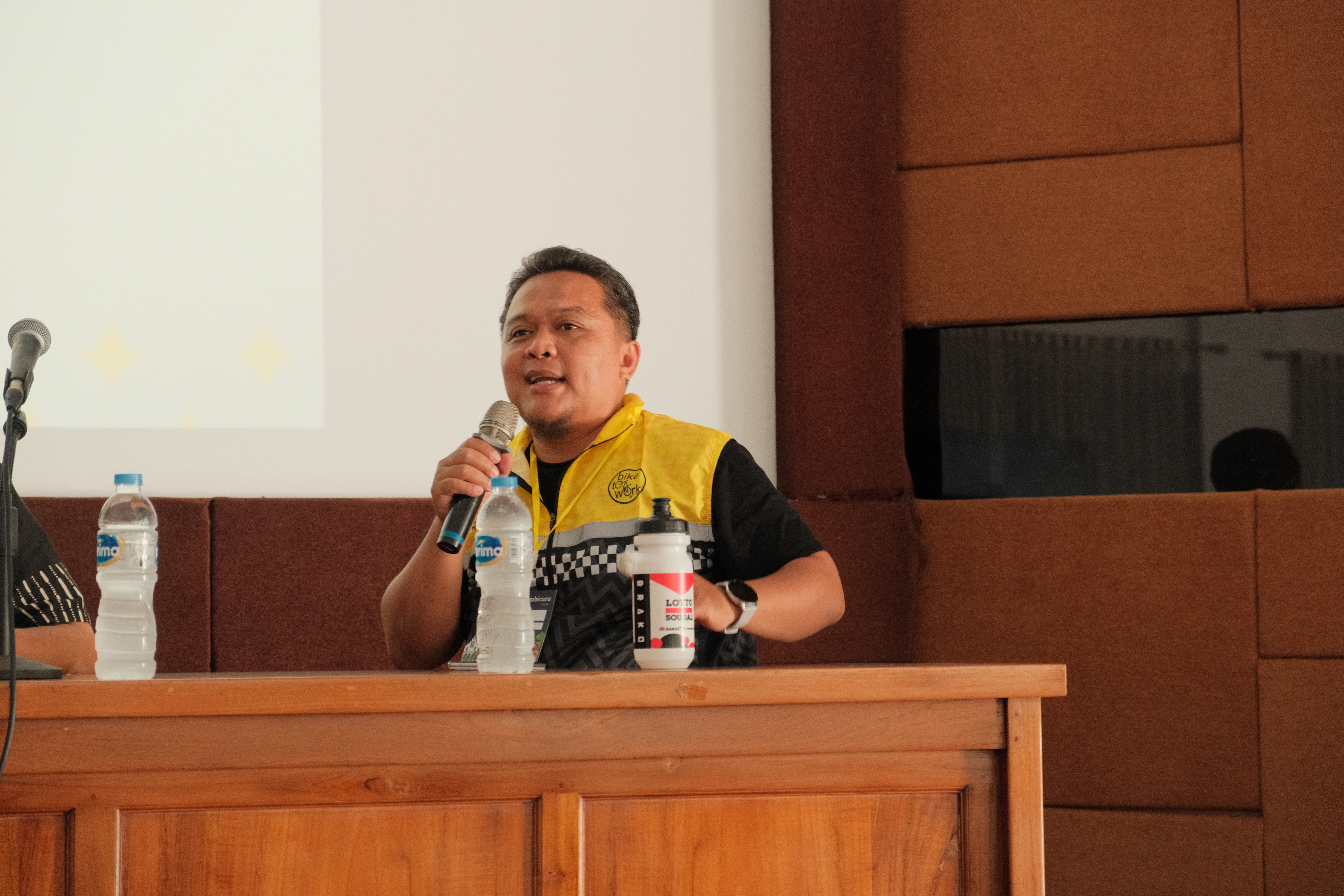
The session continued with a panel featuring Chrestina Erni Widyastuti, Head of the Yogyakarta Special Region Transportation Agency; Prof. Ir. Ikaputra, M.Eng., Ph.D., an urban transport observer; Nuning Suryatiningsih, Senior Program Coordinator at OHANA; and Noer Cholik, Chair of Bike2Work Yogyakarta. ITDP Indonesia Deputy Director Deliani Siregar moderated the discussion.
The discussion opened with Chrestina, who outlined developments in Yogyakarta’s mobility landscape over the past several years. Trans Jogja currently operates 128 buses, with plans for fleet renewal and service improvements, including additional CCTV, as well as planned integration with Grab. The Yogyakarta Transportation Agency is also considering a transition to electric buses, although financial constraints remain a major barrier.
Professor Ika then shared his perspective on Yogyakarta’s mobility patterns, which are heavily influenced by its large population of newcomers. He argued that improvements to pedestrian infrastructure, cycling facilities, public transport, and bus-tracking applications alone will not be enough to encourage a shift to public transport without a corresponding change in mindset. He also highlighted the need to listen to the experiences and criticism of people with disabilities regarding pedestrian infrastructure, particularly along Malioboro. In this regard, the Social Affairs Agency has an important role to play in upholding their rights and raising public awareness around accessibility.
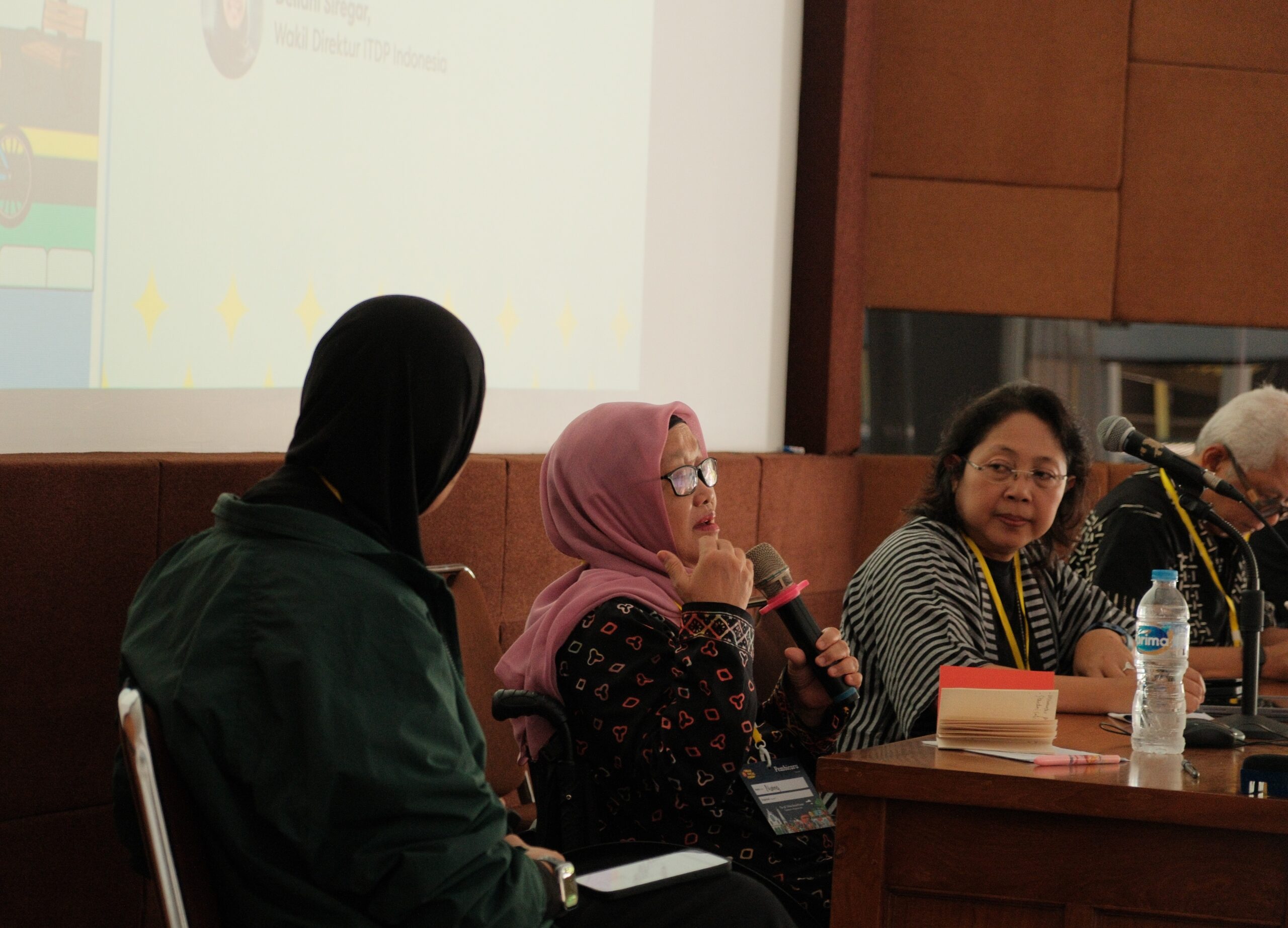
The discussion then turned to the challenges of advocating for inclusive mobility for people with disabilities, as shared by OHANA Senior Program Coordinator Nuning Suryatiningsih. She highlighted OHANA’s “Morning Gathering”, held every two months and attended by legislative and executive representatives. During these sessions, participants are invited to simulate the use of assistive devices. The initiative aims to build greater sensitivity towards the lived experiences of people with disabilities and, ultimately, encourage the development of more inclusive policies.
Noer Cholik shared his perspective as a cyclist. In his view, Yogyakarta has a strong foundation for expanding cycling infrastructure, with many public destinations that can be easily reached by bicycle. However, fast-moving traffic, bicycle lanes being used for car parking, and conflicts with other infrastructure continue to make cyclists feel unsafe on the road.
Responding to the speakers’ perspectives, Deliani shared ITDP Indonesia’s experience in supporting the development of more inclusive Transjakarta stops. This work has been carried out through a co-design process involving organisations of people with disabilities from the planning stage through implementation. In 2023, 13 Transjakarta stops incorporated inclusive design features, including layout maps, stop maps, and Braille-enabled tapping gates, alongside staff assistance and real-time information announcements. By 2024, this had expanded to 144 stops.
Deliani also highlighted ITDP’s work in developing guidelines and recommendations for cycling infrastructure across several cities, adding that ITDP Indonesia is committed to supporting improvements to cycling infrastructure in Yogyakarta.
The discussion concluded with a shared understanding that building inclusive cities begins with individual action, followed by collaboration and advocacy to ensure that everyone’s right to mobility is upheld. Only through these collective efforts can we create cities that are truly inclusive.